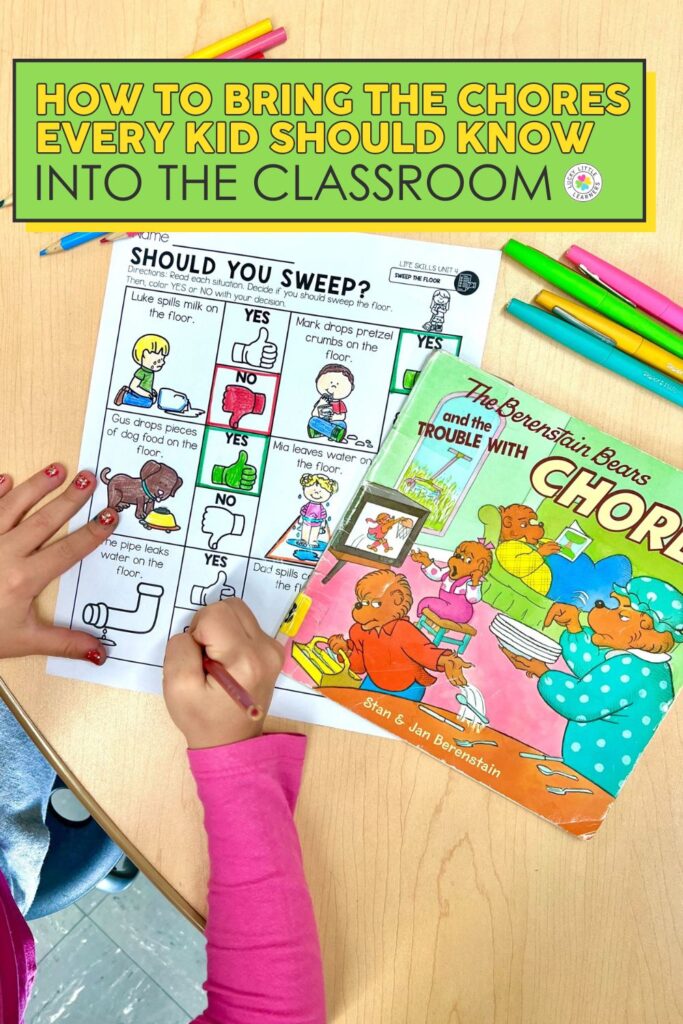
If you’ve ever tied a student’s shoe for the fifth time before 10 a.m. or watched a first grader sweep crumbs into every corner but the dustpan—you already know: basic home skills don’t always come naturally. And yet, these real-world responsibilities are just as important as sight words and subtraction facts.
That’s why the Lucky to Learn Life Skills unit, Basic Home Skills, was created—to help K–2 teachers bring essential everyday tasks into the classroom in a way that’s age-appropriate, engaging, and easy to implement.
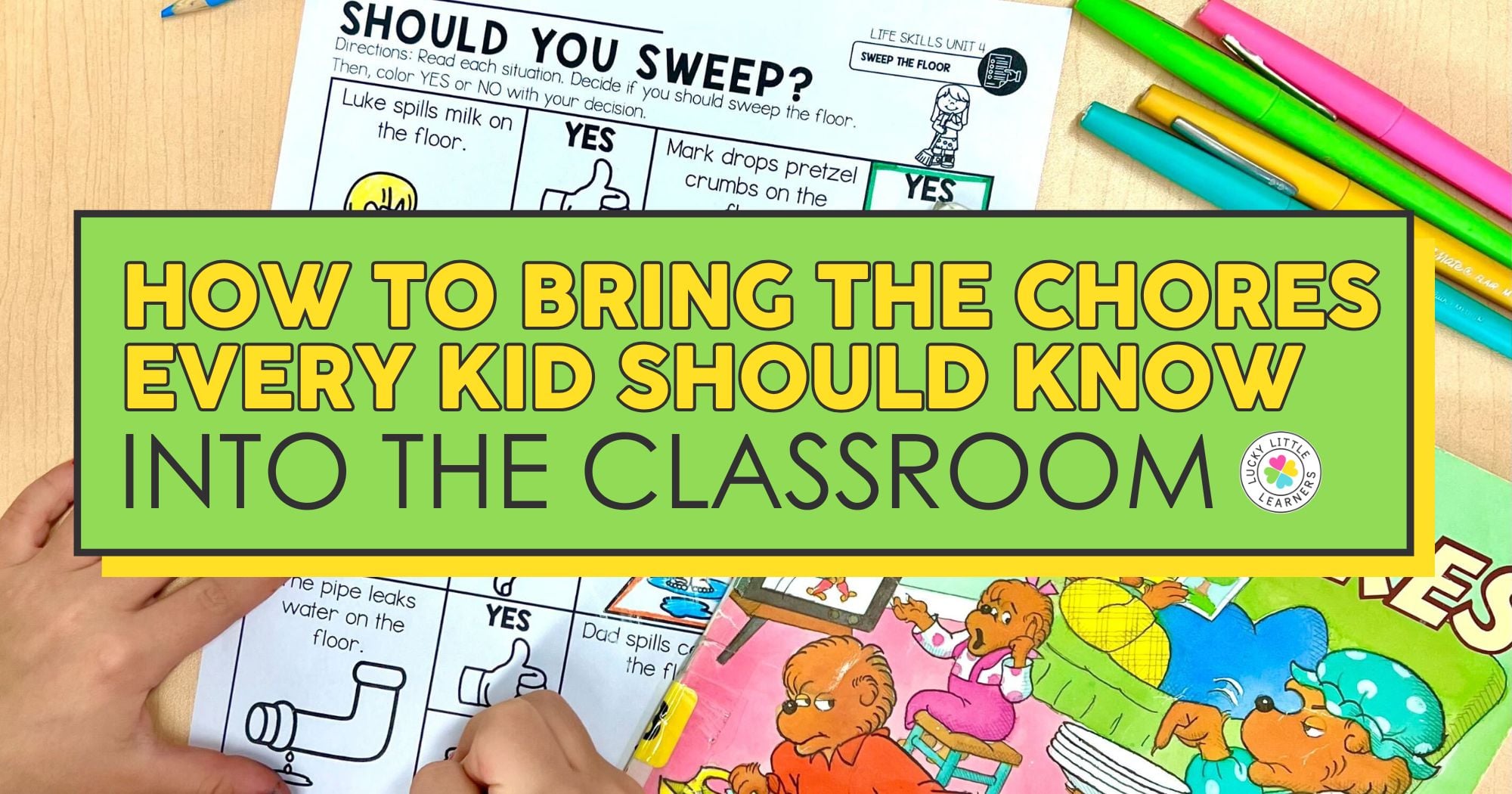
Why Teach Chores at School?
You might be thinking: Shouldn’t home skills stay at home? Ideally, yes. But many kids aren’t getting consistent practice with these foundational tasks. And the result is a gap in independence, confidence, and executive functioning.
By teaching basic chores in the classroom, you’re not just building practical skills. You’re supporting:
- Self-help routines that reduce dependency on adults
- Motor planning and sequencing through hands-on tasks
- Pride and responsibility through classroom contributions
- Stronger home-school connections when students show what they’ve learned at home
And the best part? You don’t need a full hour or fancy materials. These skills can easily be embedded in morning meetings, stations, life skills centers, or your SEL block.
👉 If you’re also working on routines around self-care and hygiene, this post on teaching responsibility and personal hygiene to K–2 students offers ready-to-use ideas that pair perfectly with chore skills.
What Skills Are Covered in the Basic Home Skills Unit?
The Basic Home Skills unit includes six practical life skills every child should begin mastering in early elementary:
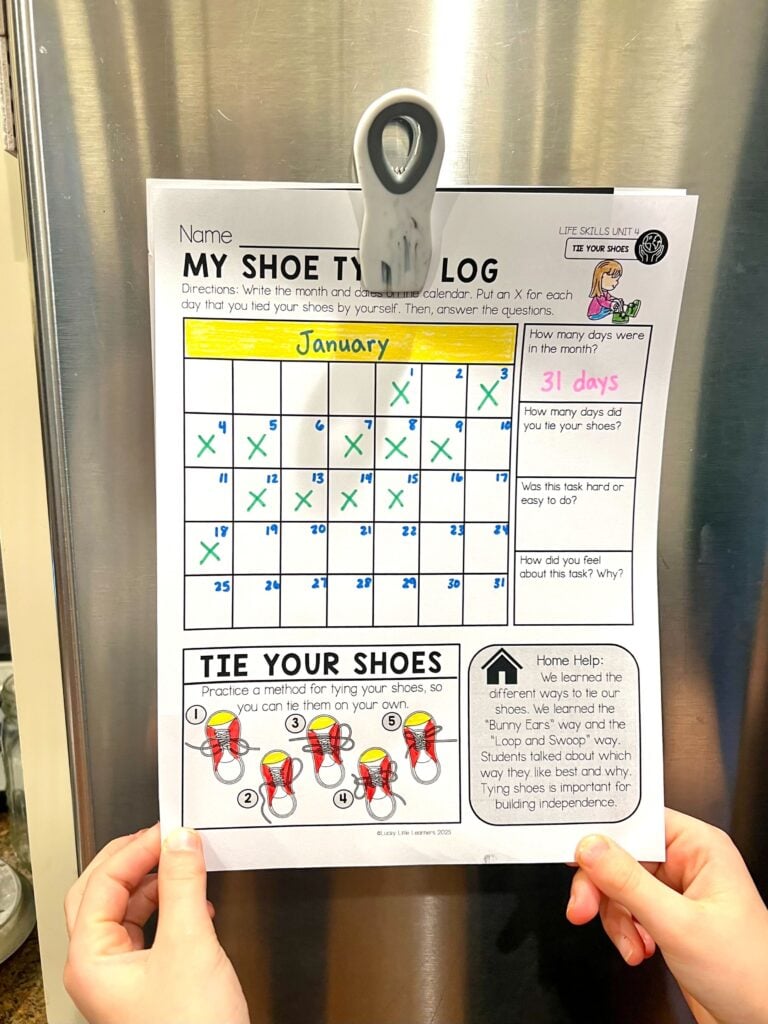
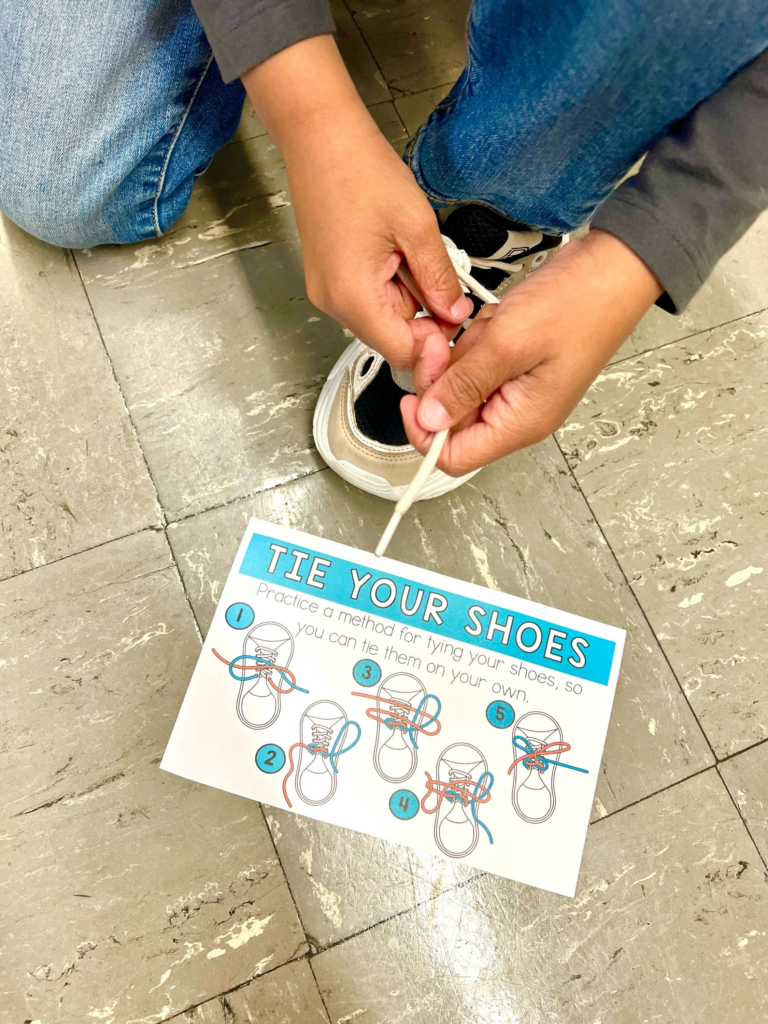
- Tie Your Shoes
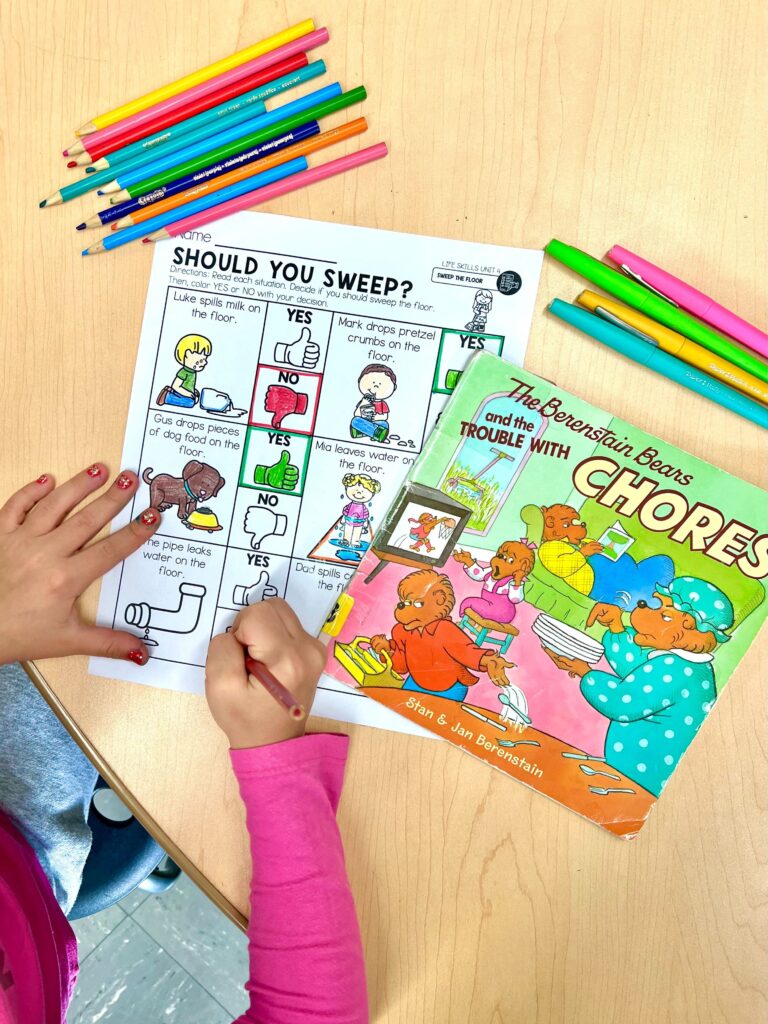
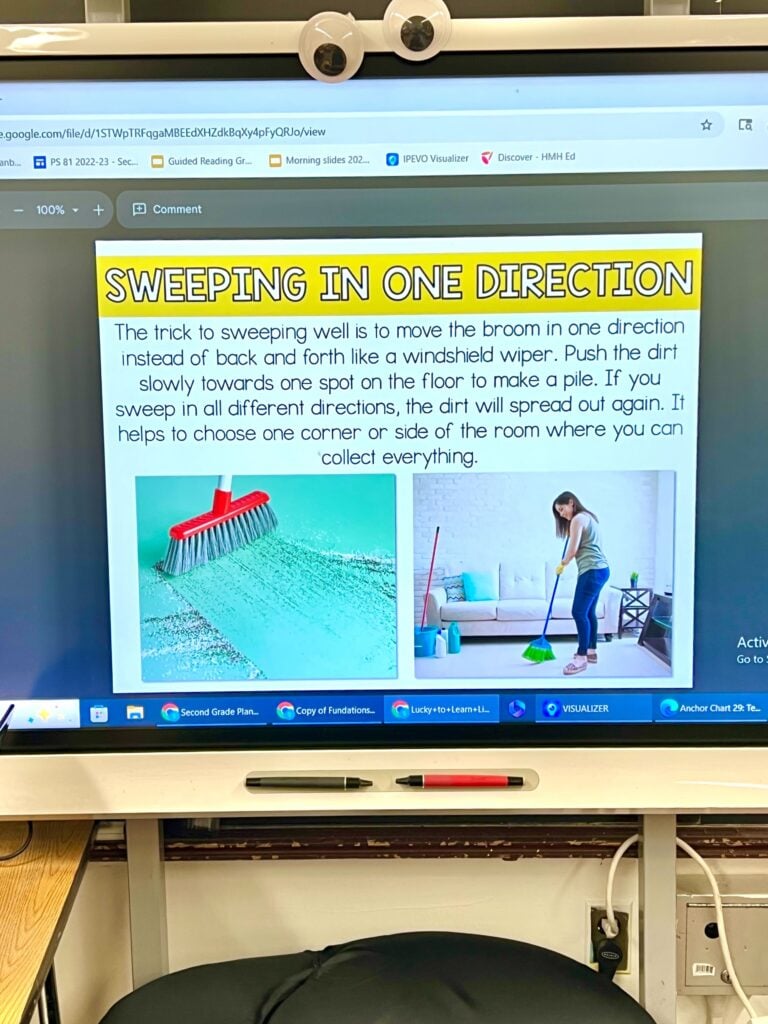
Fine motor practice + independence = fewer untied shoes on the playground. - Sweep the Floor
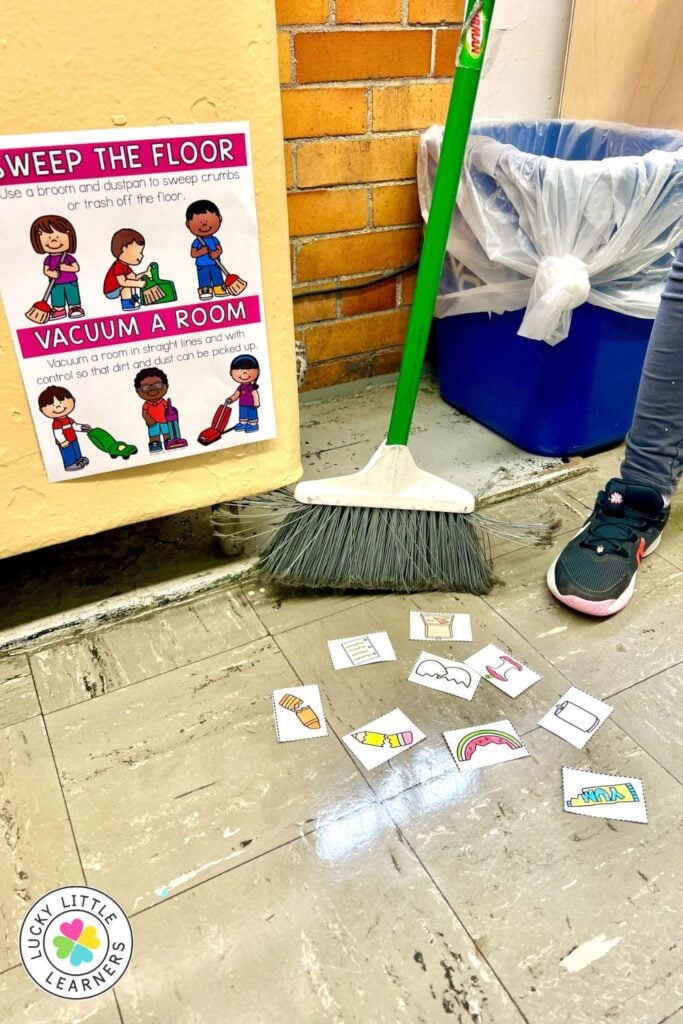
Teaches coordination and responsibility for shared spaces. - Vacuum a Room
A great conversation starter about care and effort—plus, it’s a hit during role-play centers. - Mop the Floor
Builds body awareness and control while reinforcing step-by-step thinking. - Change Your Bedding
Encourages ownership over personal space and persistence with multi-step tasks. - Take Out the Trash
Supports responsibility, routine, and learning how to finish a task all the way through.
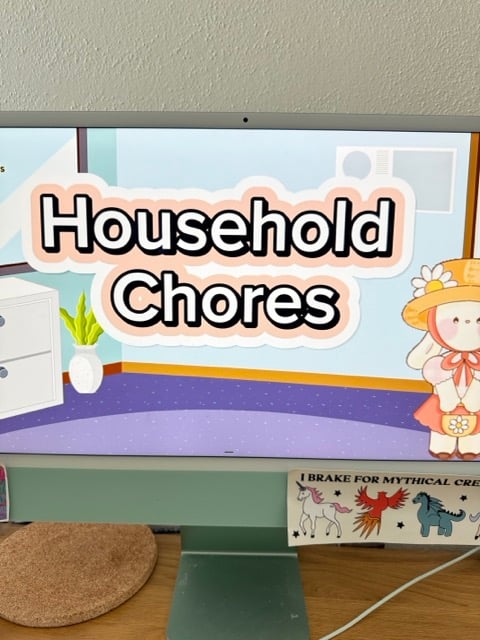
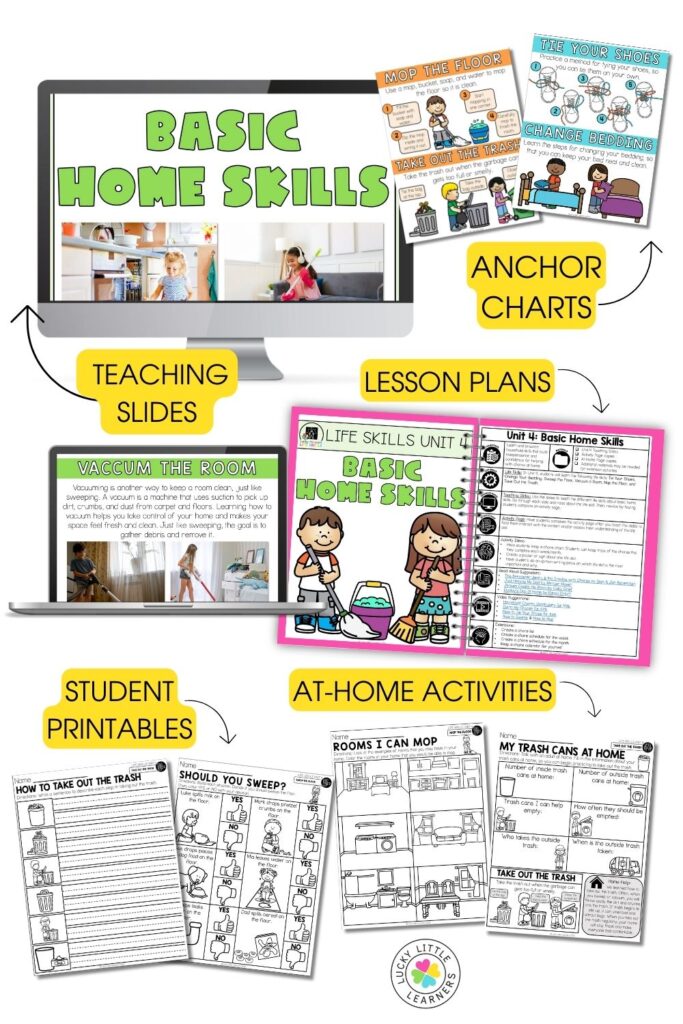
Each skill is introduced with teaching slides, an activity page, and at-home connections that encourage practice beyond the classroom. There are even videos and read-alouds to support visual learners and tie everything together with language-rich learning.
Easy Ways to Fit Chore Skills Into Your Week
You don’t need to launch a full life skills program to make this work. Here are some simple ways teachers are fitting these skills into their routines:
- Monday Morning Meeting: Introduce one new skill each week using the slides and video.
- Centers or Fast-Finisher Options: Set up mini stations where kids can role-play sweeping, tying shoes, or organizing “laundry” (real towels or cloths).
- Writing Block Extension: Use the opinion writing prompts to reflect on which skill is most important and why.
- Home Connection: Send the at-home pages for students to complete with a grown-up, then share during show-and-tell or morning meeting.
Real-World Ready, One Small Step at a Time
Teaching chores in the classroom isn’t about perfection—it’s about helping students feel capable. When kids learn to care for their environment, contribute to routines, and feel confident doing everyday tasks, they’re building skills that will serve them long after they leave your classroom.
The Lucky to Learn Life Skills – Basic Home Skills unit makes it simple to start. No big shift needed—just small, consistent moments that make a big difference.
Want to Try It Out?
You can explore the full Basic Home Skills unit.
More Life Skills Resources for K–2 Teachers:
- Teaching Responsibility & Personal Hygiene in K–2
- Life Skills Every K–2 Student Should Know About Safety
- How to Help Kids Learn Their Address and Phone Number