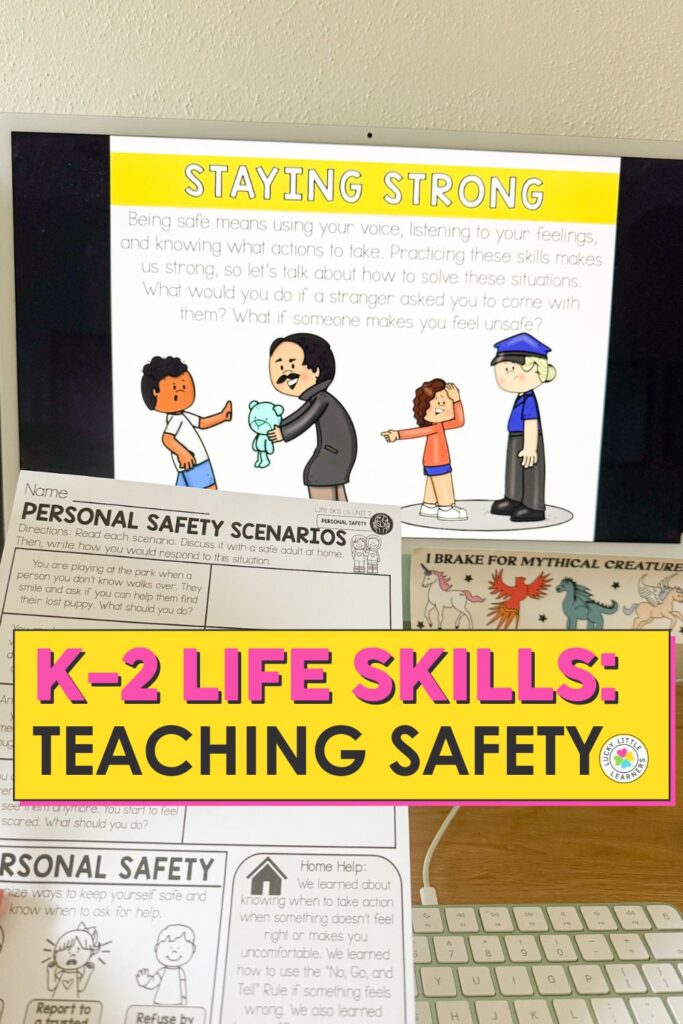
You go over fire safety, emergency drills, and “stranger danger,” but a week later all you get are blank stares. Safety lessons can feel like a checkbox. But what if they could become real-life habits your students remember without reteaching them every month?
Why Safety Lessons Often Don’t Stick
Kids will remember essential safety concepts if they practice it like a routine—not just a rule.
1. Safety is taught reactively, not habitually
Most classrooms only focus on safety during drills or after something happens. But safety should be woven into your weekly routines—not saved for one week in October.
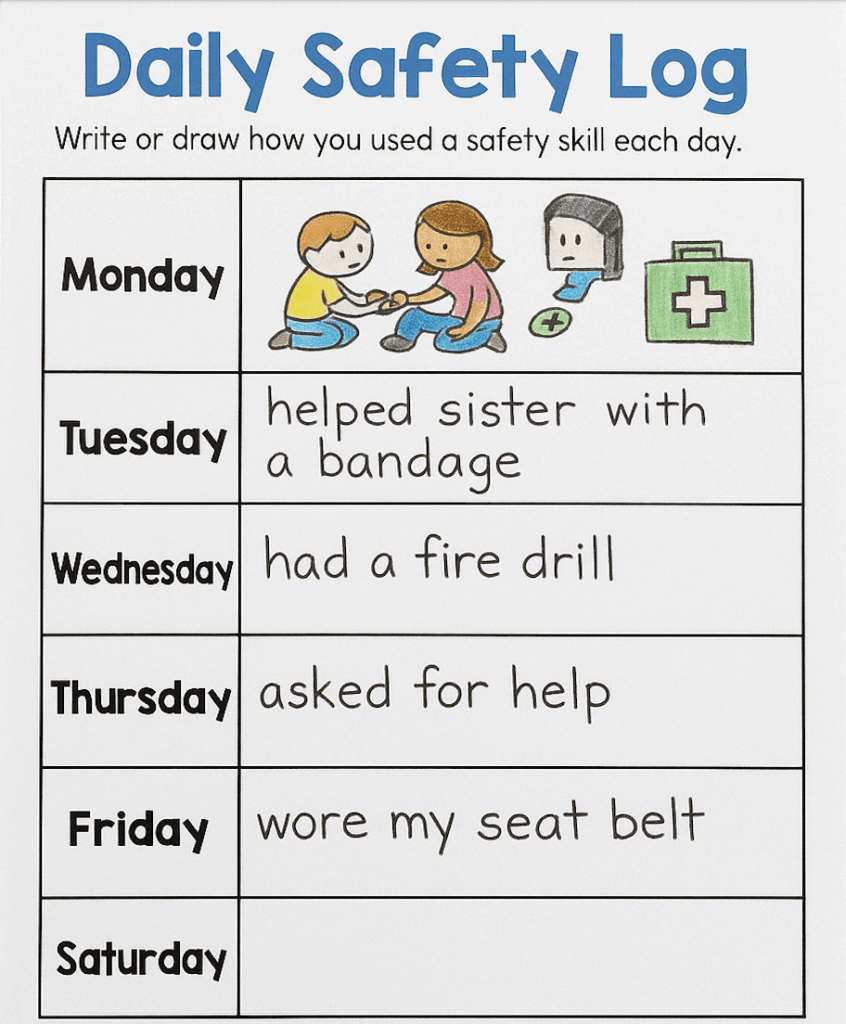
Example: A daily life skill log encourages students to reflect on how they used safety skills at home or school each day. This simple activity helps students think about safety as something they practice—not just something adults talk about once in a while.
2. Safety is taught through rules, not application
Kids are often told what not to do (“don’t talk to strangers,” “don’t run in the hall”), but they aren’t always shown what to do instead. They need modeling, movement, and hands-on ways to apply the skills.
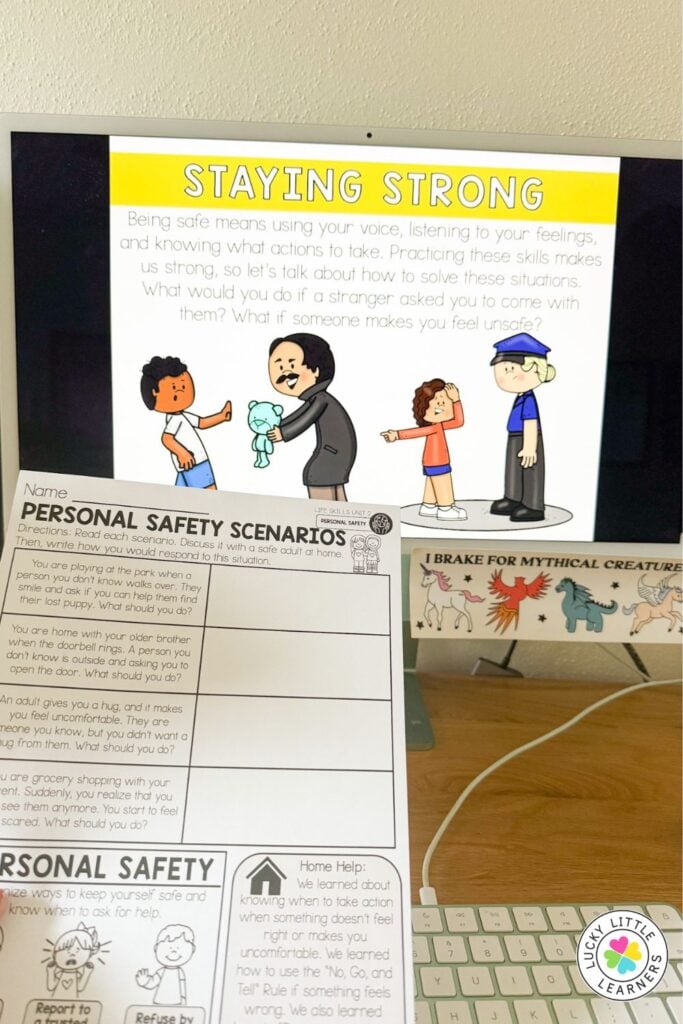
Example: Each teaching slide pairs a safety concept (like calling 911 or buckling up) with scenarios, images, and short, clear language, followed by an activity page to help them process and apply what they learned.
3. Safety is not reinforced with daily connections
Safety skills need regular reminders in different settings—not just one-time lessons. When students revisit a skill across subjects, stories, or routines, it sticks.
With read-aloud suggestions like What Does It Mean to Be Safe? and I Won’t Go with Strangers, plus writing prompts and discussion ideas, this unit keeps safety part of daily conversations.

The Secret to Teaching K-2 Safety Skills
If you want safety lessons to stick, they need to be more than one-off talks or fire drill prep. The key is helping students think about safety as part of their daily lives—something they understand, practice, and feel confident using.
And if you know safety belongs in today’s classroom but don’t have the time to plan it all yourself, we’ve got a fully prepped unit ready for you.
Lucky to Learn Life Skills Unit: Safety First
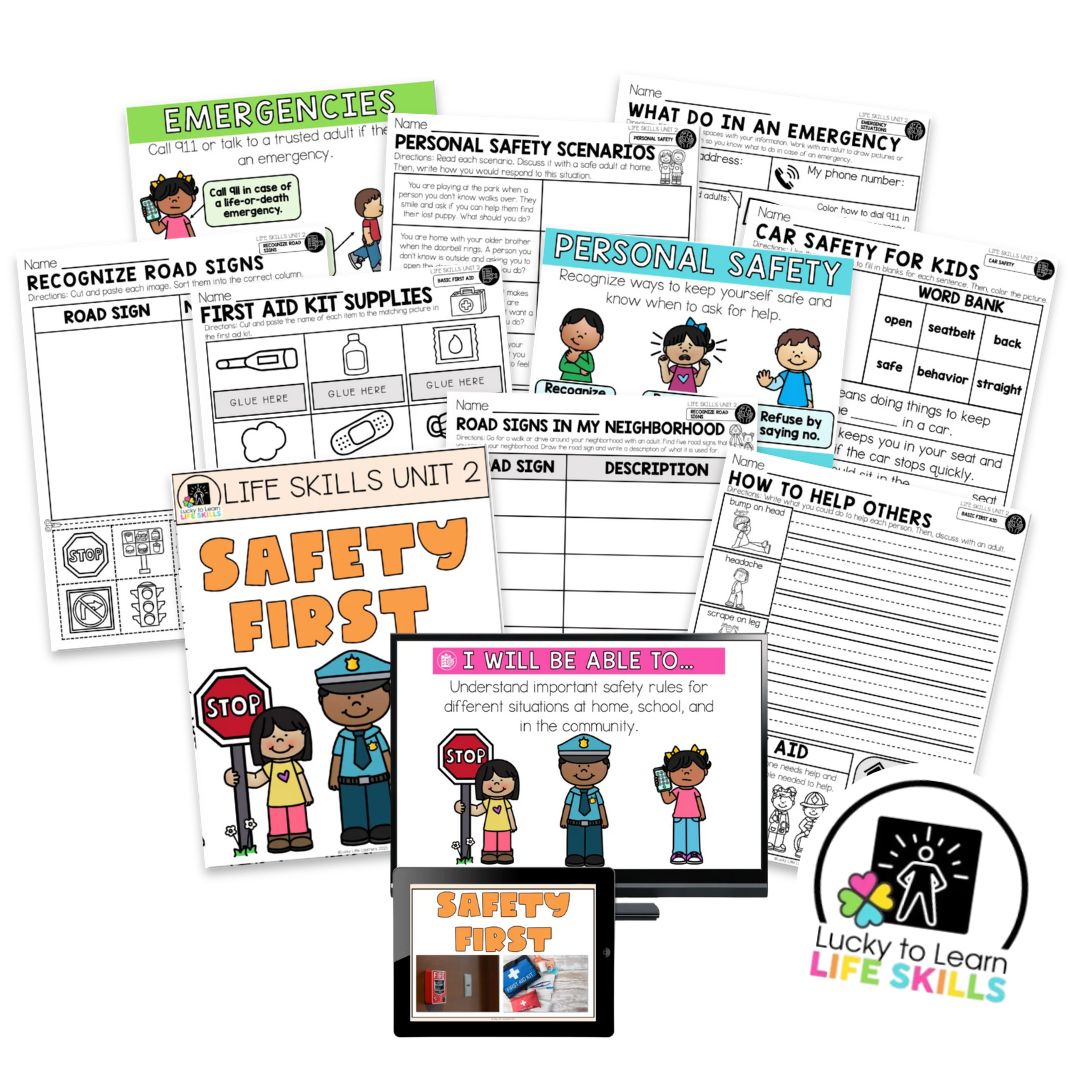
The Safety First unit was created to take the guesswork out of teaching essential safety skills. Each lesson helps kids build real-world understanding through repetition, reflection, and hands-on activities that make the learning stick.
No fluff. No fear-based language. Just age-appropriate, practical lessons that fit easily into your daily routine.
Skills Covered in This Unit:
- What to do in an emergency
- Fire safety
- Personal safety
- Basic first aid
- Recognizing road signs
- Car safety
What’s Included:
- Teaching slides for each topic
- Printable activities to reinforce every skill
- Read-aloud and video recommendations
- Optional at-home logs and simple extension ideas
Teaching Safety Shouldn’t Be a One-Time Talk
With this unit, you don’t need to build a new curriculum from scratch. Just plug it into what you’re already doing—morning meetings, transitions, or writing block—and your students will start building safety habits that last.
“I used the slides in my morning meeting, the activity during an awkward 20-minute time between lunch and specials, and then reflected on the skill as we prepped for dismissal at the end of the day—done and done and done!”
— Bella M., 1st grade teacher
Try it out first! Sign up for a trial and get 100 downloads for just $1!