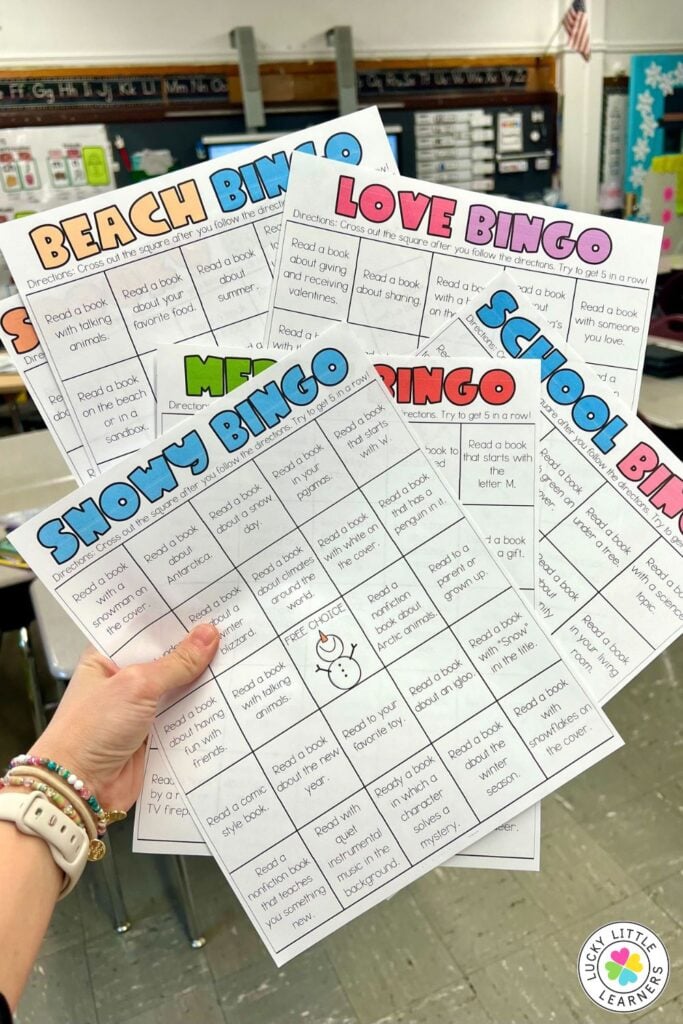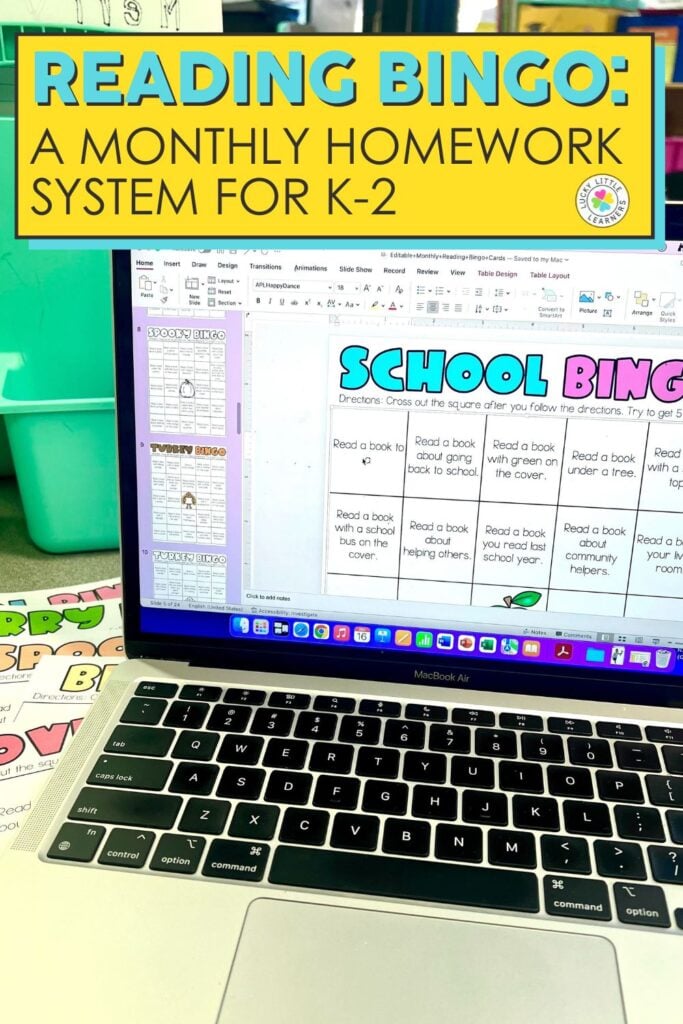
Tired of nightly reading logs and half-finished homework packets? A monthly reading BINGO board might be the change you and your students need!
1. What is Reading Homework BINGO and Why Use It?
- Simple concept: students complete reading challenges across a BINGO board for the month.
- Encourages choice, independence, and meaningful engagement with books.
- More developmentally appropriate than drill-style worksheets, especially for young learners.
- Builds home-school connection without overloading families.
- Promotes a lifelong love of reading over skill mastery.
Tip: Mention how this supports reading stamina, listening comprehension, and early fluency.
8. Why BINGO is Better Than Worksheets and Reading Logs for K-2
- Encourages real reading instead of rote practice.
- Builds choice and confidence.
- Helps teachers differentiate for a wide range of learners without adding more prep time.
- Reduces frustration for students and families alike.
2. How to Set It Up in Your K-2 Classroom
✔ For Kindergarten:
- Focus on listening to stories, identifying cover/title, retelling with pictures.
- Use icons or visuals instead of written directions.
- Activities like: “Listen to a story with a grown-up,” “Find a book with an animal,” “Tell a story using the pictures.”
✔ For 1st Grade:
- Include phonics-based tasks and simple comprehension.
- “Read a book and circle all the short ‘a’ words,” “Draw your favorite part,” “Read a book to a stuffed animal.”
✔ For 2nd Grade:
- Add more independent reading options and written reflection.
- “Read 2 books by the same author,” “Write a new ending,” “Read under a blanket fort.”
Tech tip: If using Google Classroom or Seesaw, you can assign a digital version or link a PDF.
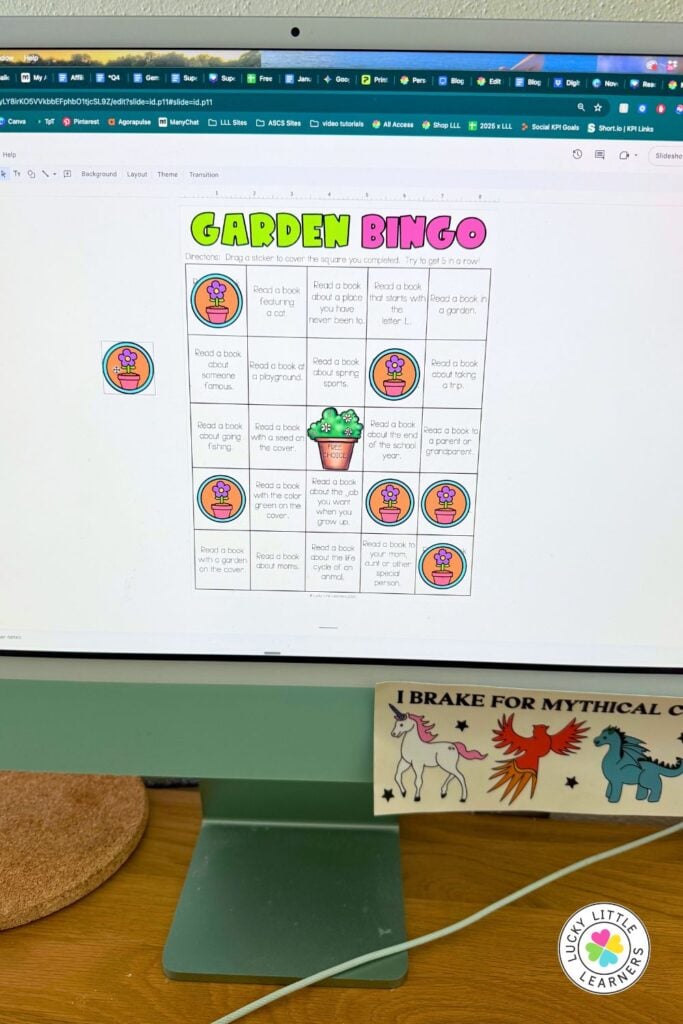
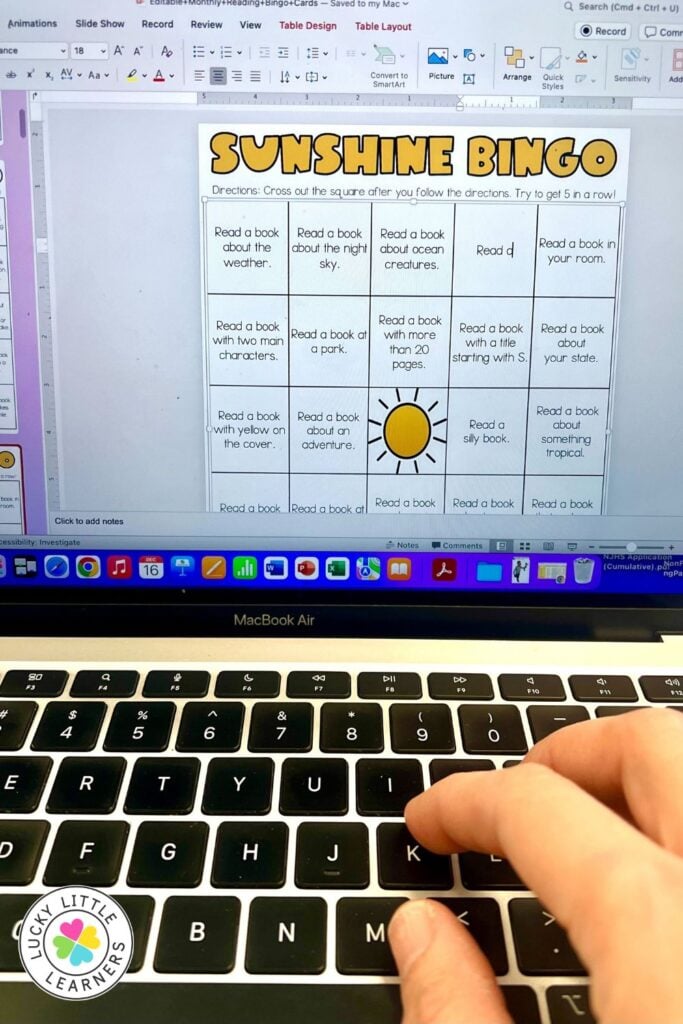
3. Step 1: Create a Bank of Reading BINGO Activities (By Season or Theme)
- Fall: “Read a book about leaves,” “Listen to a story while drinking cocoa.”
- Winter: “Read under a cozy blanket,” “Find a book about snow.”
- Spring: “Read outside,” “Read about animals that hatch.”
- Summer (for optional take-home): “Read at the park,” “Read to your pet.”
Categories to mix in for variety:
- Reading to someone / being read to
- Genre-specific (fiction, nonfiction, poetry)
- Location-based reading (under the table, outside, flashlight)
- Response activities (draw/write/tell)
- Reading apps or audiobooks
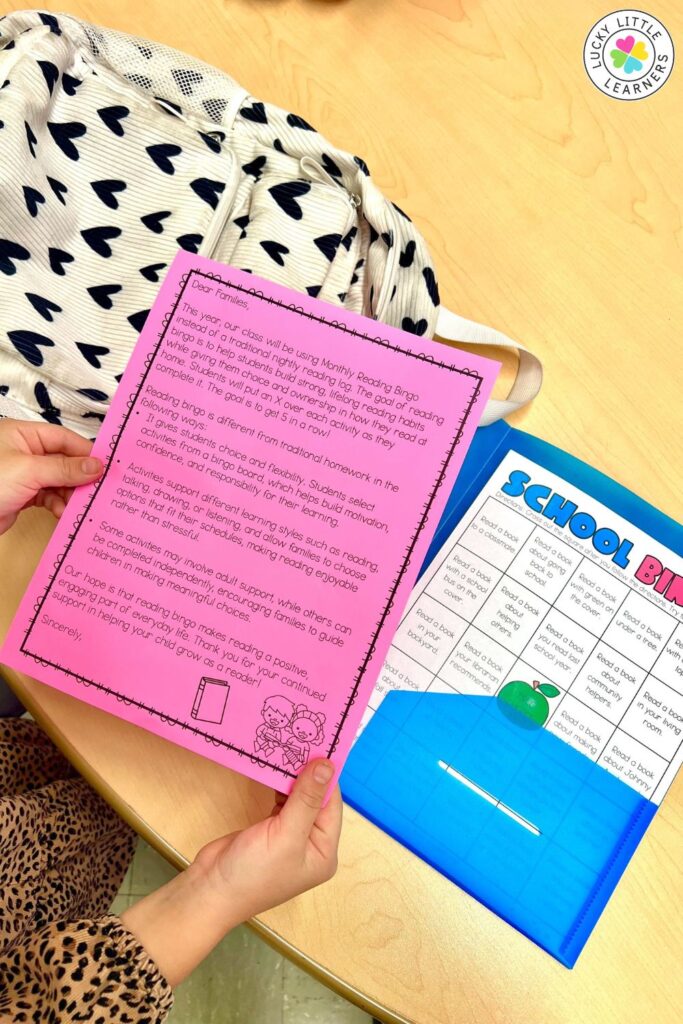
4. Communicating with Families & Getting Buy-In
- Send a short, friendly letter explaining:
- Why BINGO is a better option than traditional homework.
- How it builds reading habits and gives kids ownership.
- That not all activities require adult help.
- How it supports different learning styles and family schedules.
Bonus Tip: Offer a parent choice board with alternative ways to support reading at home (ex: letting a child read during dinner prep, listening to audiobooks in the car).
5. How to Hold Students Accountable
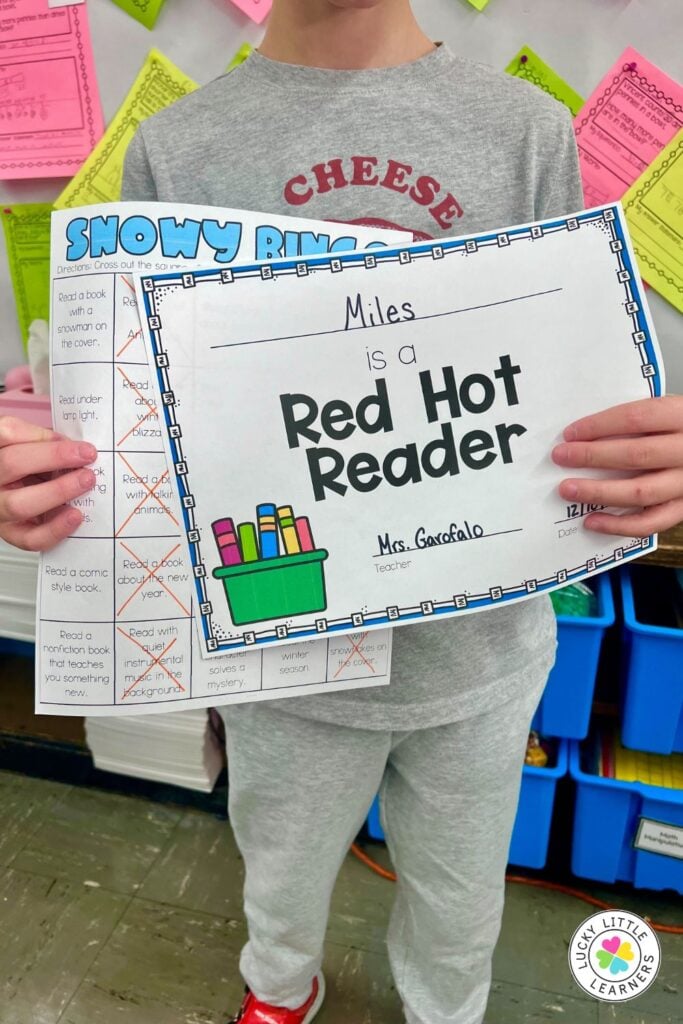
- Turn-in Day: Students bring in their board at the end of the month.
- Check off how many spaces completed—full BINGO? A row? Their choice?
- You can also use a sticker chart or Seesaw check-in for digital accountability.
6. How to Reward Completion (Without Bribery)
- Reading certificates, classroom shout-outs, extra library time.
- Let students pick the next month’s reading challenges (adds buy-in!).
- Send a “Reading Star” note home.
7. What About Students With Limited Home Support?
- Offer alternatives like:
- Listening to an online story at school.
- Completing 1 or 2 challenges during quiet time or centers.
- Letting them use a buddy reader system or record themselves reading.
Examples of Meaningful Reading BINGO Tasks (Differentiated by Learning Type/Interest):
| Type of Learner | Reading BINGO Example |
|---|---|
| Visual Learner | Draw your favorite part of a book |
| Auditory Learner | Listen to a story online & tell what you heard |
| Kinesthetic Learner | Act out a scene from your book |
| Emerging Reader | Find and point to the title on 3 different books |
| Advanced Reader | Compare two characters from different books |
Call to Action (CTA):
Ready to save time and start strong? Join All Access to download our done-for-you Monthly Reading Homework BINGO boards, ready to print or assign digitally!
Grab them here.