If you’ve ever tried to help a five-year-old remember their phone number or recite their address, you know it takes more than just saying it once. Teaching young children their personal information—like full name, birthday, address, and phone number—is one of the most important safety and independence skills we can give them. But it can be tricky to make it stick, especially when you’re juggling so much else in the classroom.
The good news? With the right strategies—and a resource that breaks it down step by step—it doesn’t have to feel overwhelming. In this post, we’ll walk through when and how to teach address and phone number in K–2, what works best for memory, and why it matters for safety, confidence, and life skills development.
What age should a child learn their address and phone number?
Most children can start learning basic personal information like their full name, address, and phone number around age 5 to 7. By kindergarten and first grade, they’re ready to understand that this information helps others know who they are, where they live, and how to reach a trusted adult if needed.
But—memorization at this age needs to be repetitive, visual, and hands-on, especially for students who are still developing number sense, letter knowledge, or oral language skills.
Why is learning your address and phone number so important in early childhood?
Teaching kids their personal information helps with:
- Safety – Knowing their phone number or address in an emergency
- Confidence – Feeling secure in who they are and where they belong
- Independence – Being able to respond to questions from trusted adults
- Responsibility – Understanding the value of information that belongs to them
It also lays the groundwork for more complex life skills like organization, planning, and communication, which are covered in the units of the Lucky to Learn Life Skills curriculum.
How do you teach a child their phone number?
Memorizing a phone number can be a challenge for young learners, but it doesn’t have to be boring—or frustrating. These strategies turn memorization into play, movement, and pattern, helping students feel successful and excited.
Sing it like a song
Rhythm makes information more memorable. Break the phone number into smaller chunks and create a chant or melody your class can repeat each day.
Example:
Try this rhythm during morning meeting or transition time:
“123 (clap, clap) – 456 (stomp, stomp) – 7890 (snap, snap)”
You can even use a familiar tune like “Twinkle, Twinkle” or “Happy Birthday” to make it more engaging.
Use a pretend phone
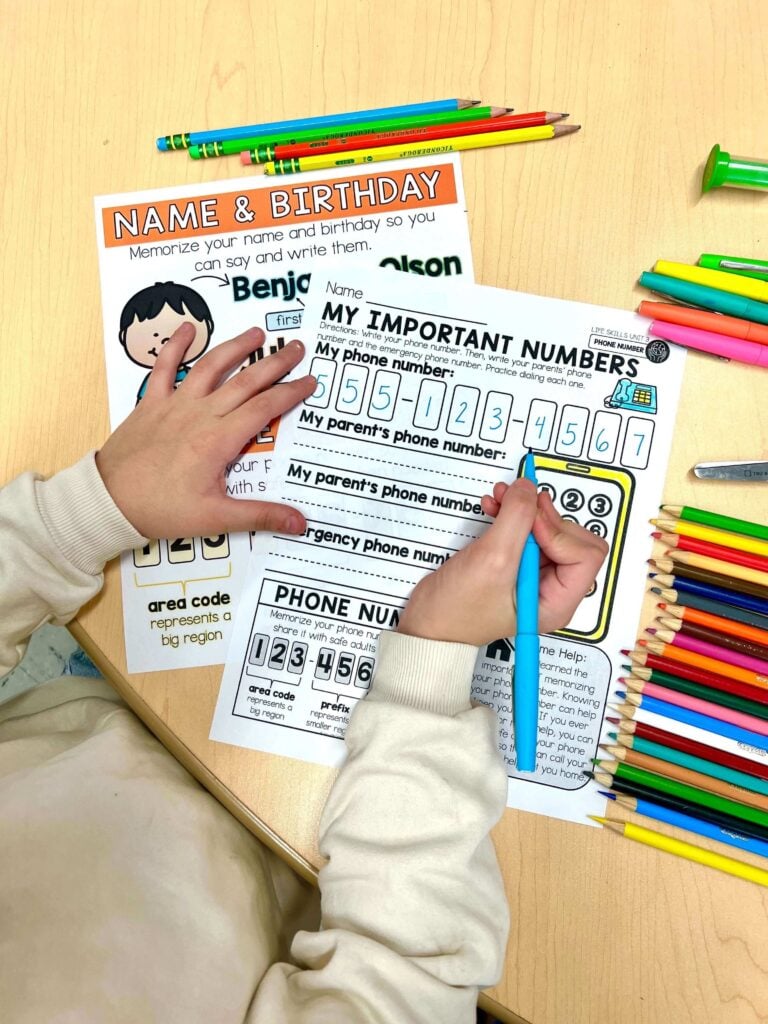
Give students a paper phone keypad or laminate one for center use. Let them “dial” their number as they say it out loud. This taps into muscle memory and builds number order.
Try this:
Set up a small “Phone Practice Station” where students can practice calling their number during center time or free choice.
Build with number tiles or cubes
Use magnetic numbers, snap cubes with numbers written on them, or small cards to build the phone number in order.
Why it works:
Physically manipulating the digits reinforces number recognition, sequencing, and attention to detail—all skills that support memorization.
Add a twist:
Mix up the number tiles and have students reassemble their phone number like a puzzle.
Add movement
Kinesthetic learners benefit from connecting motion with memory. Assign a movement to each number or chunk to keep it fun.
Ideas to try:
- Jump once for each digit
- Clap on each number
- March in place while chanting
- Bounce a ball as you say each part of the number
You can even create a whole-body routine—jump for the area code, spin for the next three digits, and freeze for the last four!
In the Lucky to Learn Life Skills: IDENTITY & INFORMATION unit, you’ll find activity pages and hands-on ideas that introduce these strategies in a calm, repetitive way that works for a whole class or small group.
Fun fact: Phone numbers were designed for memory
The “7-digit rule” comes from research that suggests most people (even adults) can easily memorize 5–9 pieces of information at a time. For younger students, especially in early grades, breaking a phone number into three parts and using repetition + movement helps them hold onto it longer.
Here’s a quick chant idea:
“123 (clap, clap), 456 (stomp, stomp), 7890 (jump, jump!)”
How can I help my students remember their address?
Memorizing an address can be tricky for early learners—it involves numbers, sequencing, and unfamiliar vocabulary (like “Street” or “Avenue”). But with the right supports and lots of repetition built into your routine, even young students can master it. Here are teacher-tested strategies that make learning an address meaningful, visual, and fun:
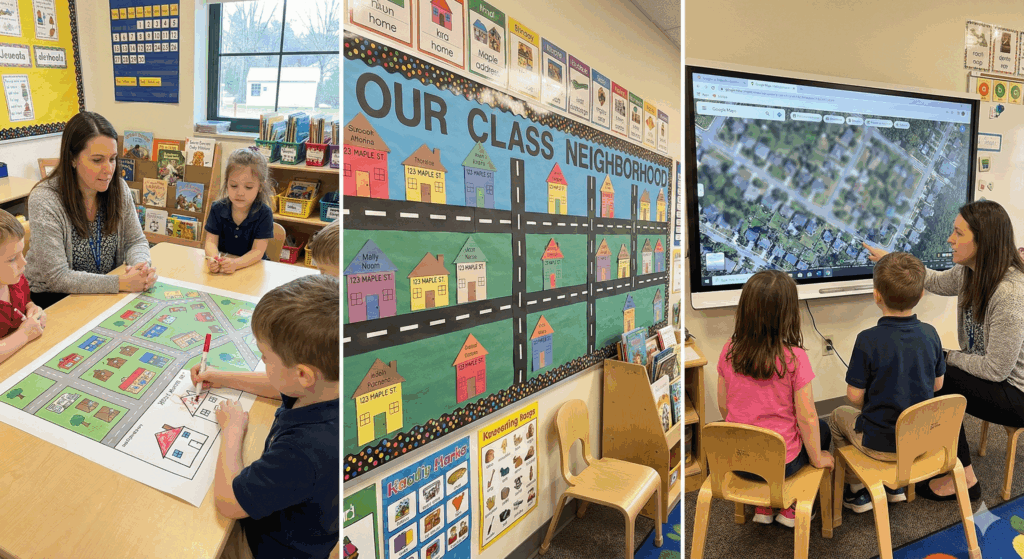
Use visual maps
Help students connect their address to a real or pretend map. You can:
- Print a simple town or neighborhood layout and have students mark where their house would be.
- Create a class “neighborhood” wall with paper roads, and let each student add a mini house with their name and address.
- Use Google Maps (with caution and privacy) to show general layouts of streets, helping students visualize how their house fits into a bigger picture.
This builds spatial understanding and reinforces directional language.
Write it daily
Repetition is key. Add address writing to your morning work, handwriting practice, or writing journals once or twice a week.
Options for differentiation:
- Traceable address lines for emerging writers
- Blank lines for independent practice
- Label parts of the address (street number, street name, city, state, ZIP)
This also builds confidence in writing mechanics while reinforcing personal information.
Draw their house
Let students illustrate their home and label it with their address. You can:
- Use drawing time or SEL journaling to have students sketch their home, adding numbers and street signs.
- Provide cut-and-paste shapes for building paper houses and writing the address on the front like a mailbox.
Why it works: Connecting their address to a familiar image makes the abstract more concrete.
Repeat it in partner chats
Give students regular chances to say their address out loud, ideally to a partner or small group. This could happen:
- During morning meeting pair shares
- As part of a “Tell Me Something About You” routine
- In centers, where students role-play introducing themselves or giving their info
Saying the address in a low-pressure setting boosts oral language and memory.
Turn it into a chant or cheer
Chants and cheers add rhythm, movement, and fun. Try:
- Clapping for each word or number in the address
- Marching in place as they say their street, city, and state
- Creating a class “address song” for review time
Pair this with music during transitions or end-of-day routines for extra exposure.
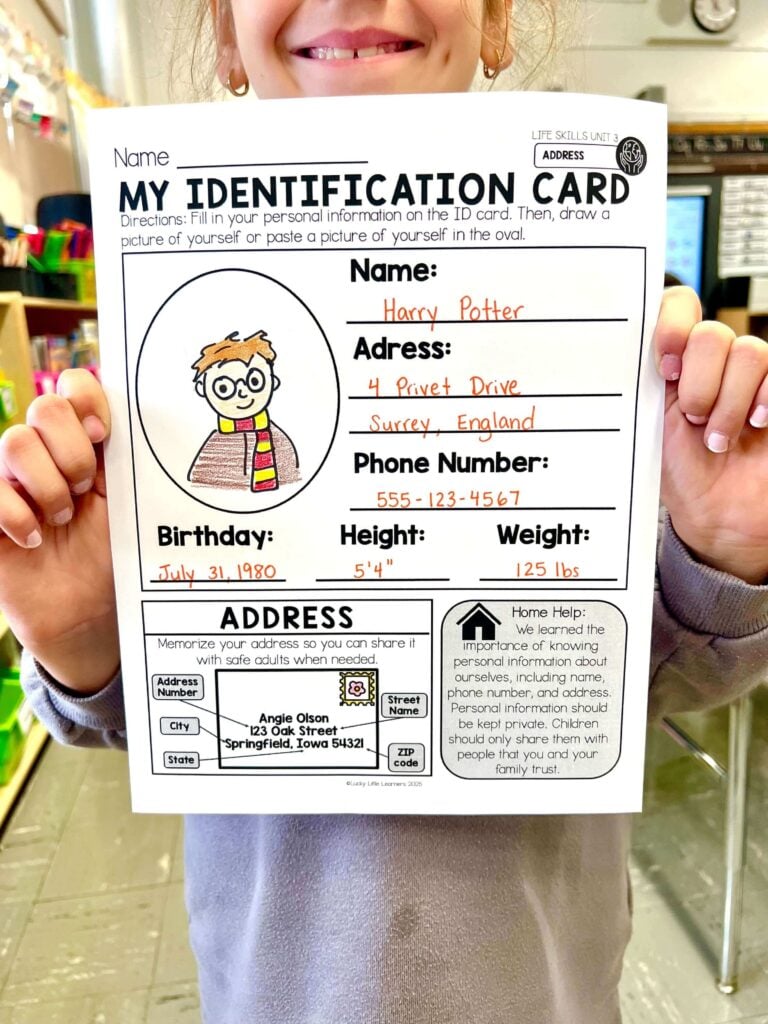
Create ID cards
Give each student a personal “My Info Card” to keep in their backpack, homework folder, or desk. Include:
- Full name
- Birthday
- Phone number
- Full address (including city and ZIP)
You can laminate the cards and attach them to lanyards, clipboards, or pencil boxes. For students who are still learning, this becomes a daily reference tool and a way to reinforce what they’re practicing.
What’s the best way to teach personal information without overwhelming kids?
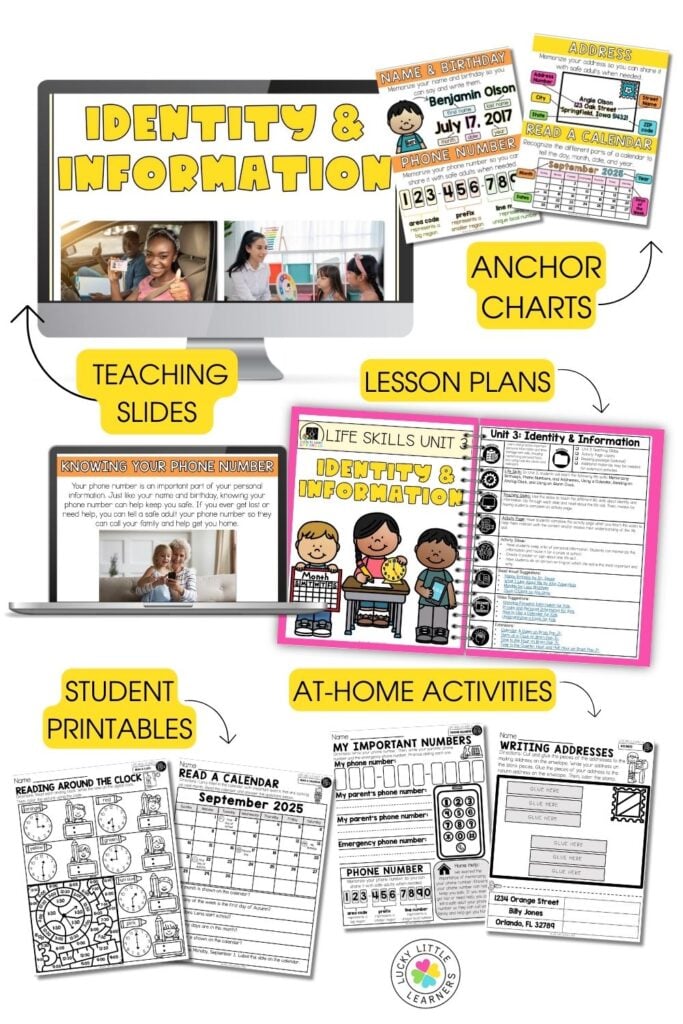
Keep it simple, routine-based, and multi-sensory. The Lucky to Learn Life Skills: IDENTITY & INFORMATION unit does exactly that.
Included in this ready-to-teach resource:
- Teaching slides to introduce concepts
- Activity pages for name, address, and phone number practice
- Calendar and clock connections for teaching time tools
- Read-aloud and video links for deeper learning
- Extension ideas that work across content areas
Including lessons and activities for:
- Memorizing birthdays, phone numbers, and addresses
- Using a calendar to understand days, weeks, and months
- Reading an analog clock and building time awareness
- Learning how to use an alarm clock as a tool for independence
These are the kinds of foundational skills that help young learners navigate daily life with more confidence—and they’re presented through visual supports, interactive practice, and simple routines that fit into what you’re already doing.
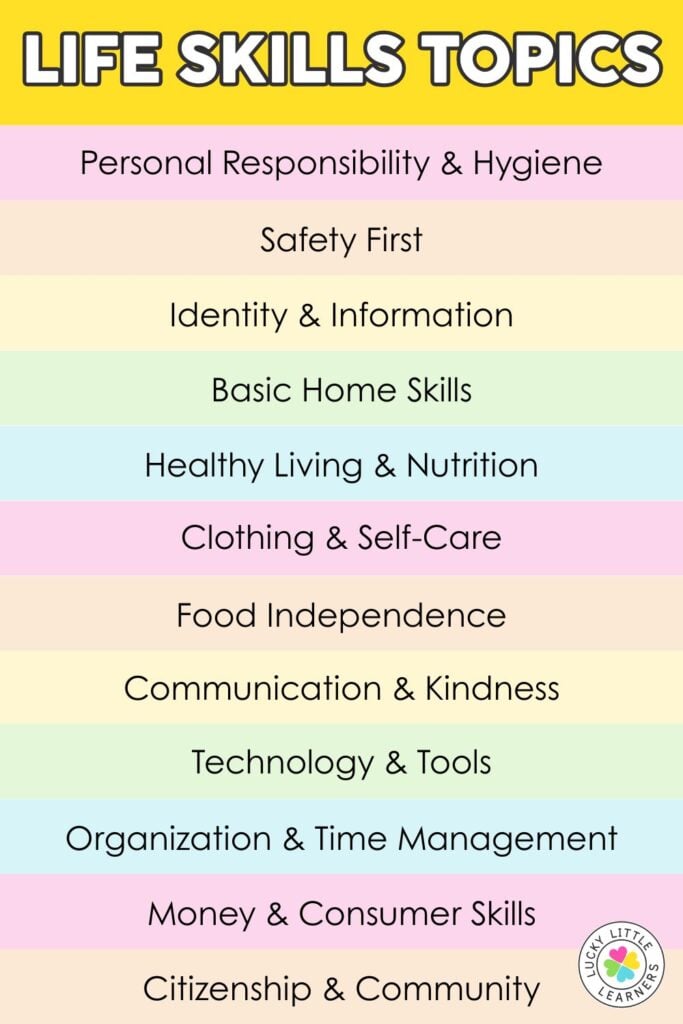
The greatest gift: Teach ALL the life skills
If you’re building out a full-year life skills plan, this is just one of 12 units—all designed to help you teach the things that truly matter.
Where can I find lessons and materials to teach personal information in K–2?
Try Lucky to Learn Life Skills out in your classroom today!
[/et_pb_text][/et_pb_column]
[/et_pb_row]
[/et_pb_section]