
Morning messages are short prompts, questions, activities, or written tasks that help students start the day with connection, conversation, and learning. They can be used during morning meeting to build classroom community, review academic skills, support social-emotional learning, and give students a predictable way to begin each school day. These morning message ideas are simple, low-prep options for elementary classrooms.
The classroom morning meeting is one of the most important parts of the school day. It is where students can share, connect, listen, laugh, and learn! A great morning meeting sets the tone for the day. Using a morning message is a fun way to engage your students and build community.
In this post, you’ll find:
- 10 easy morning message ideas for elementary students
- Morning meeting prompts that build classroom community
- Quick ways to add reading, writing, math, and SEL to your morning routine
- Low-prep ideas teachers can use right away
- Morning message activities students can answer verbally, on sticky notes, or in journals
Head to this article for different morning meeting routines to try.
1- Check-in Question
Start each day with a thoughtful check-in question. A check-in question can be a great ice-breaker for students as they form connections with their classmates. Need ideas for meaningful class discussion topics? Check out our Morning Meeting Slides! With 180 slides and printable discussion cards, thinking of a morning message has never been easier!
Why it works: Check-in questions help students practice listening, speaking, and making personal connections with classmates.
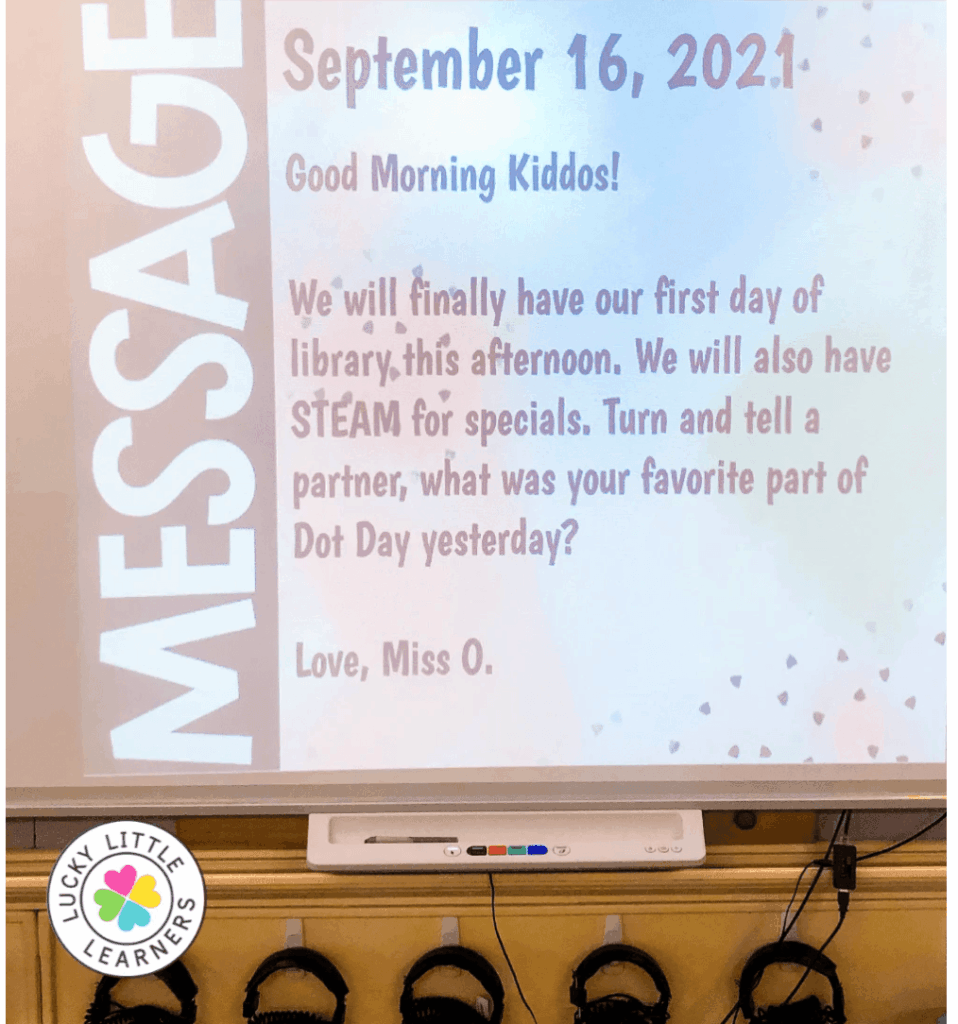

2- Let’s Vote!
Have your students respond to a poll question for the morning message. Tally the votes, and discuss the responses. Here are a few ideas for morning message polls. Use these to get started, or create your own!
Why it works: Voting questions give every student a simple way to participate while building oral language, opinion sharing, and classroom community.

3- Poems
Feel the rhythm, feel the rhyme, come on class, it’s morning message time! Share a short poem as the morning message. Ask students to share their thoughts, feelings, and observations about the poem.
Need poems? Try projecting one of our phonics poems!
Why it works: Poems support fluency, phonemic awareness, vocabulary, and discussion in a quick and engaging format.

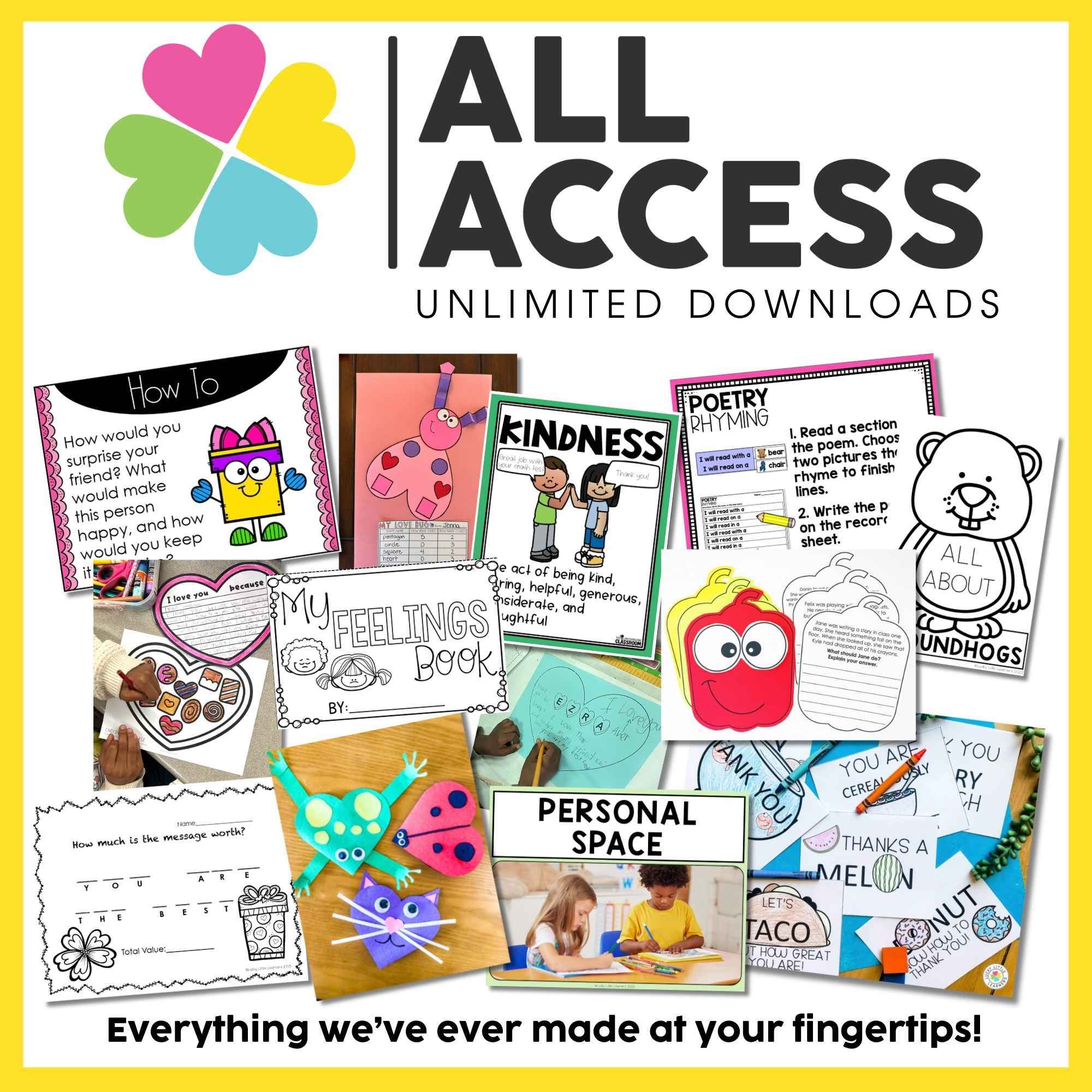
Get the morning meeting slides, poems, jokes, writing prompts, and more for $1!
Start a 7 day All Access trial to download all the activities in the post and make your morning message routine easier to plan.
4- Jokes and Riddles
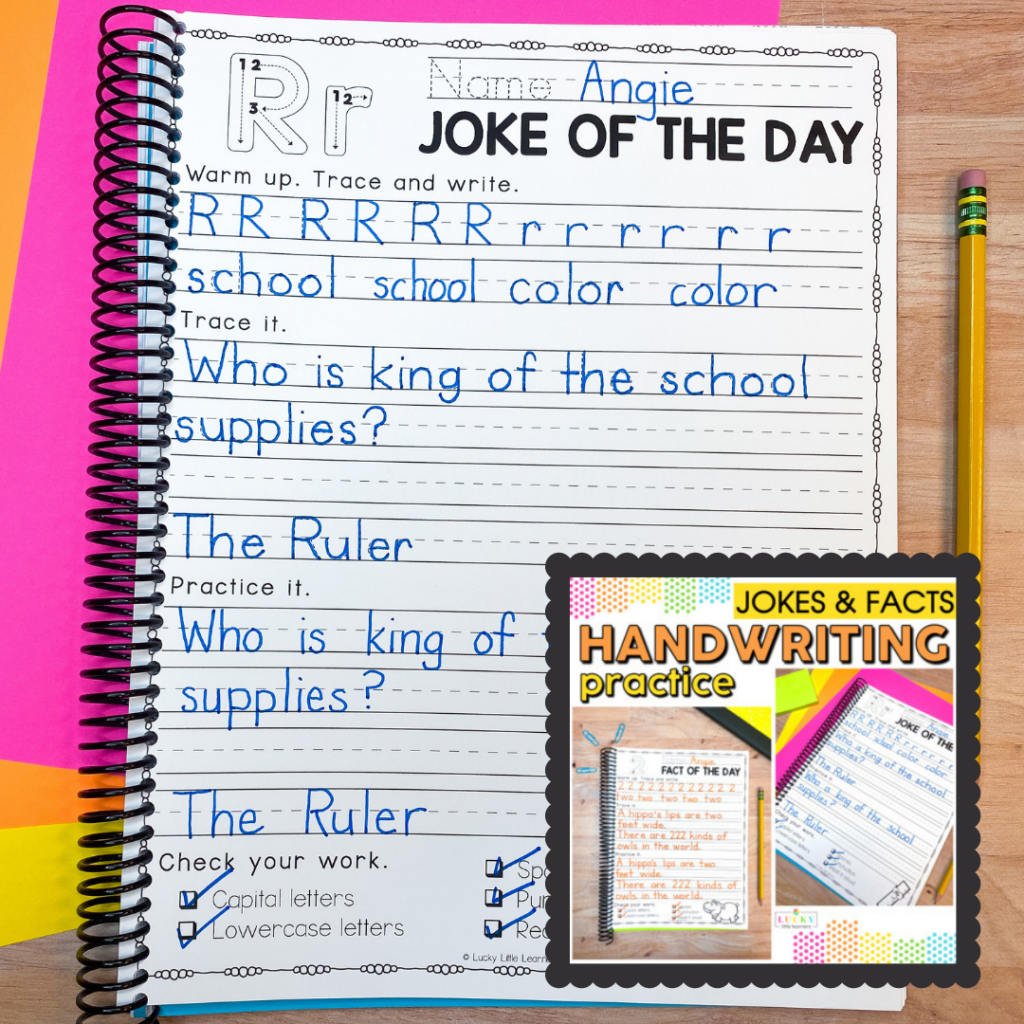
Start the day off with a laugh! Write a joke or riddle of the day for the morning message. Students will have fun trying to figure out the answers! Need any ideas for silly, side-splitting jokes? Check out our list of Jokes and Riddles for 2nd Grade! Tie this into handwriting practice with our jokes cursive, d’nealian, or manuscript handwriting sheets.
Why it works: Jokes and riddles encourage flexible thinking, vocabulary development, and problem-solving while helping students start the day with a smile.

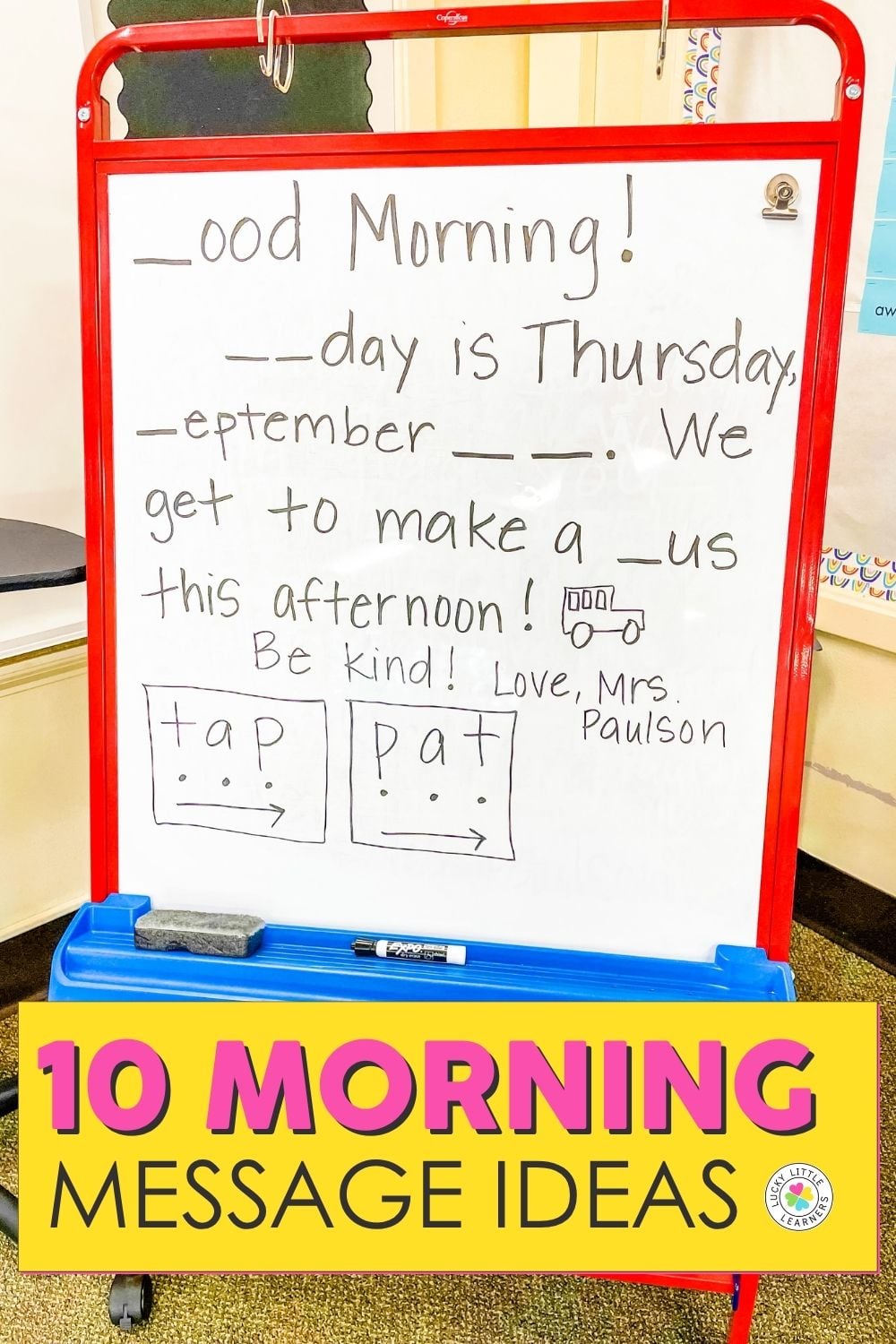
5- Fill in the Blank
The morning message can be a useful time to quickly review language arts concepts. Write the morning message on the board, but leave a few items blank – initial letters, word endings, and punctuation are a few ideas. Have students copy the message and fill in the blanks, or fix the message together as a class.
Why it works: Fill-in-the-blank messages give students a quick, meaningful way to review phonics, grammar, spelling, punctuation, and sentence structure.

Teacher Tip: Keep your morning message routine predictable, but change the response format throughout the week. For example, students might answer verbally on Monday, vote with sticky notes on Tuesday, complete a fill-in-the-blank message on Wednesday, respond in journals on Thursday, and share an SEL check-in on Friday.
6- Venn Diagram
A Venn Diagram is a graphic organizer that many students recognize. Why not add it to your morning meeting? Have each student write one thing in the Venn Diagram as school begins. Some ideas for class Venn Diagram morning messages:
Why it works: Venn diagrams help students compare, contrast, and categorize ideas in a visual way.


7- Graph It!
Like the poll questions above, you can use a graph to add some excitement to the morning message! Ask students a poll question, and have them place a sticky note above their choice. Then, arrange the sticky notes to create a pictograph or bar graph.
Why it works: Graphing morning message responses adds math practice to your routine while helping students interpret data from their own classroom.

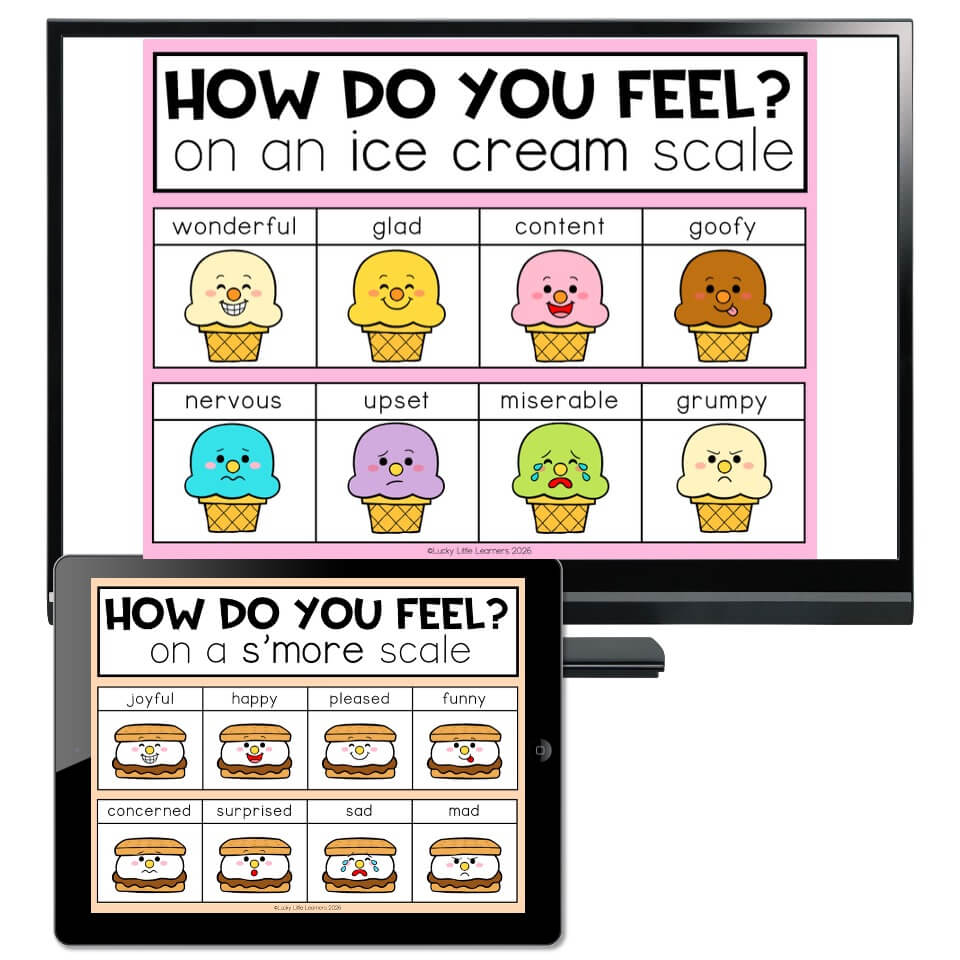
8- SEL Check-In
Morning meetings are now more important than ever. Many teachers use a morning message as part of a social-emotional learning curriculum. Asking important questions and sharing positive stories can help students express their needs and feelings. A morning message as simple as “How are you feeling today?” can start a much-needed discussion.
Why it works: SEL check-ins help students name their feelings, share their needs, and build emotional awareness at the start of the day.

9- Collaborative Picture
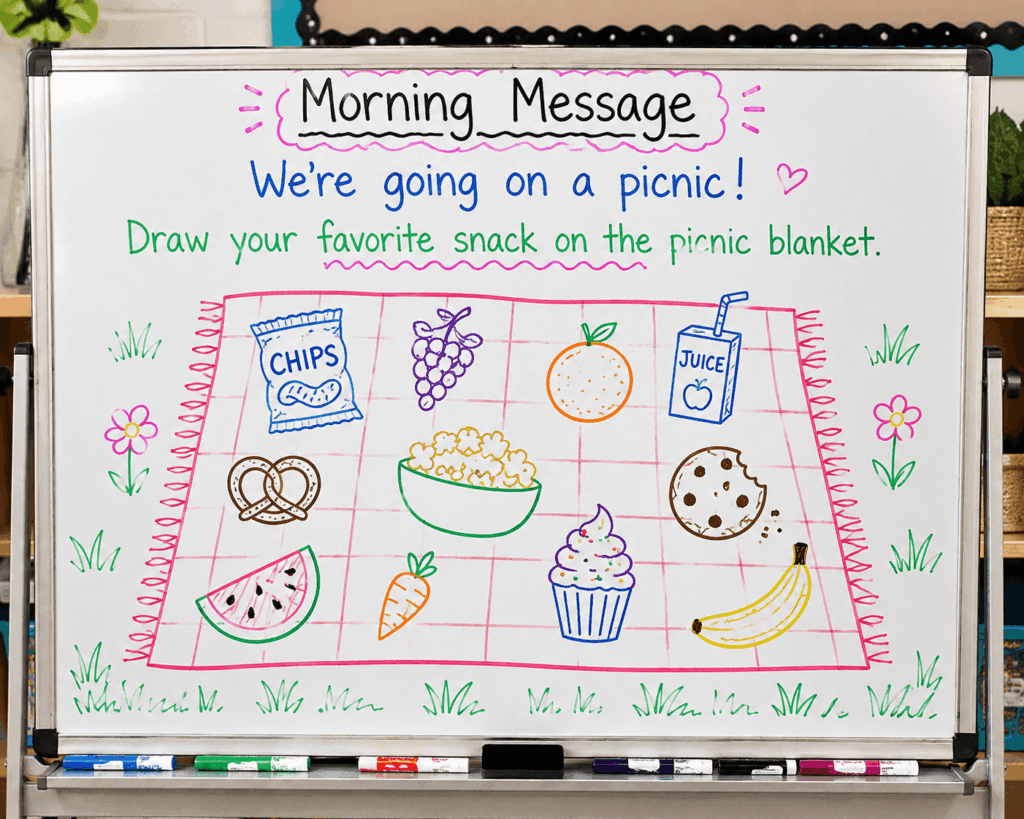
Do you have students who are reluctant to share their morning message response, in either words or writing? If so, try a class collaborative picture! Draw a simple image on the board, and have each student add another element to the picture. Some ideas for a class collaborative picture:
Why it works: Collaborative drawing gives reluctant writers and speakers a low-pressure way to participate in the morning message.
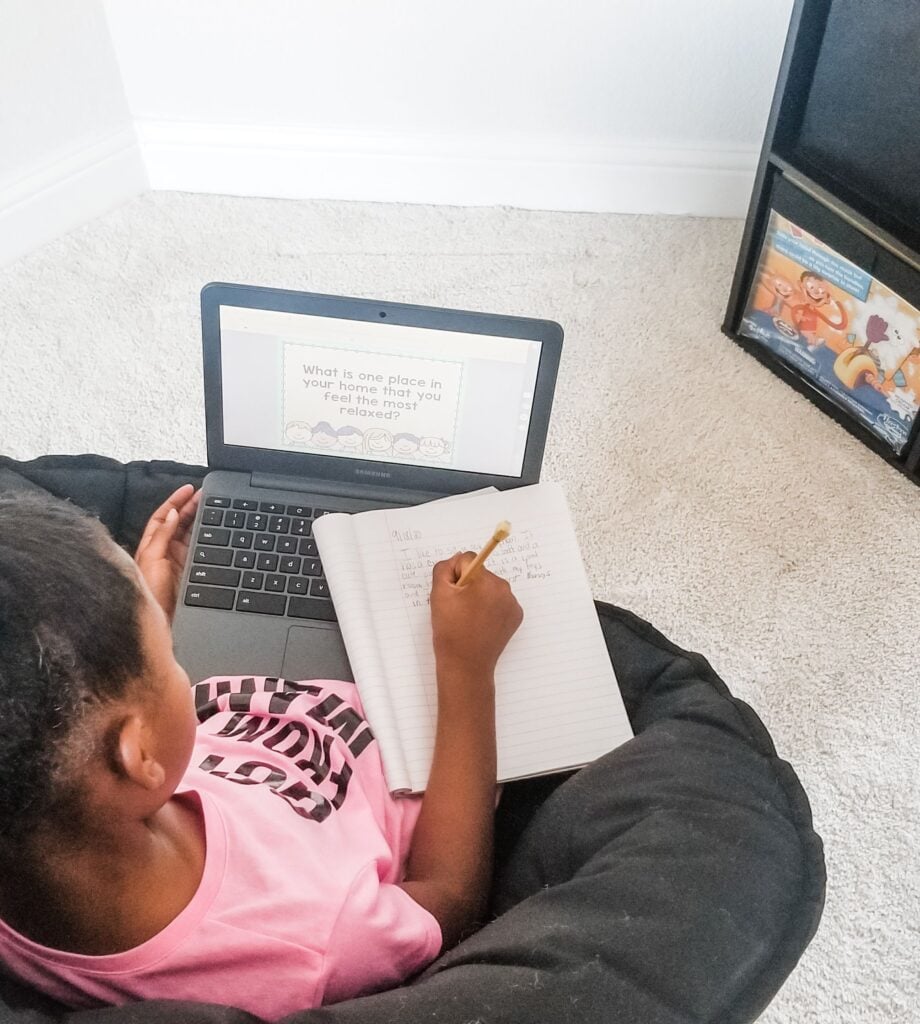
10- Morning Message Response in Journals
Tight on time? Change in the schedule? Unexpected event? We get it – the morning meeting might not always run smoothly – and that’s OK! After the class has read the morning message, take the topic to the next level! Students can respond to the morning message in their journals, and discuss it together later when there is more time. Print Morning Message Slides and use them as writing prompt cards, too!
Why it works: Journal responses extend morning message time into writing practice and give students a quiet way to organize their thoughts.

Want to see morning message ideas in action?
Let Katie from Team Lucky Little Learners show you each of these morning message ideas (plus a couple other ideas) and how to implement them easily into your classroom.
No matter what approach you take to the morning message, one thing is clear – a consistent morning message routine is so important! Allowing students the opportunity to freely think, question, and express themselves will help build trust and community in the classroom. Have fun with these new morning message ideas! Have you tried any of these suggestions yet? Tell us in the comments below what makes your morning message special!
Ready to make morning message planning easier?
Start a 7 day All Access trial to download all the morning message activities, slides, poems, writing prompts, and classroom resources featured in this post.
2 Responses
Thank you for the program, it’s so helpful.
Thank you! It is helpful to have the visual as well.