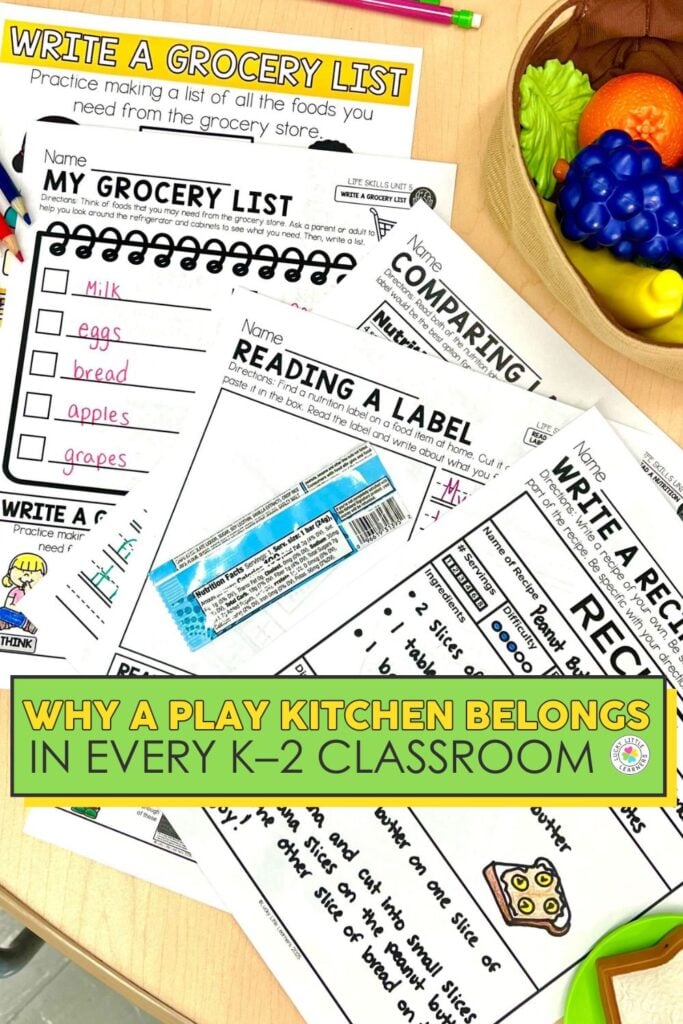
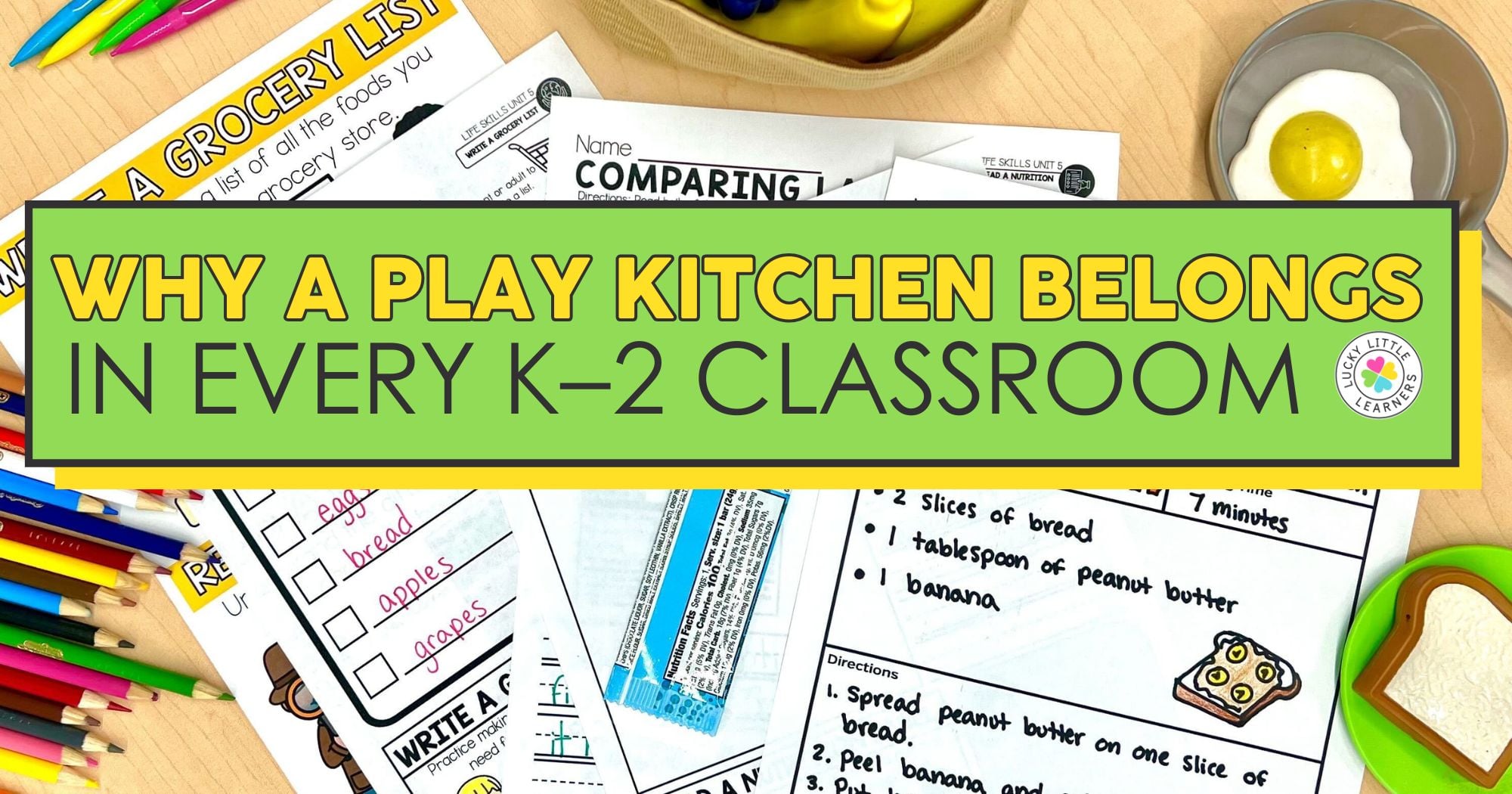
Looking for an easy way to teach nutrition, writing, and math in one learning center? A classroom play kitchen might be your best teaching tool, and it doesn’t take a single new lesson plan!
In this post, you’ll learn how to use a dramatic play kitchen to:
- Teach real-life health and nutrition skills
- Reinforce math, reading, and writing standards
- Keep your K–2 students fully engaged—without adding more to your plate
Here’s What You’ll Learn:
- How pretend play supports academic + life skills
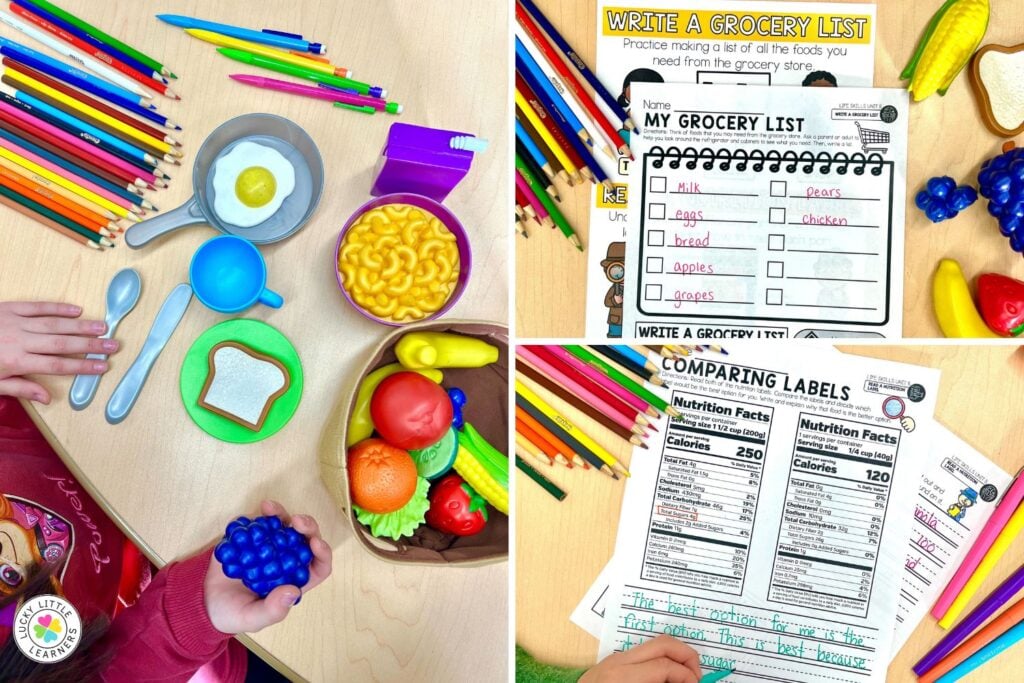
- How to set up a pretend kitchen (or grocery store) with low-prep tools
- Ways to sneak in cross-curricular learning
- When and how to use this during your school day
- Easy-to-use printables from our Healthy Living & Nutrition Life Skills Unit
Why a Play Kitchen Is the Most Overlooked Academic Center in K–2
“But it’s just play, right?”
Actually, it’s foundational learning disguised as play. Research shows that pretend play boosts early childhood development including language, planning, and self-regulation—and is a natural fit for reading, writing, and math skills.
A pretend kitchen or grocery store lets kids:
- Read functional print (recipes, nutrition labels)
- Write lists and instructions (grocery lists, meal plans)
- Use math (prices, item counts, categorizing foods)
- Practice teamwork, listening, and turn-taking
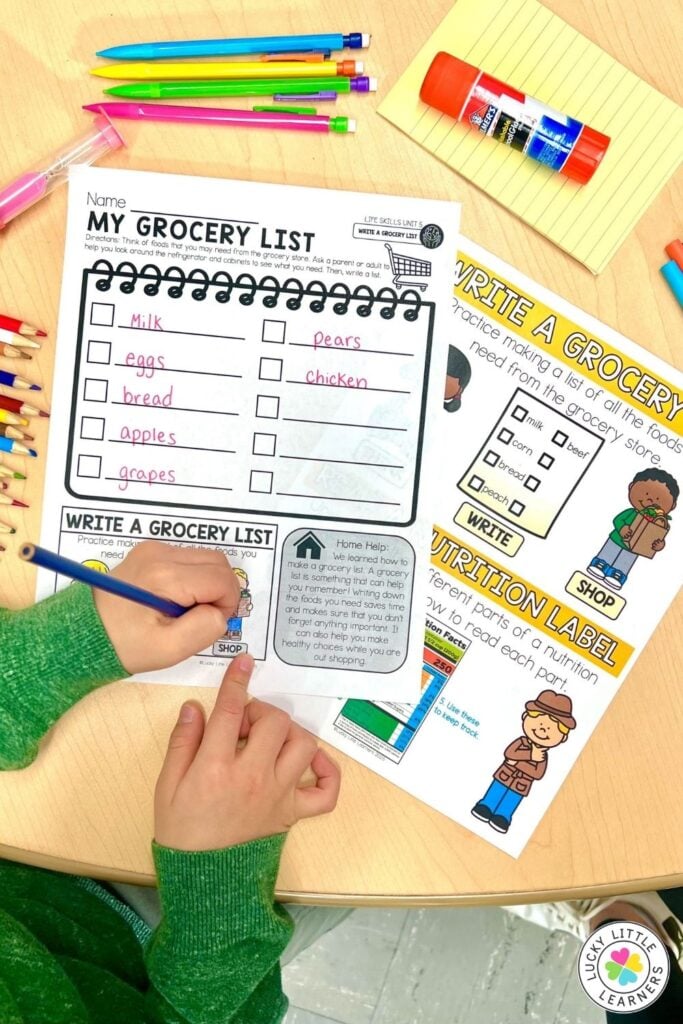
What Materials Do I Need to Set Up a Pretend Kitchen or Grocery Store?
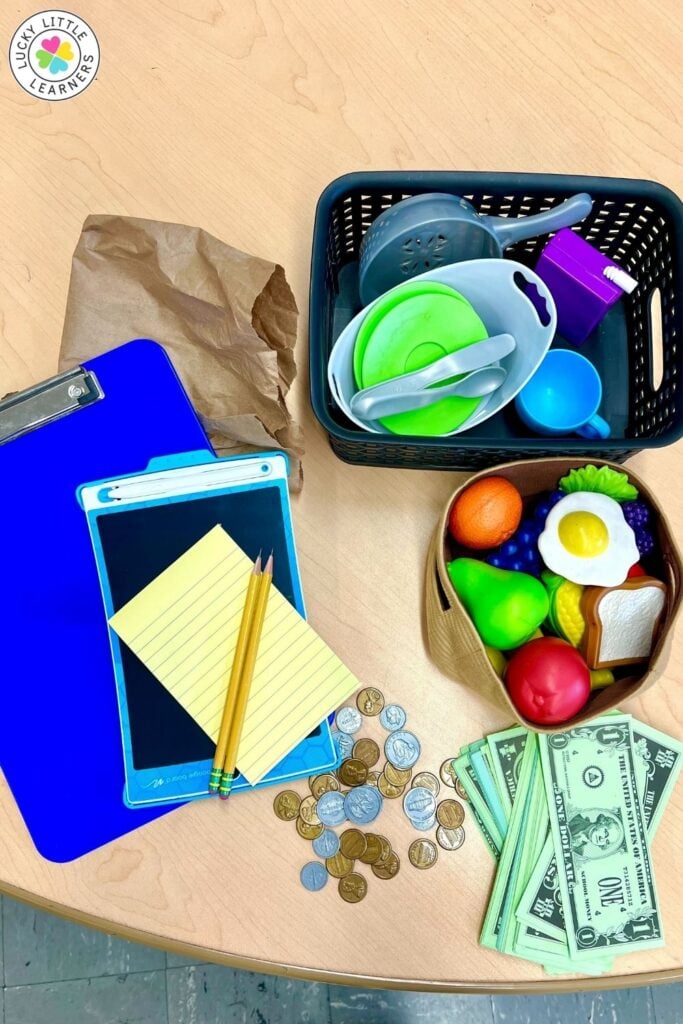
Keep it simple. Most of what you need is already in your recycling bin!
| Essentials | Optional Add-ons |
|---|---|
| Empty food boxes/containers | Clipboards or menus |
| Plastic food or paper printables | Play money and baskets |
| Grocery list templates | Laminated recipe cards |
| Anchor charts or labels | A “microwave” made from a cardboard box |
One Quick Tip: Create a bin of reusable props labeled “Chef’s Corner” so kids can help set up and put away materials themselves.
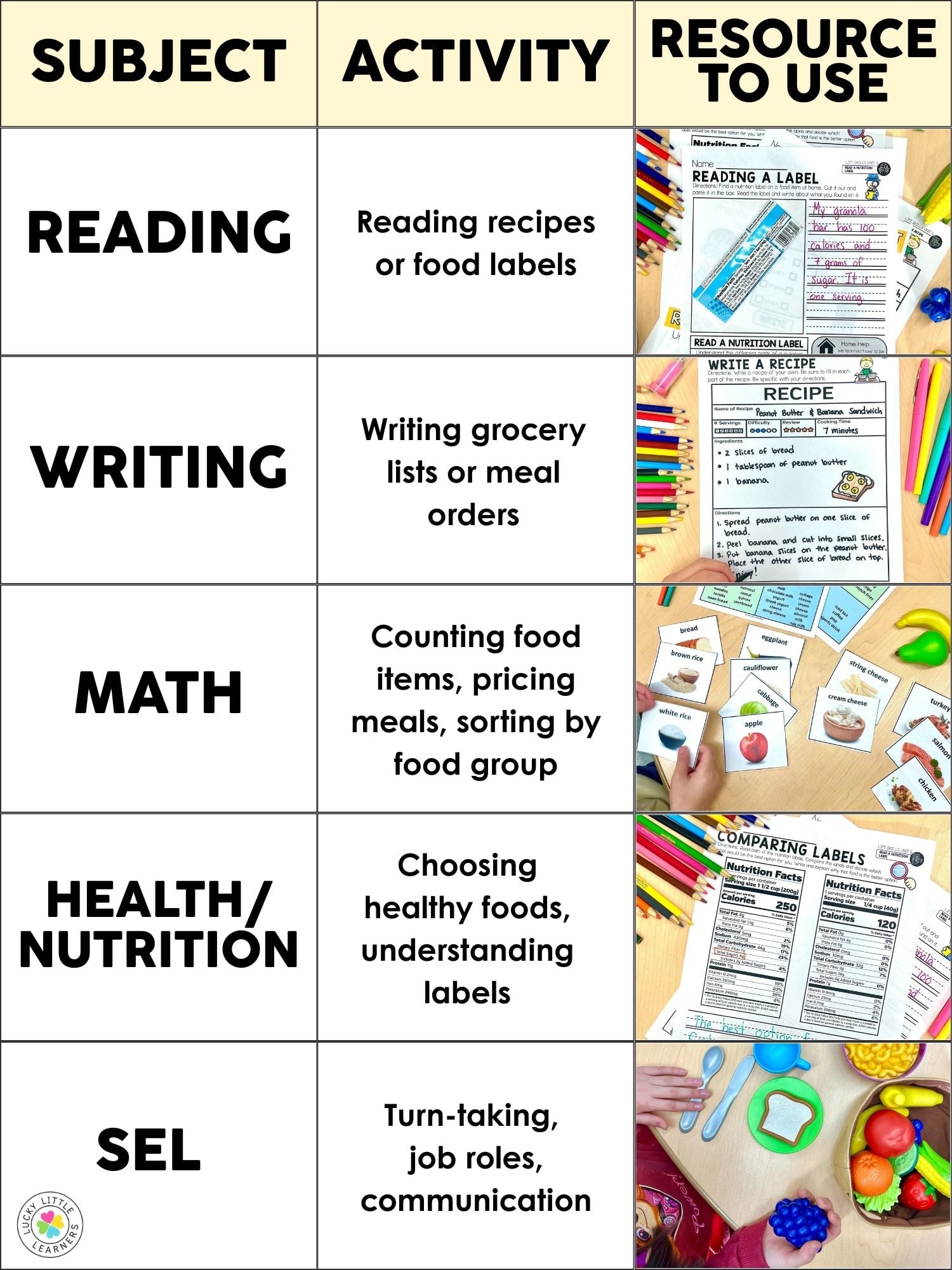
What Can Students Learn in This Center?
Use this center to naturally integrate multiple subject areas:
How Do I Use This Without Losing Instruction Time?
You don’t need a new block in your schedule. Here are 5 simple ways to fit this center into what you’re already doing:
1. Morning Tubs or Soft Start
Set out structured morning tubs that tie directly to your nutrition unit. A few easy, low-prep ideas:
- The “Who Is Cleaning Up?” cut-and-paste activity (perfect for practicing sequencing and personal responsibility)
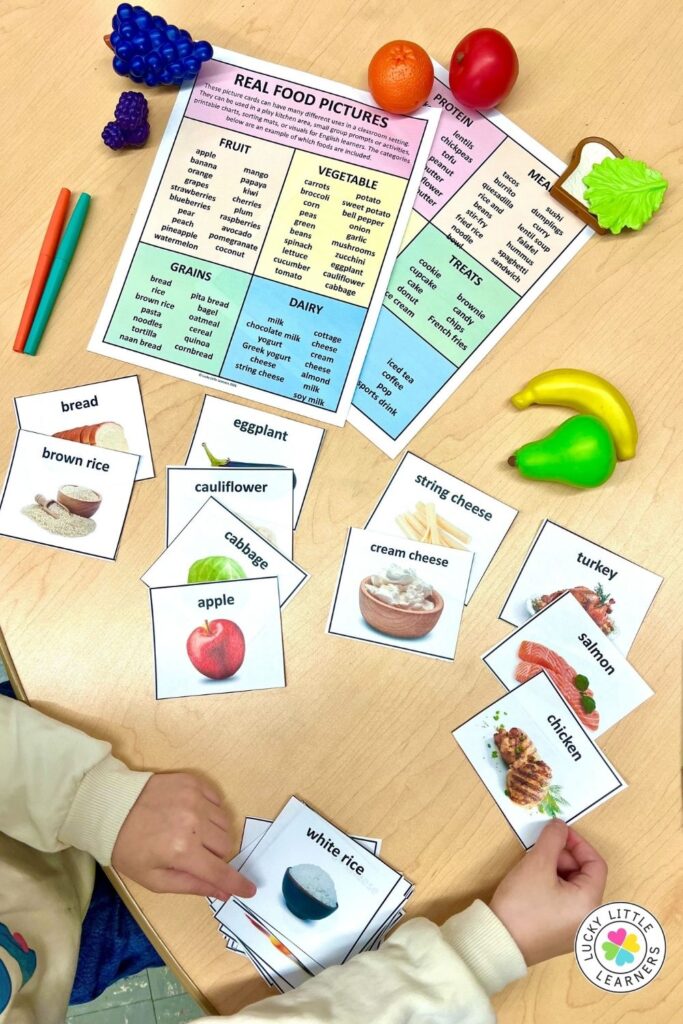
- A tub of laminated play food cards or empty boxes students can sort by:
- Food group
- Beginning letter (for ABC order practice)
- Healthy vs. sometimes foods
These tubs keep hands busy, minds engaged, and expectations clear while giving you a few quiet minutes to take attendance or handle morning tasks.
2. Fast Finishers
Done with writing early? Head to the kitchen and write a grocery list.
3. Writing or Math Rotations
Use the kitchen as a functional writing center or hands-on math station.
4. Indoor Recess
Keep kids busy and learning during a rainy-day recess.
5. Fun Friday Choice Time
Reward students with a center that feels like play but teaches real skills.
Real-Life Teacher Example
“I used the Grocery List printable as a writing center and then had kids ‘shop’ using empty boxes from home. We added price tags with sticky notes and suddenly we were doing math, reading, and SEL all at once!”
— Ms. Lewis, 1st Grade Teacher, Texas
Want to Go Bigger? Try a Classroom Transformation
Once students are familiar with the pretend kitchen or grocery store, turn it into a full restaurant day or even a surgery transformation with patient nutrition charts and meal planning.
🔗 Check out our Restaurant Transformation for a fun, themed expansion
🔗 Or go deeper into real-world skills with our Top 10 Classroom Transformations
Resources That Make It Easy
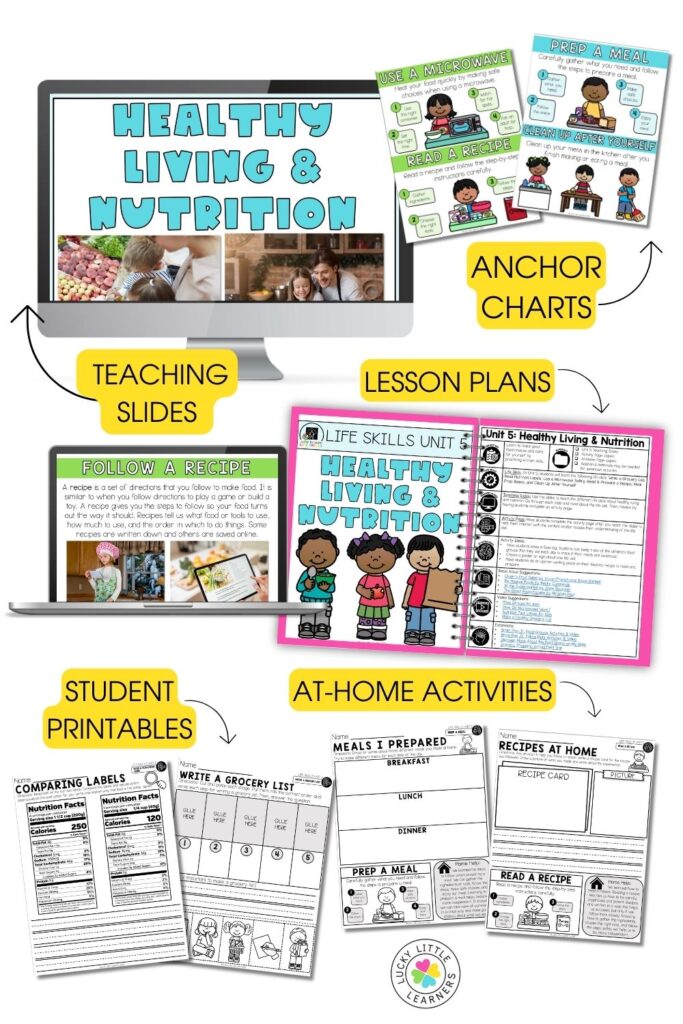
You don’t have to create materials from scratch. Our Lucky to Learn Life Skills: Healthy Living & Nutrition Unit includes:
- Printable grocery lists, meal prep pages, and recipe cards
- Teaching slides to introduce each skill
- Anchor charts for cooking, cleaning, reading labels, etc.
- Microwave safety + clean-up activities
- Lesson plans with linked read-alouds and videos
Key Takeaways for Teachers in a Hurry
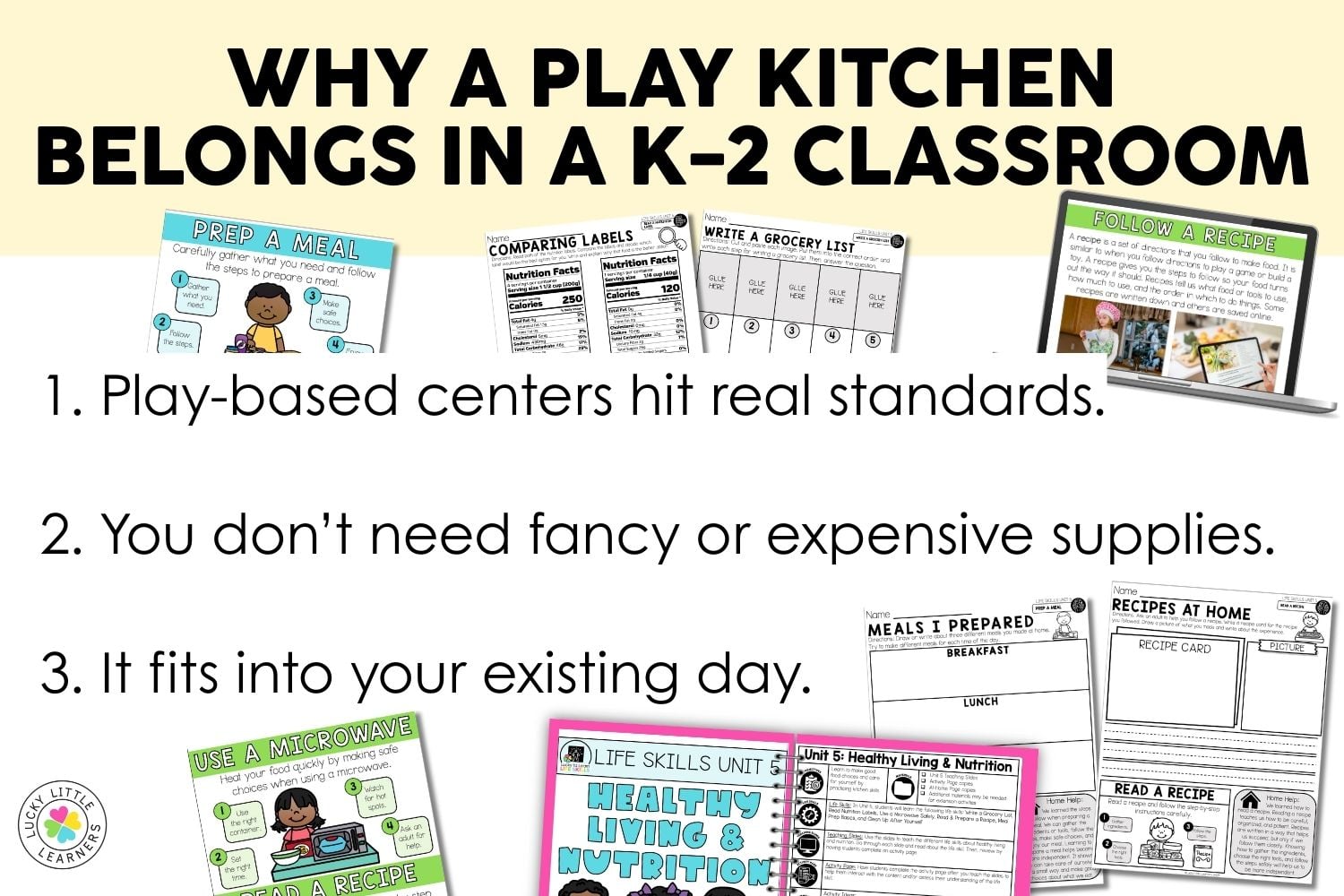
- A pretend kitchen or grocery store teaches more than just play—it hits writing, reading, math, and health standards
- You can set it up with what you already have (plus a few ready-to-use printables)
- It fits easily into existing parts of your day like morning tubs, fast finisher time, or choice time
- The Healthy Living & Nutrition Unit gives you everything you need to launch it quickly
Frequently Asked Questions
Q: How do I teach nutrition in kindergarten?
A: Set up a pretend grocery store or kitchen. Use real food boxes, printable lists, and role-play games to teach healthy choices in a fun, low-prep way.
Q: What academic skills can students learn in a pretend kitchen center?
A: Reading functional print (labels, recipes), writing grocery lists, counting and sorting food, adding prices, and more.
Q: What if I don’t have toy food or a kitchen set?
A: Use paper food cutouts, empty boxes, and printed menus. Add labels and imagination—they’ll do the rest!