
Once your students have been introduced to nonfiction text features, the next question is:
How do you help them actually understand and use them?
The key is giving students repeated, hands-on opportunities to explore how text features support comprehension.
In this post, you’ll find 4 simple and effective strategies for practicing nonfiction text features that help students move beyond identification and start thinking like readers.

What You’ll Learn
In this post, you’ll discover:
- 4 engaging ways to practice nonfiction text features
- How to help students understand the purpose of text features
- Simple activities that build comprehension and critical thinking
- Ways to incorporate text features into reading and writing practice
What Are Nonfiction Text Features?
Nonfiction text features are parts of a text that help readers better understand information.
Common nonfiction text features include:
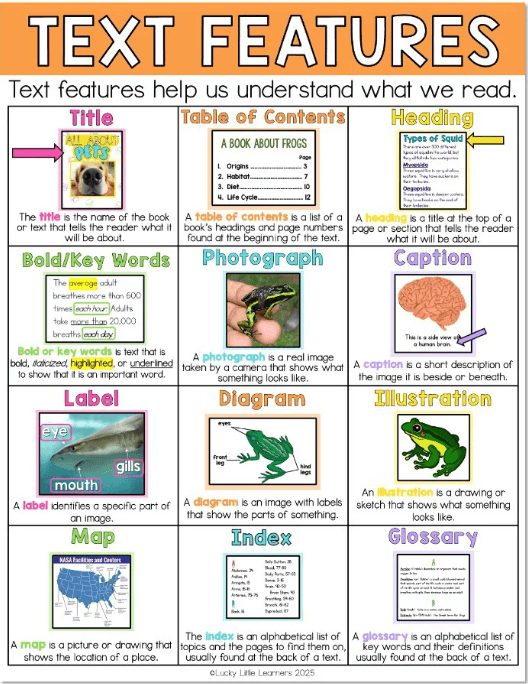
These features guide readers, highlight important information, and make complex ideas easier to understand.
1. Text Feature Walk
A text feature walk is a simple way to introduce or review text features before reading.
Instead of jumping straight into the text, students explore the features first—just like a picture walk in fiction.
How to do it:
- Flip through the text together
- Identify text features on each page
- Ask: What can we learn just from this feature?
- Make predictions about the topic
This strategy helps students understand that text features are not just “extras”—they are tools for comprehension.
Steps for Taking a Walk Through Text Features
| Title | What is the text going to be about? |
| Table of Contents | What are the different sections in this text teaching us about? |
| Index | What clues does the index give us about what this text will be teaching us? |
| Glossary/ Bolded Words | What are some of the words this author wants us to understand? |
| Heading/ Subtitles | According to the headings/ subtitles, what is the main idea for this section of the text? |
| Sidebars/ Photographs/ Captions/ Diagrams | What can we learn from these details? |
2. Text Feature Surgery
Use old Scholastic News or Time for Kids and search for, then cut out the text features!

Scavenger hunts for text features are fun too! Give students boxes of nonfiction books and they have to find the listed text features and write the page numbers. This activity is helpful for helping kids remember all the different types of text features.
3. Text Features Cover Up
Another fun thing to do is to use sticky notes to cover up the text features you find during a shared reading.
Start by hunting for text features and covering them with sticky notes. Then, go back through the pages to talk about how each text feature helps us understand more about the topic. It’s also very effective to talk through whether any additional text features could be used on a page to further clarify the topic!
For example, if the text is about parts of an insect, kids usually say it would be nice to have a diagram showing where each part is. Or if the text is talking about a place, how about a map? When the discussion moves in this direction, it helps kids to think critically about why there are text features and what they do to help the reader.

4. Add Text Features to Independent Writing
The best way to reinforce learning is to have students apply text features in their own writing.
When students write informational texts:
- Encourage them to include headings, diagrams, or captions
- Provide a checklist of text features
- Model how authors use features to support ideas
This helps students see themselves as informational writers—not just readers.
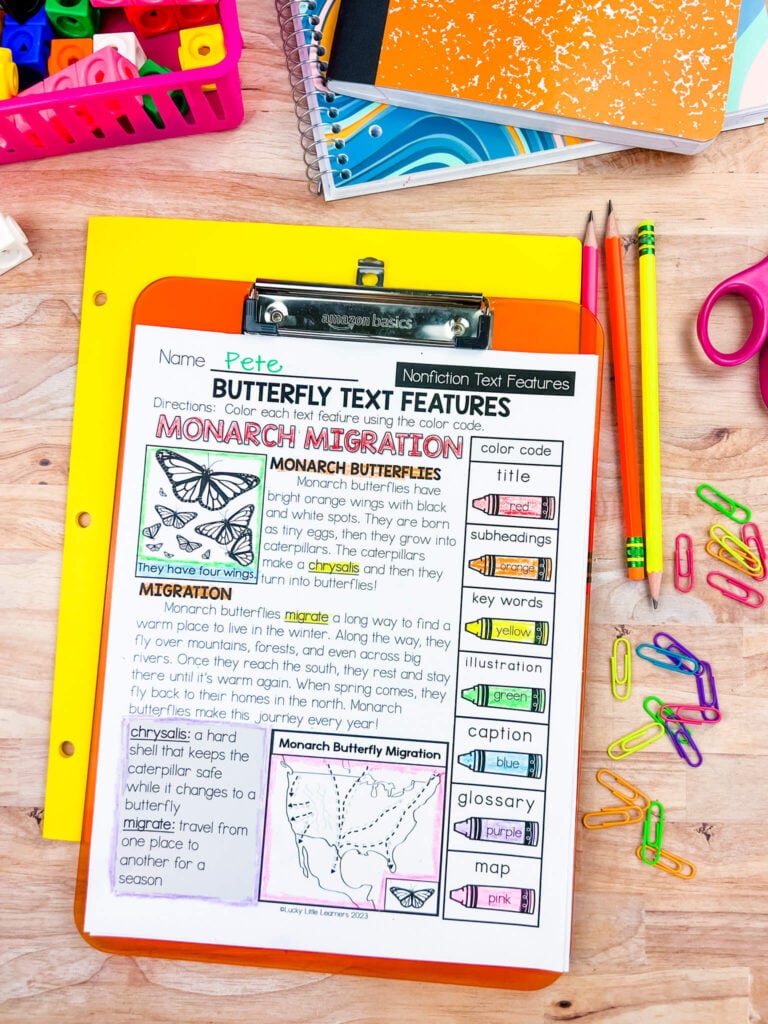
Want Ready-to-Use Text Feature Activities?
If you want to save time and give your students consistent practice, these ready-to-use resources make it easy.
Purchase the Nonfiction Text Feature Pack in our shop
Frequently Asked Questions About Teaching Text Features
What grade should text features be taught?
Text features are introduced in early elementary grades and continue to be reinforced through upper elementary.
How do you make text features engaging?
Use hands-on activities like scavenger hunts, cut-and-sort tasks, and interactive discussions.
Why are text features important?
They help students locate information, understand complex topics, and improve overall reading comprehension.
What are more resources for teaching nonfiction text features?
Here’s a list of our favorite Nonfiction Text Features Resources.
