Setting up your classroom is one of the most exciting parts of the school year. Bulletin boards go up, supplies get organized, and everything starts to feel like a home away from home for your students. If you’re planning your classroom environment, these classroom setup ideas for organizing school supplies and learning materials can help you create systems that keep your room running smoothly all year long.
One part of classroom setup that can feel surprisingly tricky, though, is classroom desk arrangements. The way you arrange student desks affects classroom management, collaboration, and how easily students can focus during independent work.
Whether you prefer rows, desk pods, or creative layouts, the right desk arrangement can make a big difference in how your classroom functions.
In this post, you’ll find 13 classroom desk arrangement ideas for elementary classrooms, along with examples to help you design a layout that works for your students and your teaching style.

What You’ll Learn
In this post, you’ll discover:
- 13 classroom desk arrangement ideas for elementary classrooms
- Pros and cons of different desk layouts
- Classroom setups that encourage collaboration and focus
- Space-saving desk arrangements for small classrooms
- A complete classroom setup bundle that simplifies decorating and organizing
What Is the Best Classroom Desk Arrangement?
There is no single “best” desk arrangement. The ideal layout depends on your classroom size, student needs, and how often students collaborate.
Many teachers rotate between layouts throughout the year to refresh the learning environment or support different types of activities.
Classroom Desk Arrangement Chart (Quick Comparison)
Trying to solve a specific problem like collaboration, behavior, or space? This quick chart will help you quickly compare layouts.
| Desk Arrangement | Best For | Possible Challenge |
|---|---|---|
| Rows | Focus during instruction | Less collaboration |
| Paired Desks | Turn-and-talk activities | Can still lead to chatting |
| Small Groups (Pods) | Collaboration and centers | Noise level |
| Large Groups | Project-based learning | Classroom management |
| U-Shape | Whole-class discussion | Requires more space |
| S-Shape | Creative classroom layouts | Harder to monitor |
| Tables Grouped Together | Hands-on activities | Space management |
| Tables Against Wall | Opening floor space | Limited collaboration |
How to Choose the Best Desk Arrangement
When deciding how to arrange your classroom desks, consider these three questions.
1. How much collaboration do you want?
If your lessons include frequent partner work or centers, desk pods or table groups are great options.
If your classroom relies more on whole-group instruction, rows or paired desks may work better.
2. How much space do you have?
Small classrooms often benefit from layouts like:
- rows
- paired desks
- wall-facing tables
These layouts help maximize walking space and keep the classroom organized.
3. What helps your students focus?
Some students work best with fewer distractions.
If your class struggles with focus, consider starting with rows or paired desks, then transitioning to groups later in the year.
Classroom Desk Arrangement Ideas
Below are 13 classroom desk arrangement ideas teachers use to improve collaboration, classroom management, and student focus.
1. Traditional Rows
Rows are one of the most common classroom desk arrangements — and for good reason. They make it easy for students to face the front of the room and minimize distractions during instruction.
Many teachers now use grouped rows, where desks are paired together in twos or threes. This keeps the structure of rows while still allowing for collaboration.
Best for:
- Small classrooms
- Direct instruction
- Easy classroom management


2. Paired Desks
Pairing desks together is a simple way to encourage peer collaboration without creating large groups.
Students can easily turn and talk with a partner, but the arrangement still supports independent work.
Best for:
- Balanced collaboration and focus
- Turn-and-talk activities
- Peer support

3. Small Desk Groups (Pods of 3–4)
Grouping desks into pods is a popular layout for elementary classrooms because it naturally encourages teamwork.
Students can work together during centers, discussions, and group projects.
Best for:
- Cooperative learning
- Table work
- Small group discussions
This teacher got creative and put her desks into varying sized groups of 2-3. The smaller group size also allows for more walking room between groups.

Now in this classroom, the teacher created much larger groups.This is a great option if you have a larger class. This teacher also varied the group size. One con to having bigger desk groups (or pods as some teachers call them), is the talking. However, teachers have amazing “teacher judgement” to determine which students should and should NOT be grouped together.
4. Large Desk Groups
Larger desk groups allow multiple students to collaborate together. This can work well in classrooms with larger class sizes.
One challenge with larger groups is increased noise levels, so seating decisions and expectations become especially important.
Best for:
- Project-based learning
- Flexible group work
- Larger classrooms

By facing two desks against the end of the group, this teacher still has large desk groups, without taking up as much room!
Classroom Setup Resources
Need more classroom setup resources?

All Access Member? Download here.
5. Offset Desk Groups
In this layout, desks are grouped together but slightly offset so students still have personal space.
Many teachers like this arrangement because it balances collaboration with individual focus.
Best for:
- Reducing distractions
- Giving students workspace
- Maintaining group collaboration

6. Triangle Desk Arrangements
Many classrooms now have triangle-shaped desks that can be combined into larger shapes.
Triangle desks offer flexible seating arrangements and can easily be rearranged for different group sizes.
Best for:
- Modern classroom furniture setups
- Flexible seating
- Collaborative activities

7. Diamond Desk Groups
Triangle desks can also be arranged to create diamond-shaped groups.
This arrangement is visually appealing and allows students to face different directions while still working together.
Best for:
- Collaborative learning
- Flexible group sizes
- Creative classroom layouts
This teacher, having a large class, fit the triangles together with students facing every other way. This arrangement works great for collaboration, but would need clear expectations for students when it came to independent work time.

Teacher Tip: Try Changing Desk Layouts Mid-Year
Many teachers find that rearranging desks mid-year can refresh classroom energy.
“When my classroom starts to feel a little stale, I switch up the desk arrangement. A new layout can improve focus and collaboration almost instantly.”
Sometimes a simple change in layout can make the classroom feel brand new.
8. U-Shaped Desk Arrangement
A U-shaped desk layout places desks around the perimeter of the classroom with the open end facing the teacher.
This arrangement allows every student to see the board while still feeling part of a classroom community.
Best for:
- Visibility of instruction
- Whole-class discussions
- Classroom community

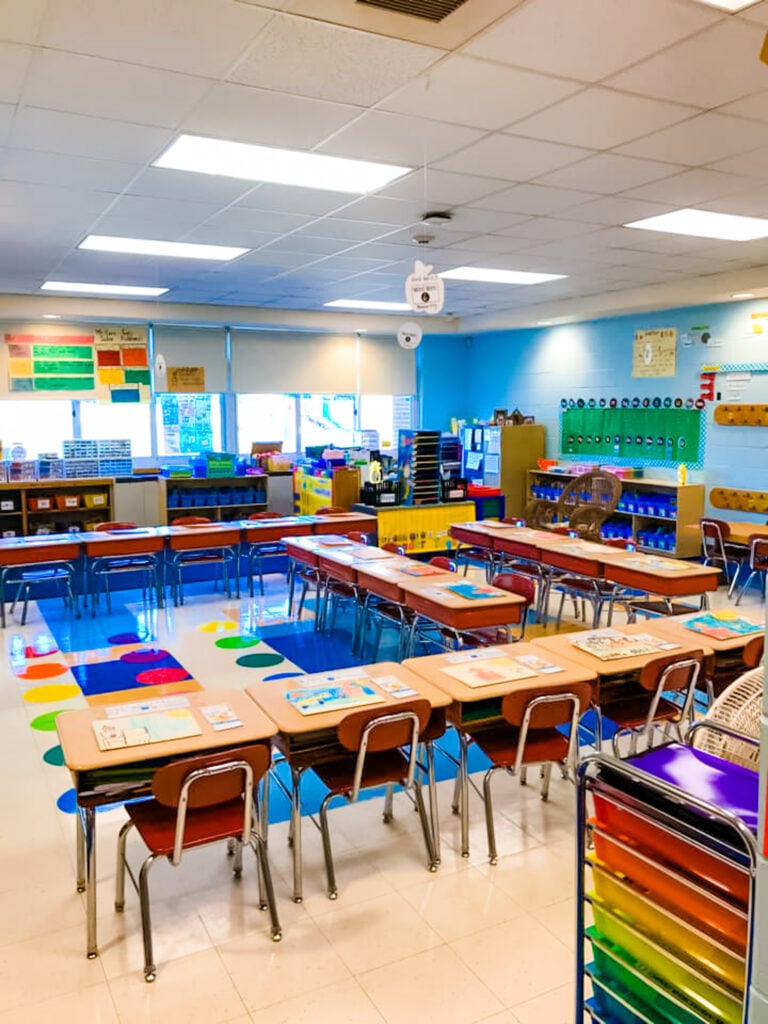
9. S-Shaped Desk Arrangement
An S-shaped layout weaves desks through the room in a curved line.
This setup can help maximize space while still allowing all students to face the front.
Best for:
- Creative classroom design
- Unique classroom layouts
- Maximizing floor space

10. Tables Grouped Together
If your classroom uses tables instead of desks, grouping tables together creates large shared workspaces.
This arrangement works well for collaborative projects and center-based learning.
Best for:
- Collaborative tasks
- Hands-on learning
- Group activities

Pushing two tables together, like this teacher did, allows for a bigger student group and gives the students a large workspace.
11. Tables Facing Different Directions
Turning tables to face different directions can create more space and reduce the “rows of tables” look.
This layout helps students stay focused during independent work.
Best for:
- Creating movement paths
- Mixed instruction styles
- Reducing distractions

If you are looking to get away from the traditional tables in straight rows look, this might be the arrangement for you. It also might create more space!
12. Tables Against the Wall
Pushing tables against the wall can open up the center of the classroom.
This is a helpful arrangement if you need extra floor space for meetings, centers, or movement breaks.
Best for:
- Whole-group meeting areas
- Small classrooms
- Flexible floor space

This table arrangement is all about space saving, and might give students a nature view if they are by a window! By pushing the table against the wall, the middle of the room is left with more space. And, if is a small enough class, the table could even be flush against the wall to create even more space.
13. Flexible Desk Layouts
Many teachers rotate desk arrangements throughout the year.
Changing the layout mid-year can refresh classroom energy and improve collaboration if a current arrangement isn’t working.
Best for:
- Classroom resets
- Changing group dynamics
- Flexible learning environments
Most Popular Desk Arrangements in Elementary Classrooms
Based on teacher feedback, these are some of the most popular desk arrangements in elementary classrooms:
- Desk pods (groups of 4)
- Paired desks
- Traditional rows
- U-shaped layouts
Many teachers rotate between these layouts throughout the school year.
Frequently Asked Questions About Classroom Desk Arrangements
How often should you change classroom desk arrangements?
Many teachers change their desk layout once or twice during the school year to improve classroom management or refresh the learning environment.
What desk arrangement is best for classroom management?
Rows or paired desks tend to reduce distractions and make it easier to monitor student behavior.
What desk arrangement encourages collaboration?
Desk pods or grouped desks are ideal for group work and cooperative learning.
What if my classroom is small?
Rows, paired desks, or wall-facing tables can help maximize space in smaller classrooms.
Classroom Desk Arrangement Mistakes to Avoid
Even experienced teachers sometimes run into challenges with classroom desk layouts. If your current setup isn’t working, one of these common issues might be the reason.
1. Choosing Collaboration Over Focus
Desk pods are great for teamwork, but they can also increase talking during independent work.
If students are struggling to stay focused, try switching to:
- paired desks
- offset groups
- rows
You can always return to collaborative seating once routines are well established.
2. Forgetting About Walking Space
When desks are too close together, classroom transitions become difficult.
Make sure students can easily:
- walk to centers
- access supplies
- line up at the door
Leaving clear walkways helps your classroom run more smoothly.
3. Grouping Students Without a Plan
Desk groups work best when teachers carefully choose which students sit together.
Many teachers mix:
- strong leaders
- students who need support
- independent workers
This balance helps groups stay productive.
4. Never Changing the Layout
Sometimes a classroom setup stops working as the year progresses.
Changing desk arrangements can:
- refresh classroom energy
- improve student focus
- solve behavior challenges
Many teachers rearrange desks after winter break or at the start of a new unit.
Key Takeaways About Classroom Desk Arrangements
- Classroom desk arrangements influence collaboration, student focus, and classroom management.
- There is no single best classroom desk layout. The right arrangement depends on your teaching style and classroom needs.
- Rearranging desks throughout the year can improve engagement and refresh classroom energy.
- A thoughtful classroom setup helps students feel comfortable, organized, and ready to learn.
Ready to Set Up Your Classroom?
If you’re planning your classroom layout, you may also be thinking about decor, organization, and routines.
Our Classroom Setup Mega Bundle includes everything you need to create a welcoming and organized classroom.
All Access Member? Download here.

7 Responses
What about grouping ideas for large class sizes of 30-35 kids? Best tips?
What are the blue things on the student’s desk called? Looks like it can used for them to store their pencil when they aren’t using it?
Those are student desk organizers! Just google “top of student desk organizers” and you’ll see lots of different options to choose from.
Would love ideas for trapezoid tables! I always just put 2 together to make hexagons, but I would love other ideas!
You can put 4 together to make a big trapezoid or parallelogram. That’s what I used to do and I loved it!
I have trapezoid tables and also looking for another way other than hexagons
Would love to see arrangements using 4 Kidney tables. They are so awkward