Building a buddy reading routine in your classroom doesn’t have to be complicated — and it doesn’t have to start with a book, either.
The key to success? Start with connection.
When students feel safe and seen by their buddy, they’re more likely to engage in meaningful reading time. And when you give both younger and older readers structure, purpose, and a few easy tools, buddy reading turns into something they look forward to week after week.
Why Buddy Reading Helps Younger Students Thrive
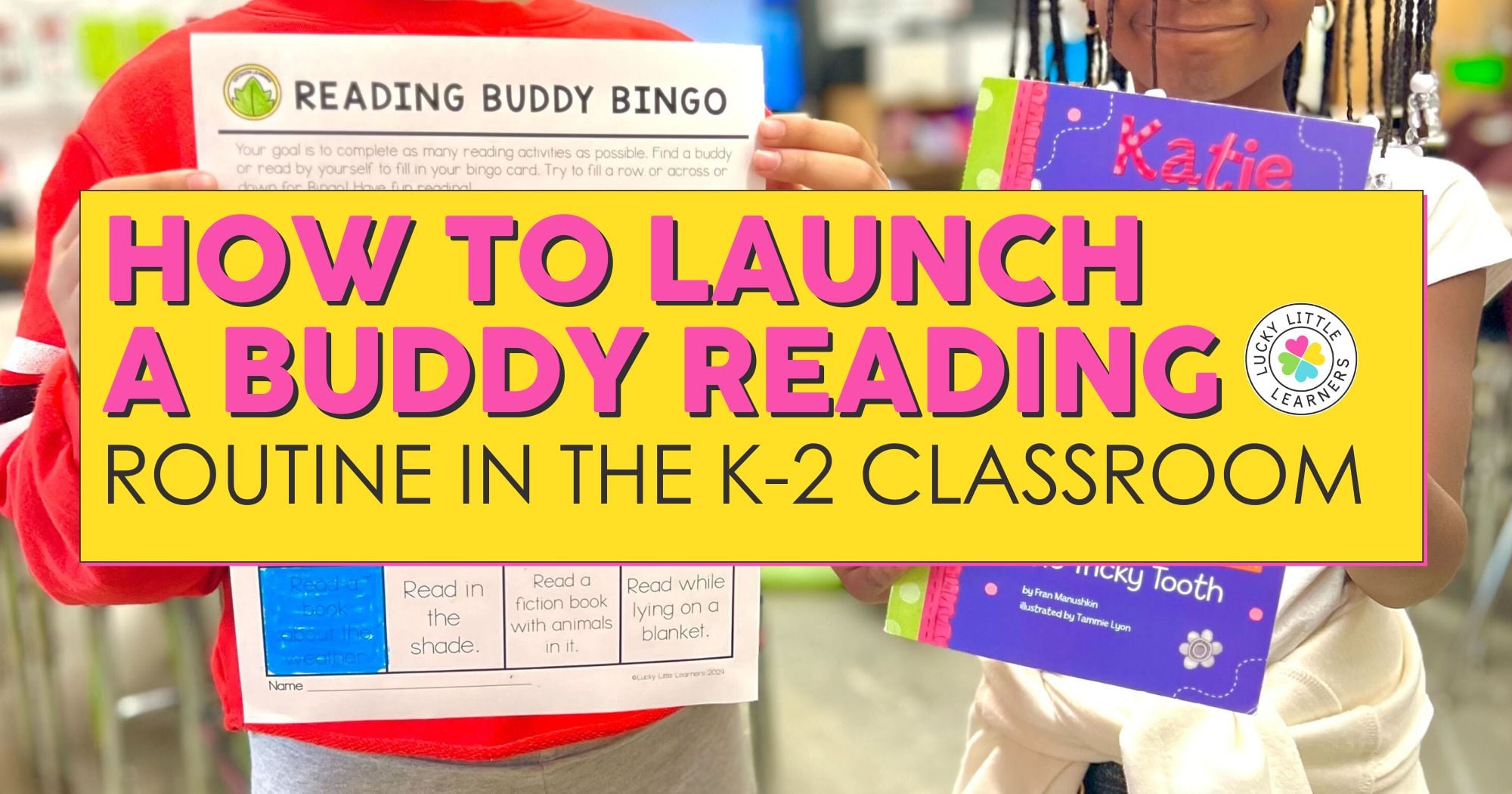
Pairing K–2 students with older buddies helps boost reading fluency, comprehension, and vocabulary in an authentic way. It also supports social growth — giving younger readers a role model and an encouraging voice during reading time.
Want to dig deeper into the benefits of buddy reading across grade levels? Check out this post on the benefits of pairing young students with a buddy classroom.
How to Launch a Buddy Reading Routine (Without Overwhelm)
Instead of jumping straight into reading, start with a few easy activities that build comfort, create structure, and keep both students engaged.
Here’s a simple way to roll it out in phases, using low-prep printables that do the work for you.
Phase 1: Build Trust & Connection First
Before any books are opened, your first buddy sessions should focus on helping students feel connected and safe with their partner. These short activities spark conversation and give kids a chance to laugh, share, and learn about one another.
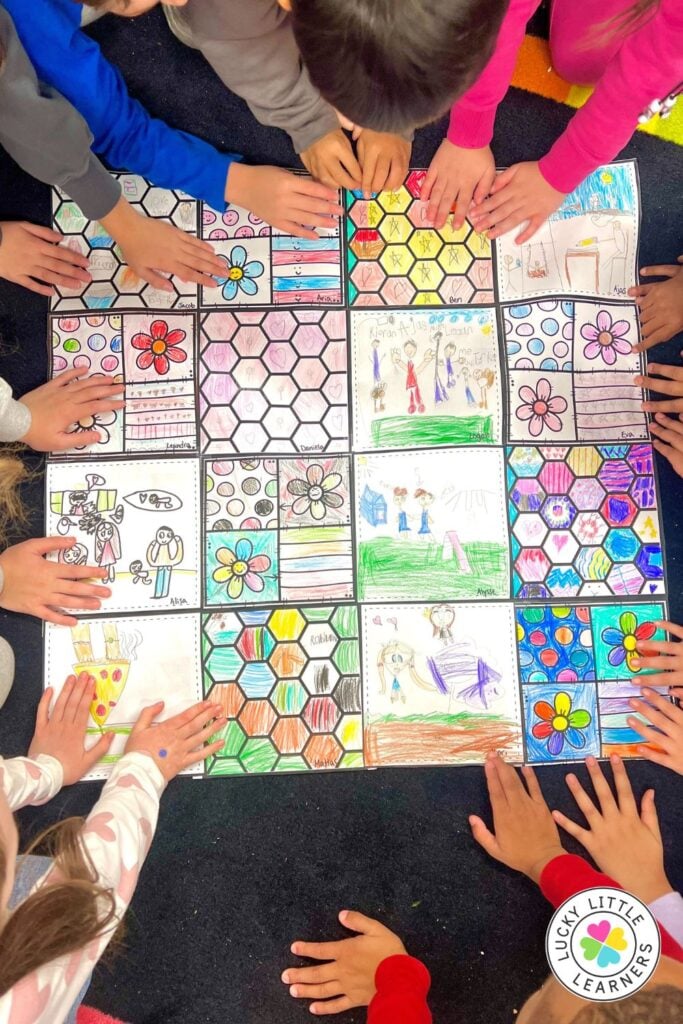
Buddy Class Quilt
Each student designs a quilt square with a self-portrait and images or words about their favorite things. When you combine all the squares, you create a visual representation of your classroom community — perfect for hallway displays or morning meeting circles.
Buddy Bookmarks
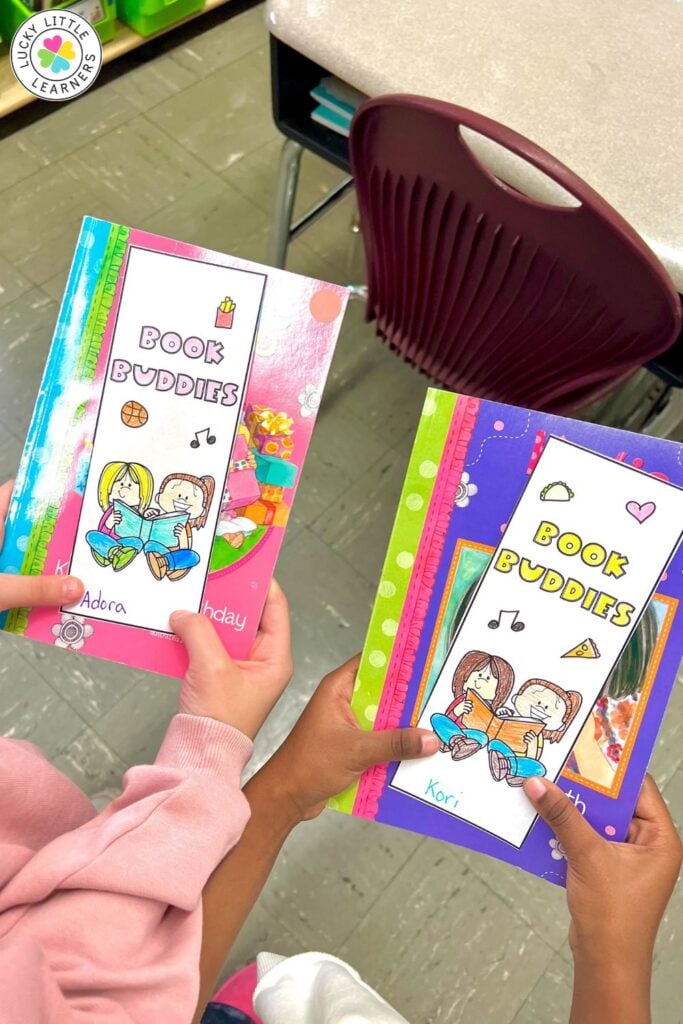
Students co-create bookmarks with their names and drawings of things they both enjoy. This quick, hands-on project gives kids something to take home or keep in their book bins — a sweet reminder of their reading buddy.
Buddy Venn Diagram
Let buddies compare their favorite foods, colors, hobbies, or animals in a shared Venn diagram. It’s a great conversation starter, and it gets kids practicing listening, turn-taking, and finding common ground.
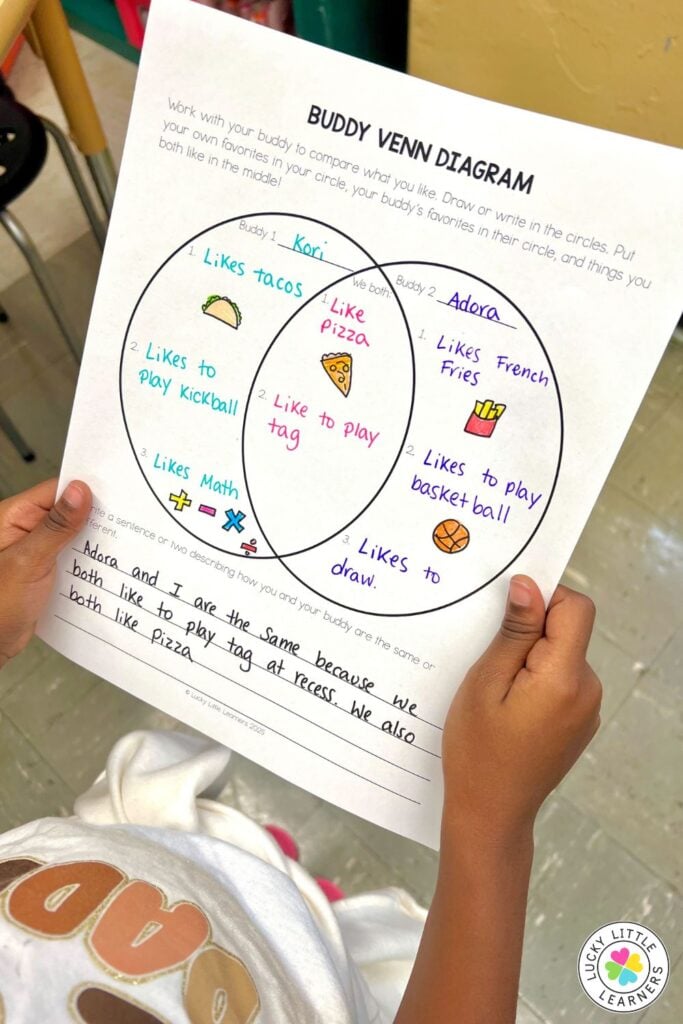
These activities aren’t just cute icebreakers — they create the foundation for trust, so reading together feels natural and fun.
Phase 2: Guide Purposeful Reading Time
Once students are more comfortable, you can introduce tools that make buddy reading time more structured — and more meaningful. These activities help the older buddies step into a mentoring role and support younger readers with comprehension and vocabulary.
Reading Buddy Questions
These printable sets give older buddies guided prompts to ask during or after reading. Some are simple (“Who’s the main character?”), while others go deeper (“How are you and the character alike?”).
Ways to use them:
- Choose 1–2 questions for each session
- Turn them into a question card game
- Have the older buddies “practice” with a partner in their own class before reading with their younger buddy
Tip: Front-load this with the older class. Model how to guide a discussion without taking over.
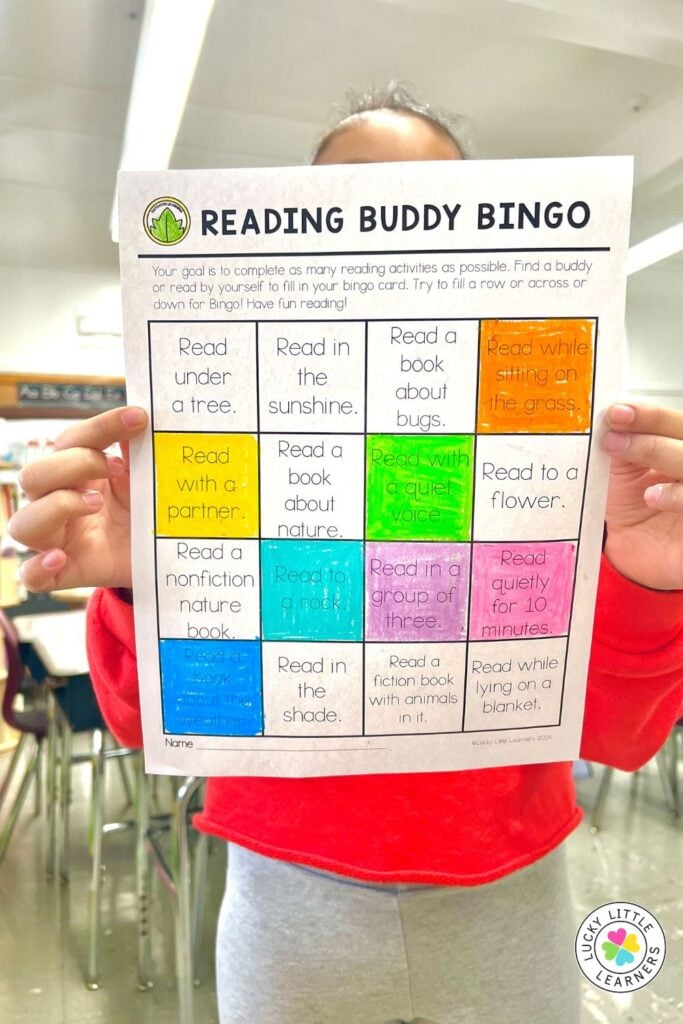
Reading Buddy Bingo
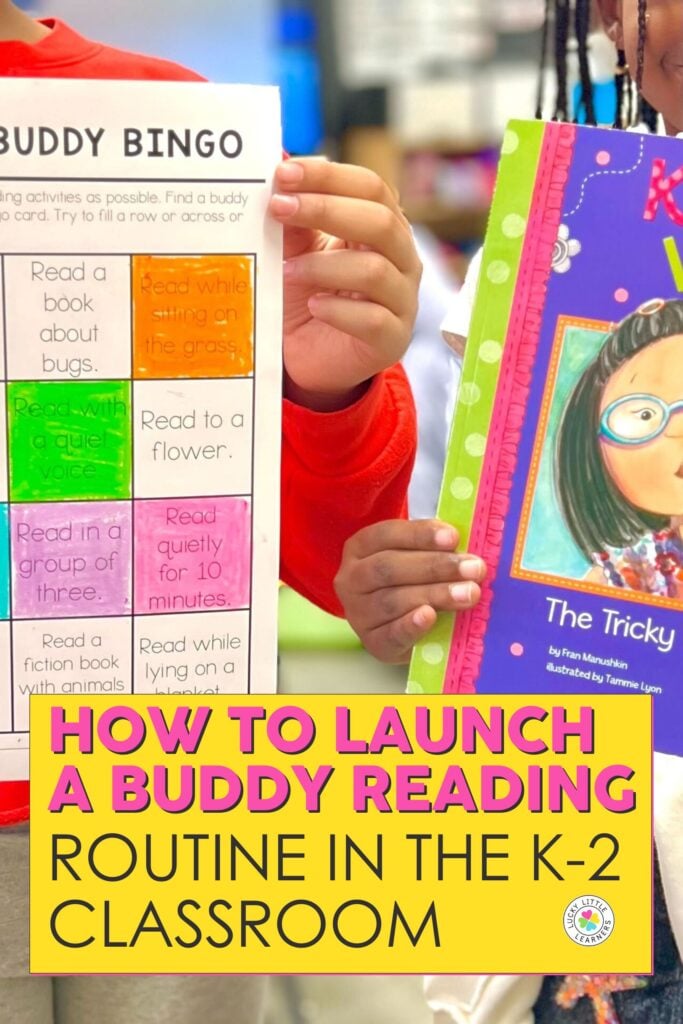
This reading challenge board gets students moving and trying new reading settings — under a tree, in a group of three, or reading a nonfiction nature book. Use it for seasonal events, Fun Fridays, or as a relaxed option when you need a lighter reading day.
Phase 3: Deepen Understanding with Reflection
Once buddy routines are rolling, consider using occasional follow-up activities to check comprehension and celebrate reading accomplishments.
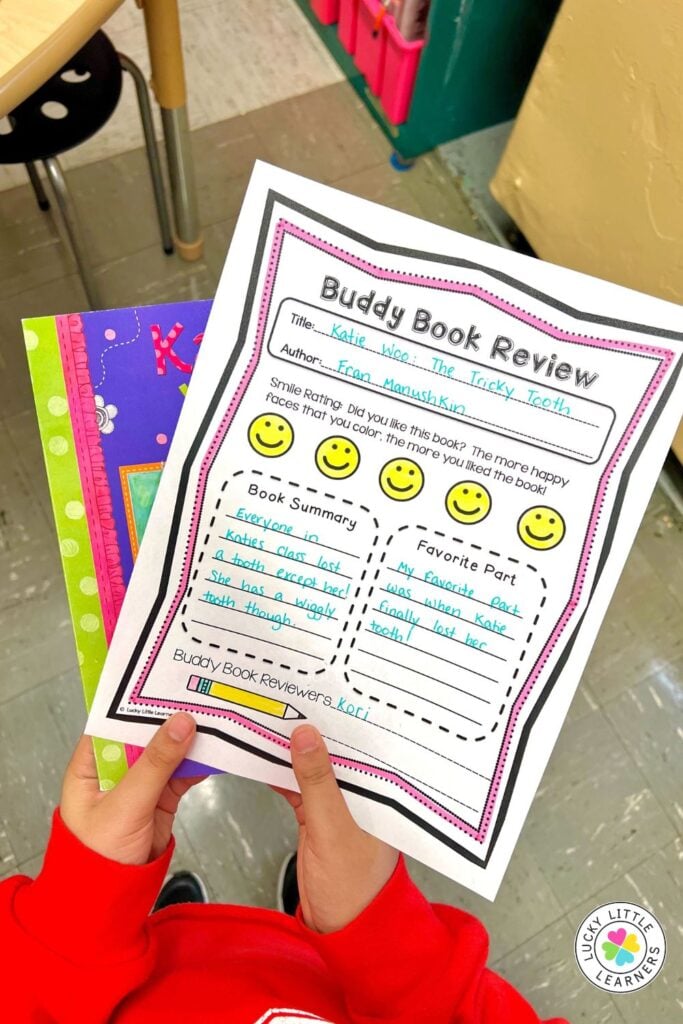
Buddy Book Review
This smiley-face rating and summary form is great after reading a favorite book or when wrapping up a theme or author study. Buddies work together to retell the story and share what they loved.
You can use it:
- As a one-off reflection activity
- As a way to highlight “buddy book of the week”
- Or display reviews in the hallway or library
This activity helps younger students process and retell a story — while older students practice guiding and listening.
You Don’t Have to Create It All Yourself
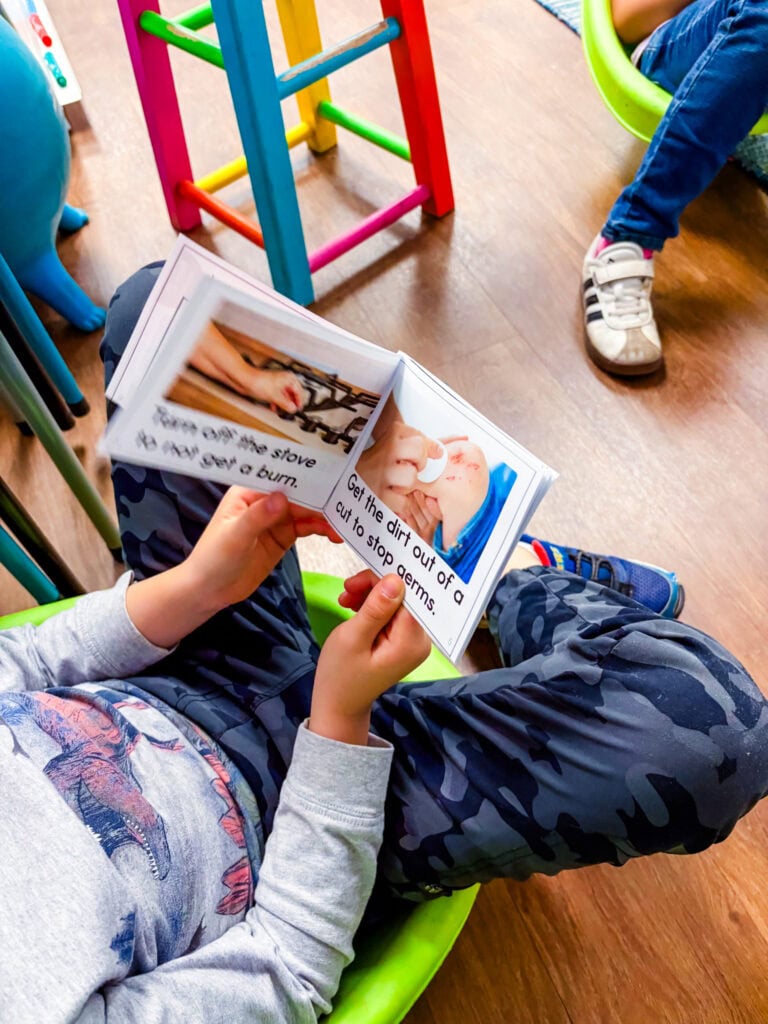
All of these print-and-go buddy reading activities are included inside the All Access Teacher Membership — and you can grab them for just $1 when you start a no-obligation trial!
👉 Click here to start your trial and get instant access.
Final Tips for Launching Buddy Reading
- Model each activity beforehand (especially the first few weeks)
- Set expectations with anchor charts or role cards
- Keep it short at first — 10–15 minutes is enough
- Rotate activities so it stays fresh and engaging
Buddy reading works best when it feels joyful, connected, and purposeful. With just a little planning, you’ll have a system that builds strong relationships and stronger readers.