
Adjectives are describing words that tell more about a noun. In first and second grade, students learn that adjectives can describe color, size, shape, number, feelings, behavior, and sensory details. The best way to teach adjectives is through hands-on activities, sentence practice, and writing lessons where students use describing words in context.
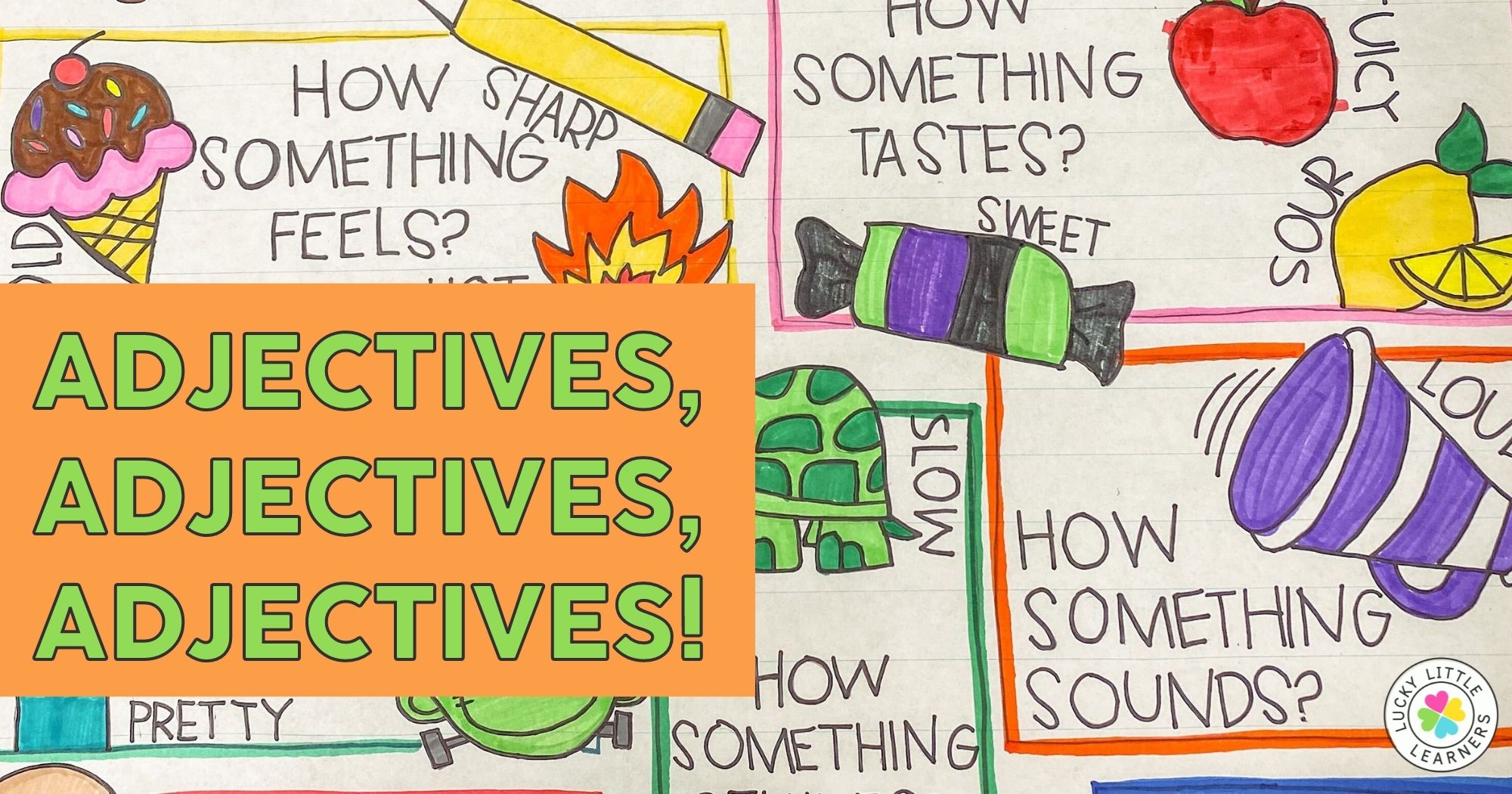
Welcome to the wonderful, wild, weird world of amazing, awesome adjectives! This post is filled with ideas for how to introduce adjectives to your first and second grade learners, as well as fun activities to share with the whole class. Keep reading to find out everything you need to know about teaching adjectives!
What You’ll Find in This Post
- A simple way to download all of the adjective activities in one place
- A kid-friendly definition of adjectives
- Examples of adjectives in sentences
- Hands-on adjective activities for 1st and 2nd grade
Download Adjective Activities with All Access
Get the adjective activities from this post, plus thousands of other teaching resources, when you start your $1 All Access trial.
What is an Adjective?
What is an adjective? An adjective is a word that describes a noun. An adjective is a word that gives more information about the noun. Adjectives can describe:
- color
- shape
- number
- size
- feelings and behaviors
- sensory experiences (sight, touch, taste, smell, sound)
Creating an anchor chart with your class is a great way to illustrate all the ways adjectives can be used!

When Do You Use an Adjective?
Now that we know what an adjective is, let’s think about where we can use it in a sentence.
An adjective usually comes before a noun in a sentence.
Example: I live in a blue house.
Blue is the adjective in this sentence. It describes the color of the house.
An adjective can also come after a noun in a sentence. If an adjective follows a noun in a sentence, use a linking verb.
Example: My house is blue.
Blue is the adjective in this sentence. It describes the color of the house. The linking verb in this sentence: is.
Teacher Tip: Before asking students to use adjectives in their writing, give them time to describe real objects, pictures, or classmates’ drawings out loud. Oral practice helps young learners build descriptive vocabulary before they apply it to sentences.
What Are the Best Activities to Teach Adjectives?
I feel like a nerdy teacher saying this, but I LOVE teaching adjectives! There are so many fun activities that can be done with adjectives and I am here to show you some of my favorites! If you read through to the end of this post, you will have access to my Mystery Adjective Bag and WOW Words FREEBIE too!
Let’s get started!
1. Adjective Mystery Bags
Students use adjectives to describe the contents of a mystery bag and try to get their peers to guess it correctly!
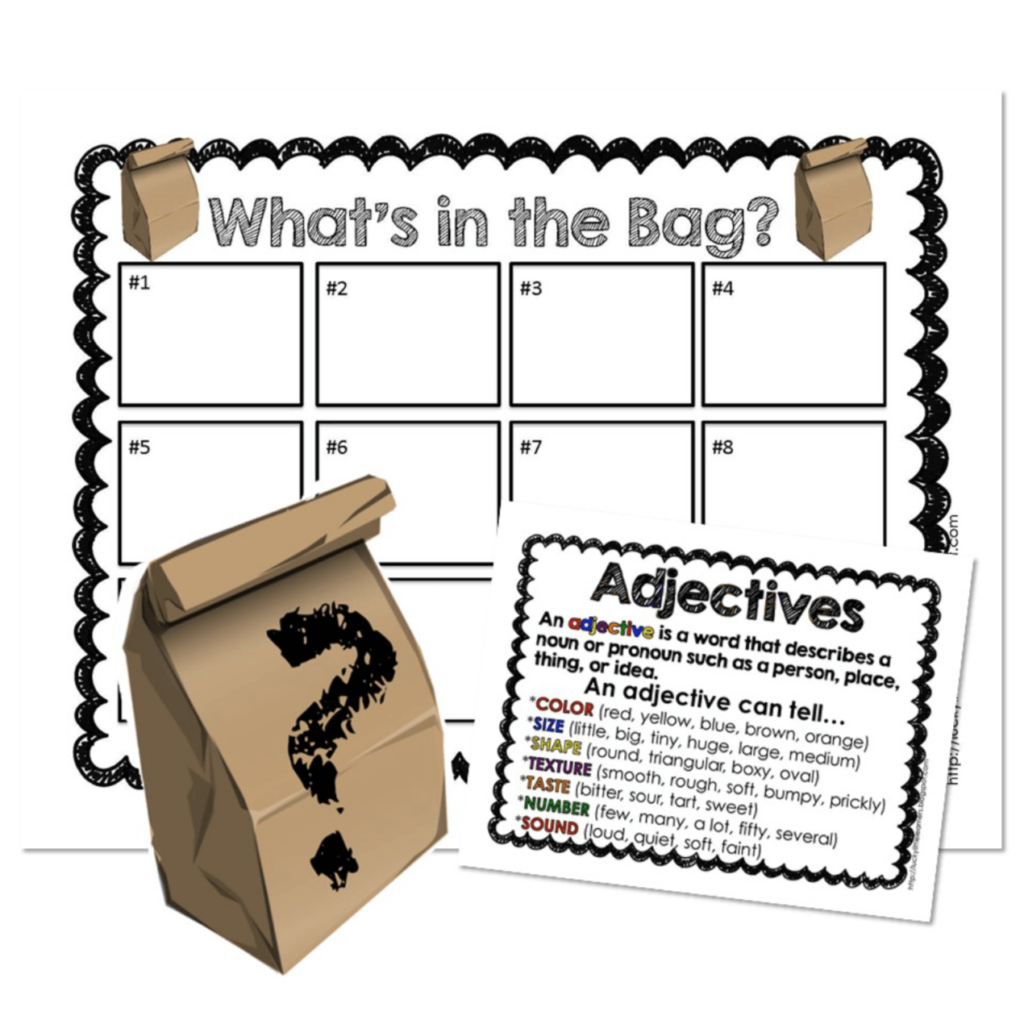
Why it works: Mystery bags help students use sensory details and descriptive language to explain an object without naming it.
2. Adjectives in a Sentence TOOTHY Task Cards
Teachers and students love Toothy! Toothy Task Kits are a great option for your students as centers, early finishers, or even morning work. In this game, students take turns reading a sentence and identifying the adjective. With these self-checking cards, students can easily find the correct answer.

Why it works: Sentence task cards give students repeated practice identifying adjectives in context, which helps them transfer grammar skills into reading and writing.
3. Adjective Self-Portraits
This is one of my favorite projects to teach adjectives!
Why it works: Self-portraits connect adjectives to students’ own identities, making the lesson personal, memorable, and meaningful.

Step 1: Give your students a sheet of white construction paper or card stock and have them draw a portrait of themselves. Make sure that they include their entire body in their drawing and explain to them that they need to try to use their entire sheet of paper (it will be easier to paint).

Step 2: Use watercolor paint to paint the portrait. I show the kids how yellow, brown, orange, and a lot of water mixed together helps to make the color of the skin.

Step 3: Once the watercolor paint dries (it dries quickly), have the students trace over their pencil lines with permanent marker.

Step 4: After the portrait has been traced with permanent marker, students cut out the body and glue onto a piece of colored construction paper.

Step 5: Once portraits are glued onto construction paper, students compile a list of adjectives that describe themselves. I had my students make a list of 15 adjectives and then go back and circle their 6 top favorites. Once they chose 6 adjectives I checked them over to make sure that they are spelled correctly and then I gave them 6 address labels for them to write their adjectives. Then the students put the labels around the outside of their portrait. Aren’t they cute?


4. Beefy Sentences and WOW Words
These Beefy Sentences and WOW Words printables are perfect for guiding your students to use impressive adjectives and detailed sentences in their writing!
Why it works: WOW Words help students replace simple describing words with stronger adjectives, improving sentence detail and writing quality.

Ready to Teach Adjectives?
Save time with ready-to-use adjective activities your students will love.
Start your All Access trial for just $1 to download everything in this post and explore the full Lucky Little Learners resource library.

5 Responses
What a great activity! I am pinning it to use possibly around Grandparent's Day! It would be fun for my students to give them to their special guests…..or maybe even MAKE them for their special guests! Thanks for the inspiration!
~Jennifer
Love this activity! I've done the adjectives that describe me activity, but never had them make a watercolor of themselves! Thanks for sharing the freebie too!
Brandi
Success in Second Grade
Follow me on Facebook!
What a great find. We've been working on adjectives for the last 2 weeks and have 1 more week to go. This will make a great hallway display to celebrate our learning. Thank you. (P. S. Maybe we'll even send them to our pen pals.)
I love how detailed your blog post is! The pictures are wonderful! I'm absolutely going to try this activity in my classroom this year! Thanks for sharing 🙂
this is a great activity, thank you for sharing