
Are you a new 1st grade teacher? Welcome to one of the most exciting years in elementary school! First graders grow academically, socially, and emotionally faster than almost any other grade level. They are learning independence while still needing lots of structure, movement, and encouragement throughout the day.
We’ve compiled the best tips shared in our Lucky First Grade Teacher community for making your first year in 1st grade smoother, more organized, and more manageable.
First grade is a huge transition year for students. New 1st grade teachers often need support with classroom management, reading instruction, stamina building, and helping students become more independent learners.
What You’ll Learn About in This Post:
What Makes 1st Grade Unique?
First graders are learning how to be “big kids” at school.
For many students, this is the first year with longer academic blocks, increased expectations, and more independent work time. At the same time, they still need visual reminders, movement, hands-on learning, and lots of modeling.
One of the biggest surprises for new 1st grade teachers is how different student ability levels can be at the beginning of the year.
Some students enter reading fluently, while others are still learning letter sounds. Building routines and differentiation systems early makes a huge difference.
3 Options for Strong Morning Routines
First graders thrive when mornings feel calm and predictable.
A clear morning routine helps students transition into learning mode while giving teachers time to handle attendance, folders, and parent communication.
Option 1: Soft Start Activities
Soft starts work especially well for 1st graders because they allow students to settle into the day gradually.
Some favorite 1st grade soft start ideas include:
- Morning tubs
- Play dough activities
- Pattern blocks
- Directed drawings
- Fine motor bins
- STEM challenges
- Puzzles
Hands-on activities help students build independence while keeping the classroom environment calm and focused.
Teacher Tip: Choose activities students can complete without needing teacher help every few minutes.
Option 2: Independent Morning Work
As students build stamina, independent morning work becomes easier to manage.
Good morning work options include:
- Phonics review
- Sight word practice
- Journal writing
- Spiral math review
- Handwriting practice
This is also a great time to reinforce routines students will use throughout the school day.
Journaling:
Have students respond to a simple prompt, draw and label pictures, or practice sentence writing. Visual prompts work especially well in 1st grade.
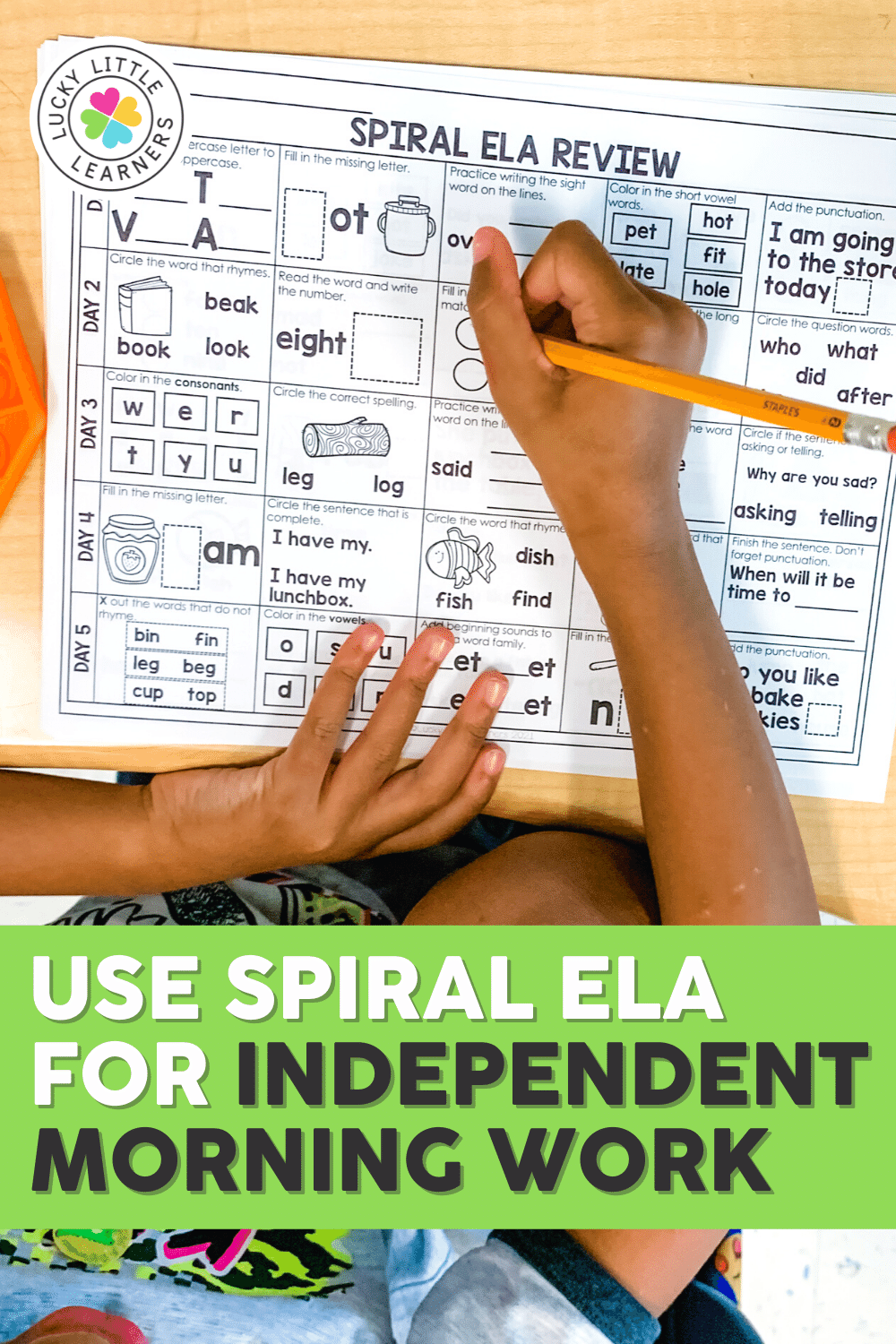
Spiral Review:
Spiral review helps students practice important math and literacy skills consistently without overwhelming them with new content every day.
Option 3: Blended Routine
Use soft starts some days and independent seat work on others to create variety while still keeping routines predictable.
Classroom Management Tips for 1st Grade
First graders need clear expectations, repetition, and lots of opportunities to practice routines.
1. Focus on Teaching Procedures Slowly
Never assume students already know how to:
- Walk in line
- Use classroom supplies
- Work with partners
- Transition quietly
- Clean up independently
Modeling and practicing procedures repeatedly during the first month saves time for the rest of the year.
2. Use Visual Supports Everywhere
Visual reminders help 1st graders become more independent.
Helpful visuals include:
- Picture schedules
- Voice level charts
- Center rotation cards
- Handwashing reminders
- Step-by-step directions
Many students still rely heavily on visuals throughout 1st grade.
3. Use Movement Throughout the Day
First graders are not built for long periods of sitting.
Quick movement breaks can improve focus and reduce behavior challenges between lessons.
Simple ideas include:
- Brain breaks
- Stretching routines
- Directed movement songs
- Freeze dance
- Partner talk walks
Quick Movement Break Idea: Try a “Freeze and Copy” break where students mirror silly movements like hopping, balancing, tiptoeing, or pretending to climb a mountain until you call “freeze!”
How Should You Set Up a 1st Grade Classroom?
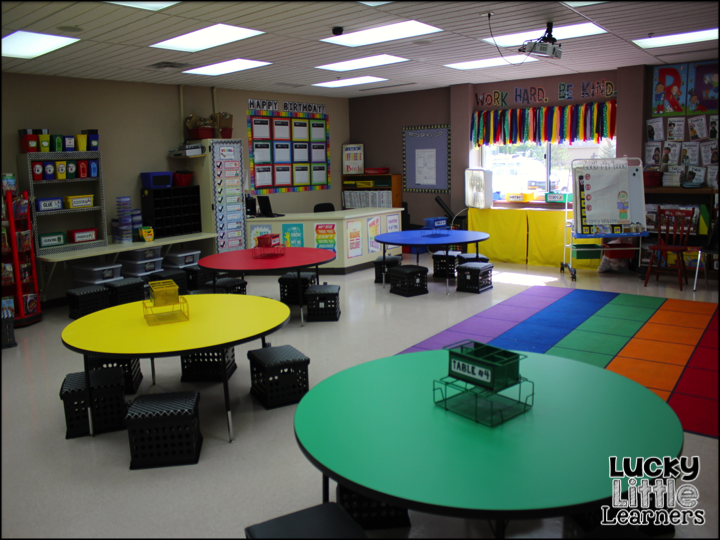
Your classroom should support movement, routines, and small-group instruction throughout the day.
Tip: Draw out your classroom layout before setup begins.

1. Prioritize Small-Group Instruction Areas
Most 1st grade classrooms spend a large part of the day rotating through:
- Literacy centers
- Guided reading groups
- Math stations
- Intervention groups
- Partner activities
Students need enough space to move safely and independently between activities.
Teacher Tip: Use rugs, shelves, or table placement to clearly define small-group spaces so students know exactly where to go during rotations.
2. Create Easy-to-Reach Supply Areas
First graders can learn independence quickly when materials are clearly organized.
Helpful organization systems include:
- Color-coded folders
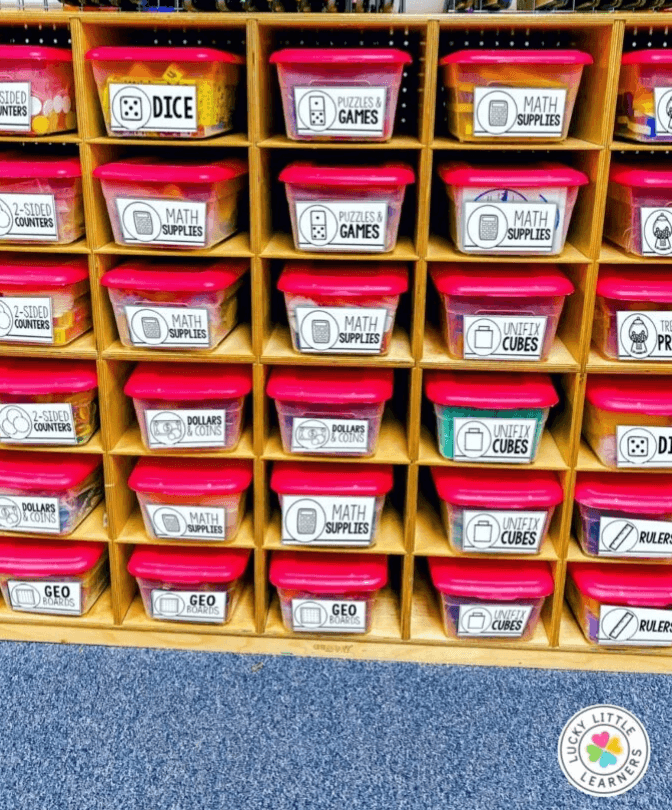
- Labeled supply bins
- Turn-in trays
- Book boxes
- Student toolkits
Teacher Tip: Use labels and picture cues together to help students find and return supplies independently.

3. Build a Classroom Library That Encourages Reading
Many 1st graders are just beginning to see themselves as readers.
Create inviting book categories like:
- Animals
- Fairy tales
- Funny books
- Seasonal books
- Beginning readers
- Nonfiction topics
Having easy-to-browse categories helps students build confidence during independent reading time.

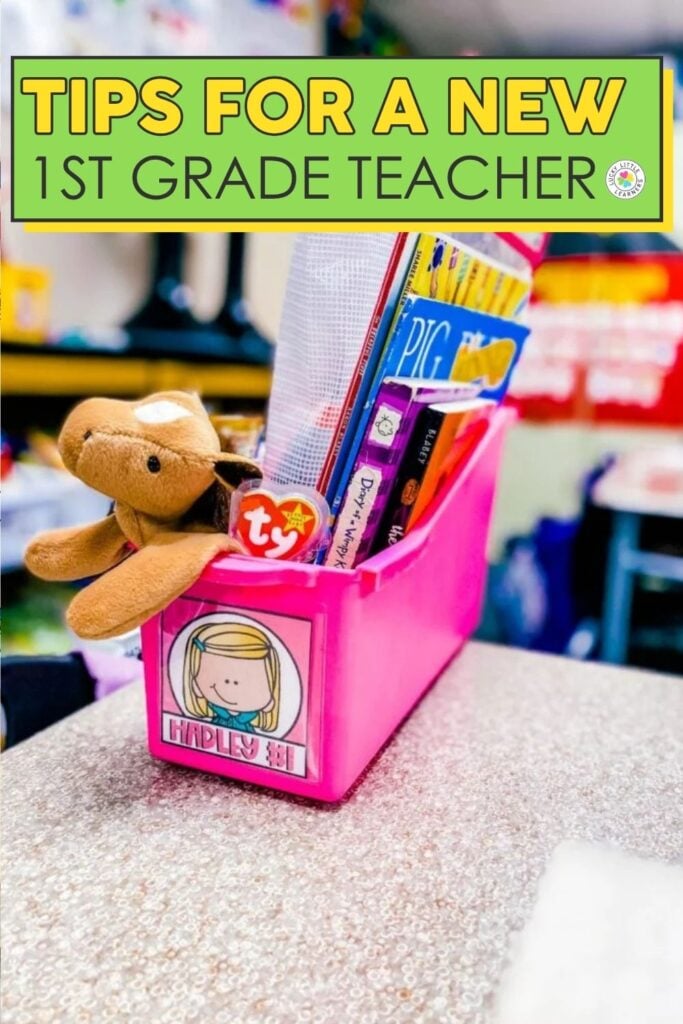
Tip: Give each student a personal supply bin or book box to keep folders, reading materials, and tools organized and easy to grab during busy classroom transitions.
Organization Tips That Save Time
There are a LOT of papers, centers, manipulatives, and supplies in 1st grade. Simple systems make daily routines much easier.
1. Organize Materials by Subject
Store literacy and math materials separately using labeled bins or drawers. This makes center prep and lesson transitions much faster.
2. Use Digital Organization Systems Early
Save lesson plans, phonics activities, centers, and printables in organized digital folders from the start of the year. You will save yourself hours later.
3. Prep Early Finisher Activities Ahead of Time
Students finish work at very different speeds in 1st grade.
Keep a basket of:
- Sight word games
- Independent reading
- Fine motor activities
- Directed drawings
- STEM bins
- Writing prompts
This helps reduce interruptions while keeping students engaged.
Teacher Tip: Don’t expect independence immediately.
Most 1st graders still need lots of modeling and reminders during the first few months of school.
FAQs About Teaching 1st Grade
What is the hardest part about teaching 1st grade?
Many teachers say balancing different academic levels is one of the biggest challenges. Students enter 1st grade with a very wide range of reading and math skills.
How do you keep 1st graders engaged?
Hands-on learning, movement, visual supports, and short learning activities help maintain engagement throughout the day.
What should every 1st grade classroom have?
Visual schedules, organized classroom systems, literacy materials, hands-on manipulatives, and independent learning tools are all helpful.
Where can new K-2 teachers find additional support?
If you’re looking for even more support, explore our K-2 new teacher guide filled with classroom management strategies, organization ideas, and time-saving resources for primary teachers.
Join our Free Community of 1st Grade Teachers!
Teaching 1st grade comes with huge academic growth, busy classroom days, and lots of memorable moments — and it helps to connect with teachers who truly understand the grade level.
Join our free Facebook group, Lucky First Grade Teachers, to swap ideas, ask questions, and get classroom-tested tips from other 1st grade teachers throughout the school year.
One Response
It helps to connect different teachers and find support from each other for a better teachers.