Teaching main idea and key details becomes easier when students begin with hands-on, concrete practice before moving into passages and paragraphs. These low-prep activities help 1st and 2nd grade students build comprehension skills through scaffolded instruction, discussion, visuals, and repeated practice.

Determining the main idea can be a very tricky concept for students to master. To assume this can be taught through cute graphic organizers would be very ineffective. Scaffolded instruction is the key. Here are some ideas to accomplish student mastery.
What You’ll Find in This Post
- Read alouds and videos that support comprehension instruction
- Low-prep activities for teaching main idea and key details
- Scaffolded comprehension strategies for 1st and 2nd grade
- Hands-on main idea practice using visuals and objects
- Main idea centers, anchor charts, and paragraph activities
How do you introduce the concept of “main idea”?
When teaching main idea and key details to students, it’s important to start with the basics. There are several ways to do this, from showing kids a simple anchor chart, building awareness with a read aloud, watching an instructional video, or with a hands-on activity.
Select the method you’d like to try below:
- Anchor Charts & Organizers
- Read Alouds
- Videos
- Activities:
What Types of Anchor Charts Help Students Understand Main Idea?
Anchor charts can get as fancy or as plain as you’d like. The main point is that the students are learning about the information through the visuals and text on the poster. Anchor charts are done with the students. Personally, I create the images at home and laminate the poster first. Then, the students help me fill in the information with either post it notes or dry erase marker.
Why it works: Visual anchor charts help students organize their thinking and create a reference tool they can revisit during independent practice.

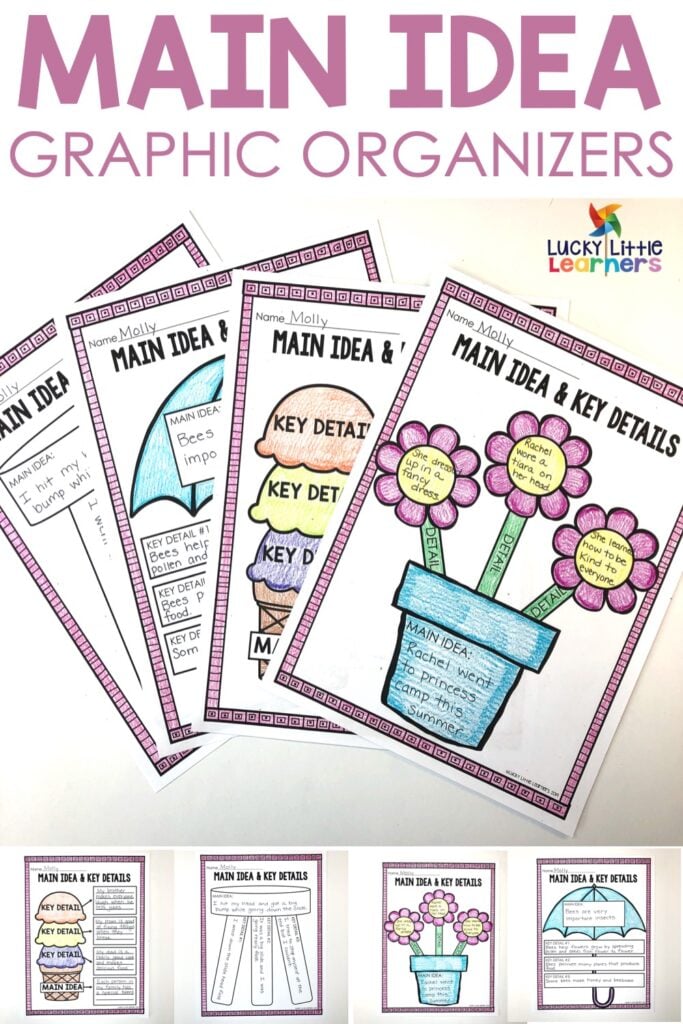
My favorite way to go through an anchor chart with students would be to give them a student copy to complete as I am up front doing the whole class anchor chart. Below you will see a variety of student anchor chart templates (graphic organizers) that could be used with your students.
What are Read Alouds to Teach Main Idea and Key Details?
A read aloud can be one of the most overlooked strategies that can be used to teaching these skills. When performing a read aloud with your students, modeling your thinking process out loud is key! Start by covering up the title of the book and encourage the students to look at the cover. Discuss what they see. Then ask the students for suggestions as to what they think would be a good title of the book and don’t forget to ask them WHY they chose that answer! Here are some of my favorite read alouds that do a nice job of showcasing main idea and key details.
- Wemberly Worried
- A Bad Case of the Stripes
- The Important Book
- Stand Tall, Molly Lou Melon
- The One, The Only Magnificent Me
- A Chair for My Mother
- Officer Buckle and Gloria
- The Dot
Why it works: Listening to mentor texts allows students to focus on comprehension skills without the added challenge of decoding difficult text.
What are Some Videos to Teach Kids About Main Idea and Key Details?
A quick instructional video can be another fun way to get your students thinking and learning about new concepts. Here is a collection of my favorite videos that I use to teach main idea and details.
Why it works: Videos combine visuals and repetition to reinforce comprehension vocabulary and modeling in an engaging way.
1. How to Find the Main Idea
2. Determining Main Idea
3. The Ultimate Main Idea Song
4. Main Idea
Want Ready-to-Use Main Idea Activities?
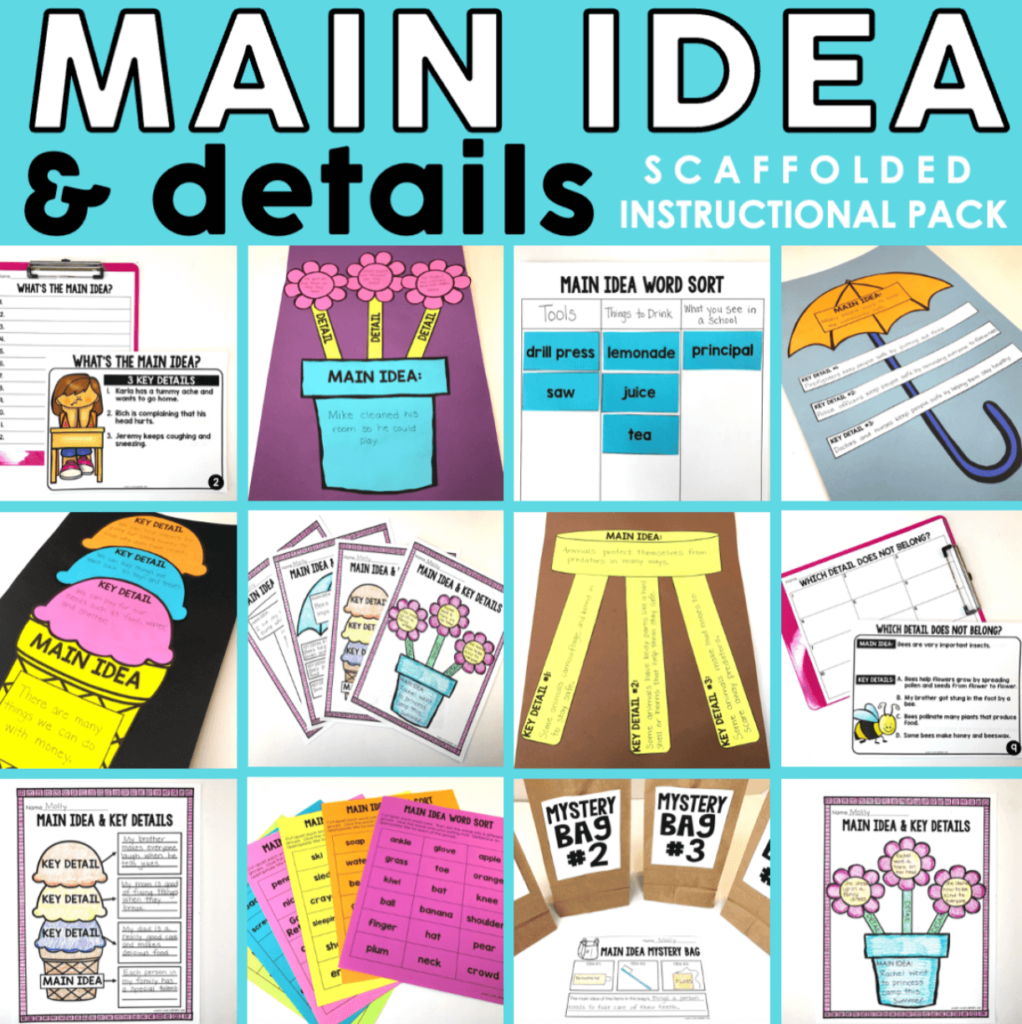
Save planning time with scaffolded main idea and key details lessons, centers, graphic organizers, paragraph practice, and hands-on comprehension activities.
Get the Main Idea & Key Details Pack here
What Are Some Hands-On Activities to Teach Main Idea?
1. Mystery Bags
After students have been exposed to a general overview explanation of main idea and key details, it’s time to move on to the application and practice. When starting this skill, start small! I don’t give students books to start this at all. Start with object and pictures.
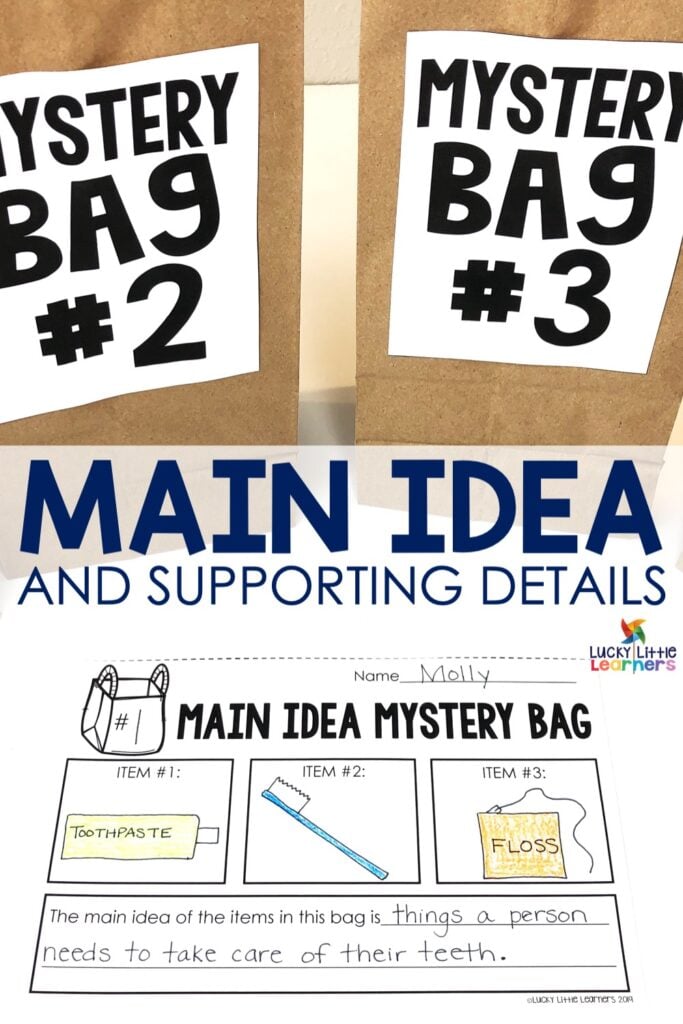
One of our favorite activities when learning about main idea and key details is Mystery Bags. There are two ways to use Mystery Bags.
Why it works: Concrete objects help students practice identifying categories and relationships before applying the skill to text.
Option 1: What Doesn’t Belong
Place four items inside of a paper bag. Three of the items will go together such as a toothbrush, floss, and toothpaste. The fourth item would be something that does not belong such as a comb. Students will look inside of each bag and determine which item does not belong and will write why that item does not belong with the other items.

DIY What DOESN’T belong Ideas
Option 2: What’s the Main Idea?
Place three items inside of a paper bag. Make sure the three items will go together such as cupcake liners, a spoon, and a bowl. Students will identify the three items and determine the main idea of the three items within the bag. Modeling this activity is essential because it will provide the students with the thought process behind arriving to a main idea. The modeling of your thinking is key! This is where the initial learning will take place!
DIY Mystery Bag Ideas
2. Photos
Another introductory idea would be to show students photos. Photos can be found on Kiddle, Kids Discover, or National Geographic for Kids. Find a photo the students would find interesting. Have students take turns giving the photo a title as if it was the front cover a book. Allow for discussion and ask questions such as, “Why do you feel this is a good title?” or “What made you choose this title?” or “What part of the photo stood out to you the most?”
Why it works: Photo discussions encourage students to explain their thinking and support ideas with visual evidence.
When kids are ready, you can bring those photos back and add details to the main idea (title) they came up with!
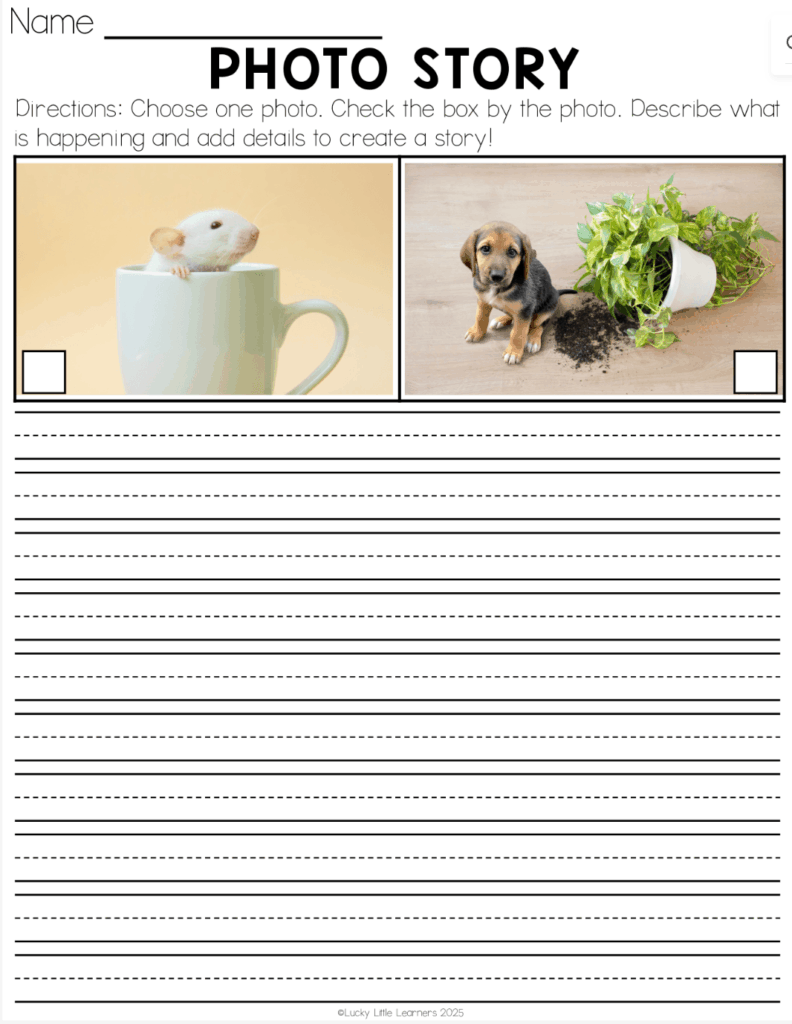
Teacher tip: Students often understand main idea more quickly when they can physically sort and discuss objects before working with written text.
3. Word Sorts
Word sorts are a nice way to scaffold the students’ practice towards mastering main idea and details. Students are given a collection of words. They need to sort the words into three groups and give each group of words a title that will provide the concept of the main idea of the group. I love doing this activity in a small group setting because the conversation that takes place during this activity is so beneficial!
Why it works: Sorting words into categories helps students recognize how details connect to a larger topic or concept.

4. Which Detail Doesn’t Belong
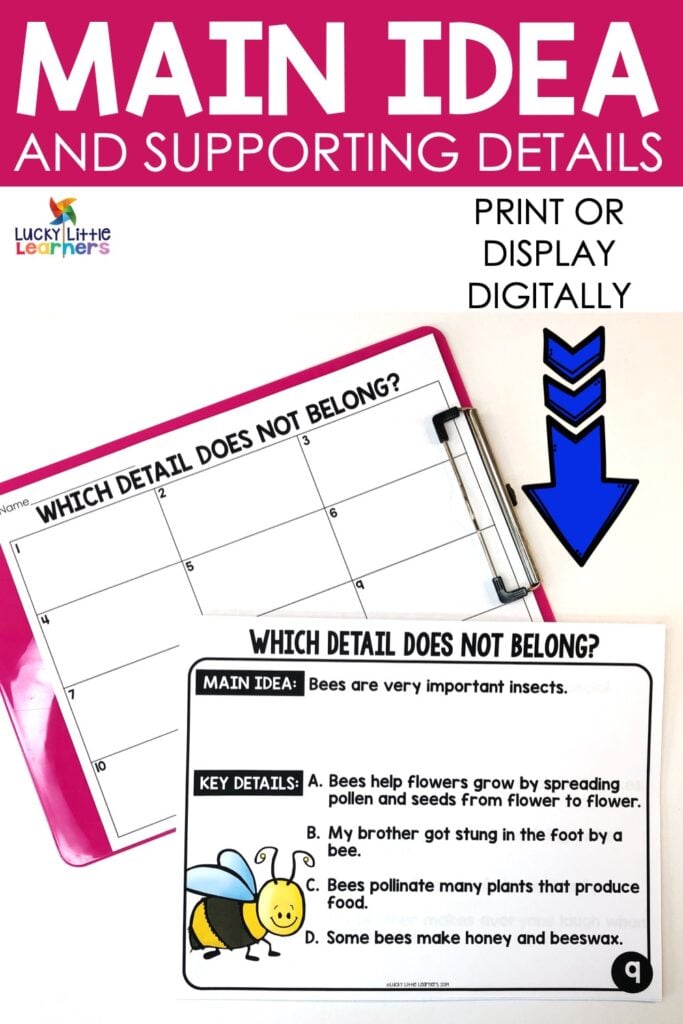
The next step in the scaffold process would be providing the students with a main idea and details and asking them to determine which detail does not belong. This can be achieved through the use of visuals that can be displayed on the Smartboard or printed and shown. For this activity, the class would read the main idea and four details. Then, the students choose the one detail that doesn’t fit and either write the answer on a markerboard or a recording sheet. Again, conversation that discusses why the detail doesn’t belong with each example is important!
Why it works: Identifying details that do not belong strengthens students’ understanding of how supporting details relate to the main idea.
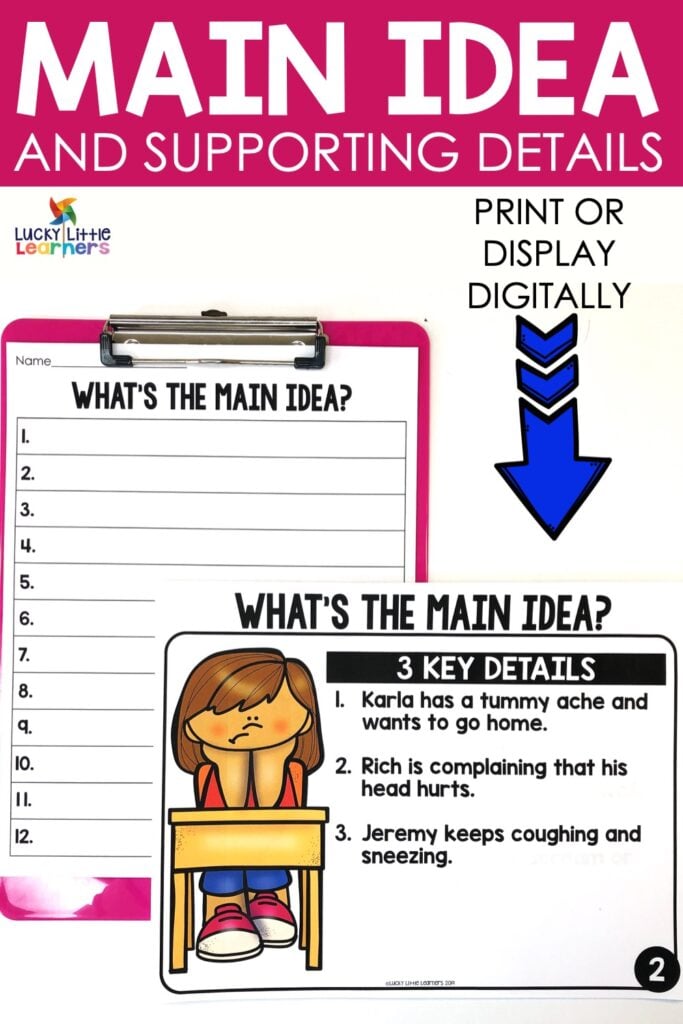
Taking this concept a step further would be to give the students the three key details and having them figure out what the main idea would be. Similar to the previous activity, the visuals can be displayed on the Smartboard or printed and shown. The students can write the main idea on a marker board or a recording sheet. Keep in mind that answers will vary.
5. Deconstruct Paragraphs
Continuing to scaffold is still important. Move from a set of sentences to a paragraph. Like the previous steps, start with modeling. Show your students how to read through the paragraph while demonstrating how to find the main idea and key details of the paragraph. Model the thinking of why and how the details support the main idea.
Why it works: Moving from pictures and objects to paragraphs helps students gradually apply comprehension skills to more complex text.
This particular activity is perfect because it includes both fiction and nonfiction options and is self-correcting as the answers are on the back of each paragraph card.

6. Main Idea Umbrellas

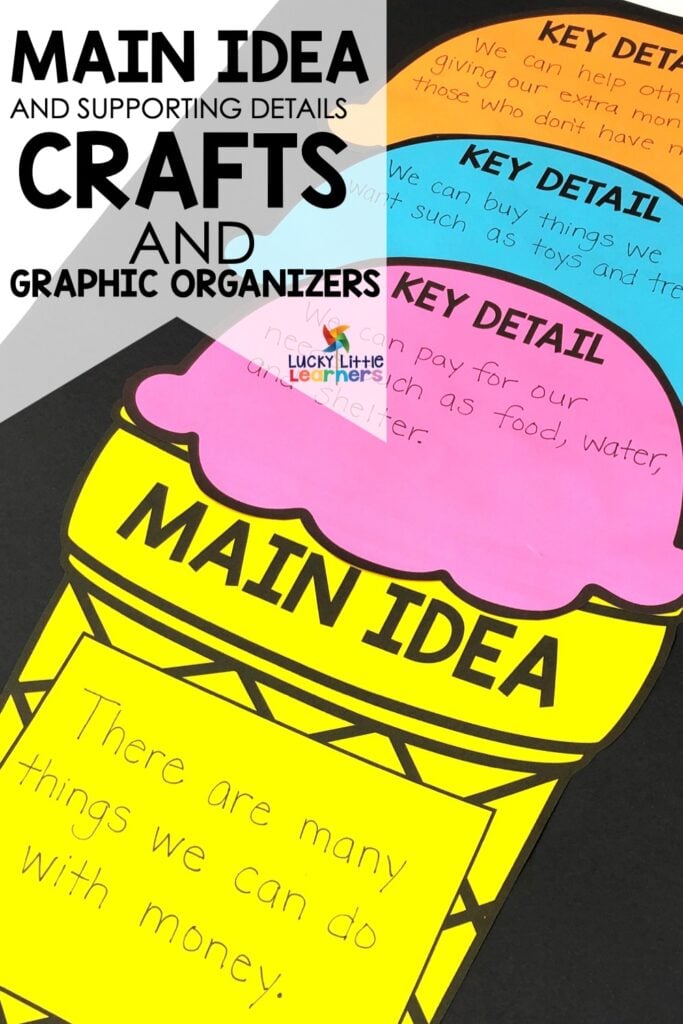
7. Main Idea Ice Cream Cones
8. Build a Table

Ready to Make Main Idea Practice Easier?
Get ready-to-use main idea and key details activities, graphic organizers, paragraph practice, centers, and comprehension lessons designed for elementary students.
Get the Main Idea & Key Details Pack here

31 Responses
{ love using what doesn’t belong.
I love these cute activities to teach main idea!! My second graders would love them!
I love the mystery bag idea and how it can not only teach main idea, but also how it can help students classify common items.
Wow, Angie! What a fabulous set of resources you put together on main idea. I have already purchased your main idea set and love your approach to teaching main idea from small parts to whole. These videos are high quality and I appreciate you sharing them with us. I guess I need to poke around your site more to see what other supporting materials you have here. Thanks so much!
I actually used most of these ideas and resources in my class and my students loved them! Thank you for your creative ideas!
I want to sign up for the Lucky Videos. You are AMAZING!!!!
lucky videos !!! 🙂
I enjoyed your video on main idea. Your instructional methods are great for all learners.
Thanks so much! Lucky Video!
Thank you. My students will love these activities.
Thank you for your very nice ideas and sharing your videos on teaching main idea.
Lucky Little Learners
As a new teacher thank you. I’ve been struggling with teaching the main idea. After watching your video I understand it better. The activities are engaging my students will enjoy this. My ELL students will benefit from this differentiation. Thanks for sharing.
I absolutely love your ideas!!!!!
I am currently in school and needed some ideas for teaching main idea and supporting details. You’ve provided great ideas and resources! I intend to implement some of your activities and include some of my own ideas! You will get credit for your ideas and provided resources. Thank you!
Lucky Videos 🙂
Wonderful explanations, wish I seen this sooner.
lucky videos
These activities are wonderful! Great intro for all grade levels. How do we get the freebies? Thank you
Hi Amy!
Email us at customerservice@luckylittlelearners.com and we will get those freebies to you! Thanks so much and have a great day!
Bailey J.
Lucky Little Learners
I love this and cannot wait to try it. How do I get the freebies for this?
Hi Danielle!
You can grab the freebie here: https://luckylittlelearners.com/main-idea-mystery-bags-freebie/
Bailey J.
Lucky Little Learners
Wow!! YAY I love this, I am going to purchase this! DO you have a video on text structures with scaffolding ideas to teach it?
Hi Stacey!
We don’t have a video but this blog post should help: https://luckylittlelearners.com/top-teaching-strategies-nonfiction-text-structure/ Please reach out to use at customerservice@luckylittlelearners.com if you have any other questions! Thank you!
Bailey J.
Lucky Little Learners
These fun activities will definitely spark my students interest.
This was awecsome! I have a better idea on teaching main ideas to students.
Love the word sort activity!!!!!!
The video was amazing. I love the resources
Lucky Videos! Great Resources
Love the mystery bags idea
Does these resources include a lesson plan?
Hello Chasity! There are not lesson plans in the main idea activities pack, although there are suggestions included for how to utilize each component. This pack includes 4 student anchor charts, 4 main idea crafts, 2 types of mystery bags and recording sheets, word sorts and two main idea & details activities that can be used for mini-lessons, small group, or individual literacy centers.
Lucky videos please!