Time to teach comparing and contrasting in your classroom? Your students are going to have a blast with this important comprehension skill! It is a fun way to have your students dive deeper into stories and also serves as an introduction into higher-order thinking. Bonus – you can compare and contrast with fiction AND nonfiction text! Check out these easy-to-implement ideas for teaching compare and contrast below!

1. Real Life Objects
Bring in two real life objects for students to compare and contrast. An example would be a high heel shoe and a tennis shoe. Have students give similarities and differences between the two types of shoes like:
Similarities:
- Both go on our feet
Differences:
- One has a tall heel
- One is for fancy occasions, the other is for running, playing and working out

2. Anchor Charts
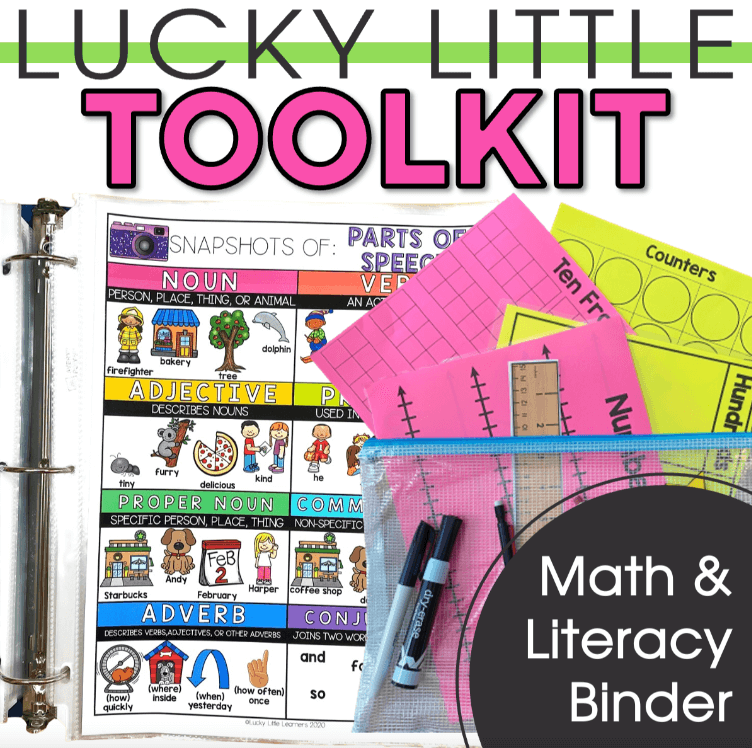
Anchor charts are a tried and true method for cementing concepts in the classroom. They remind students what they have learned. (Anchor charts are oh so handy for teachers to reference too!) The Lucky Little Toolkit comes with several graphic organizers that can be turned into anchor charts, including a compare & contrast version.

All Access member? Download here.
Did you know you can print anchor charts POSTER sized? You can! Check out this post: How to Print Poster Sized Anchor Charts, to see how.
3. Venn Diagrams
The BEST way to compare and contrast two texts is by using a Venn diagram. This visual way to organize information allows students to see how two things differ AND are the same, on one page! (Once again, the Lucky Little Toolkit has built in graphic organizers, including a Venn diagram!)

Venn diagrams can be used to compare and contrast so many things! Some “use right now” ideas:
- Fiction texts – This will help your students think deeper about stories they have read. They will enjoy digging into the characters, settings, problems and solutions! A valuable class discussion is sure to follow!
- Actual objects – Are your students having trouble filling out Venn diagrams on texts? Maybe they need more tactile/visual instruction! Bring in two very different versions of the same item, like shoes, stuffed animals, etc., and implement the “I do, we do, you do” teaching strategy to help your students get comfortable filling out the diagrams. (I do, we do, you do=Teacher models, then complete a diagram whole group, last let the students fill out their own diagrams.) Bringing in actual objects allows all types of learners to succeed. Tactile and visual learners can feel and inspect the objects to come up with their descriptions!
- Nonfiction texts – Comparing and contrasting nonfiction can help your students pay closer attention to details in the texts. (Which means they will learn more! WIN!) In science, a Venn diagram graphic organizer could be used when comparing/contrasting two types of clouds, two different animal habitats, or two types of weather. In social studies, use a Venn diagram for comparing/contrasting geography around the world or cultural practices. Incorporating this comprehension strategy into other curriculum areas will strengthen student learning as well!
4. Fractured Fairy Tales
Who doesn’t love a good fairy tale? And, who doesn’t love reading a funny or completely different version of that fairy tale? Let your students enjoy these fun tales while comparing and contrasting the main characters and events.
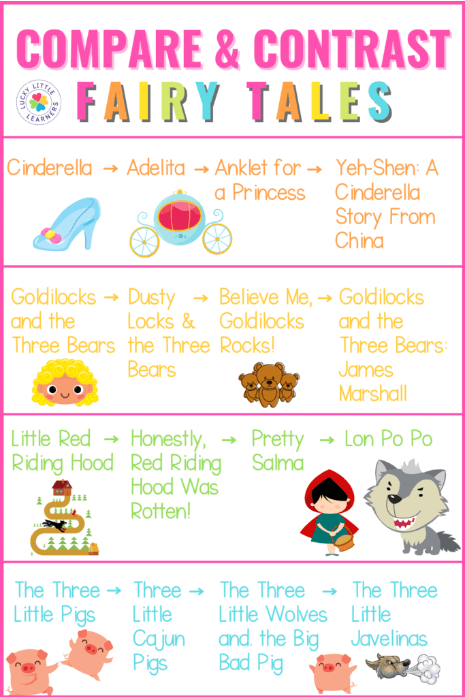
For more on this, check out this post: Compare and Contrast Fairy Tales.
5. Nonfiction Passages & Texts
Team Lucky Little Learners has been hard at work creating a new product to help with nonfiction comprehension: Nonfiction Compare & Contrast passages. These passages come in three levels (on, above, and below level) and will allow easy reading level differentiation while still having all students work on the same comprehension skill. Each page contains two passages. (Teachers can use these for fluency assessments!) Students will compare and contrast the two passages, focus on main idea and facts learned in the passages.


All Access member? Download here.
6. Compare & Contrast Toothy
Yep! There’s a toothy for that! Using mini Venn diagram organizers and recording sheets, students will compare and contrast two paired passages. (Great for fluency practice too!) These are available in digital and paper formats and for grades 1-2 complexity. Toothy is highly engaging for kids and setup is easy!


All Access member? Download here.
7. Student Bookmarks
Want your students to have their comprehension strategies at the fore front of their minds while reading independently? Check out the comprehension strategy bookmarks that are part of the Lucky Little Toolkit. Teachers can pass out bookmarks based on the current strategy being studied or individual student need.

All Access member? Download here.
Need more ideas? Check out the largest PLC on the planet in our Lucky 2nd Grade Teachers Facebook group.
Remember, together we are better!

3 Responses
Very helpful! I happen to be introducing Venn diagrams this week!
What is the best way to store Reading Toothy sets that do not fit into the rainbow containers such as the “Compare & Contrast” set?
Hi Kristy! We would love to help you with this question, please email us at customerservice@luckylittlelearners.com and we will do our best to answer it for you! Thanks so much!
Bailey J.
Lucky Little Learners