As AI becomes more integrated into classrooms, the potential benefits are vast, from simplifying lesson planning to enhancing student engagement. However, with great power comes great responsibility. Understanding the ethics, privacy concerns, and legal considerations surrounding AI in education is crucial for teachers who want to use these tools effectively and responsibly.
In this post, we’ll dive into the key issues teachers should be aware of when using AI tools in their classrooms, ensuring that they maintain privacy, security, and legal compliance. Let’s explore why these concerns are so important and how you can navigate them in a simple and straightforward way.
Why Should Teachers Care About AI Ethics and Privacy?
AI tools can help teachers save time, personalize learning, and improve classroom efficiency, but they also raise critical questions about student privacy. Teachers often overlook the implications of using AI tools that gather and store data, especially if those tools are not officially sanctioned by their district. But even free apps that seem harmless can store sensitive information, which could later become part of a data breach.
Here’s a real-world scenario: Imagine you’re using an AI-powered math fluency app that tracks student progress. You haven’t shared with parents that this app collects data on students’ scores, but what happens if a data breach occurs? That personal data—names, scores, and progress—could be exposed, putting student privacy at risk. This is why it’s vital to be transparent with parents and guardians about the data being collected.
What Is Data Privacy and Why Does It Matter?
Data privacy involves protecting student information—like their personal details, academic progress, and behavioral data—against unauthorized access or misuse. As educators, we need to ensure that the AI tools we use don’t violate FERPA (Family Educational Rights and Privacy Act) and other regulations that safeguard student data.
Consider a recent example: the LAUSD (Los Angeles Unified School District) launched an AI chatbot called “Ed” to help with student services. Unfortunately, the company behind the tool collapsed, and with it, questions about what happened to all the student data it stored. This case highlighted the vulnerabilities in using AI without fully understanding the implications on student privacy.
Legal Concerns When Using AI in the Classroom
Teachers must also be aware of the legal implications of using AI in their classrooms. Regulations like FERPA and COPPA (Children’s Online Privacy Protection Act) set guidelines for how student data can be used and shared.
For example, if a teacher uses ChatGPT to create personalized reading comprehension questions for students, it’s crucial to ensure that none of the students’ personal information is shared. Even if no names are directly used, AI tools can still gather data through IP addresses or by analyzing past usage patterns. It’s essential to regularly check your district’s AI policies and ensure compliance with the relevant laws.
How to Protect Student Privacy When Using AI Tools
As you adopt AI in your classroom, it’s crucial to choose tools that prioritize data privacy. Here are some practical tips for managing AI in a way that protects student data:
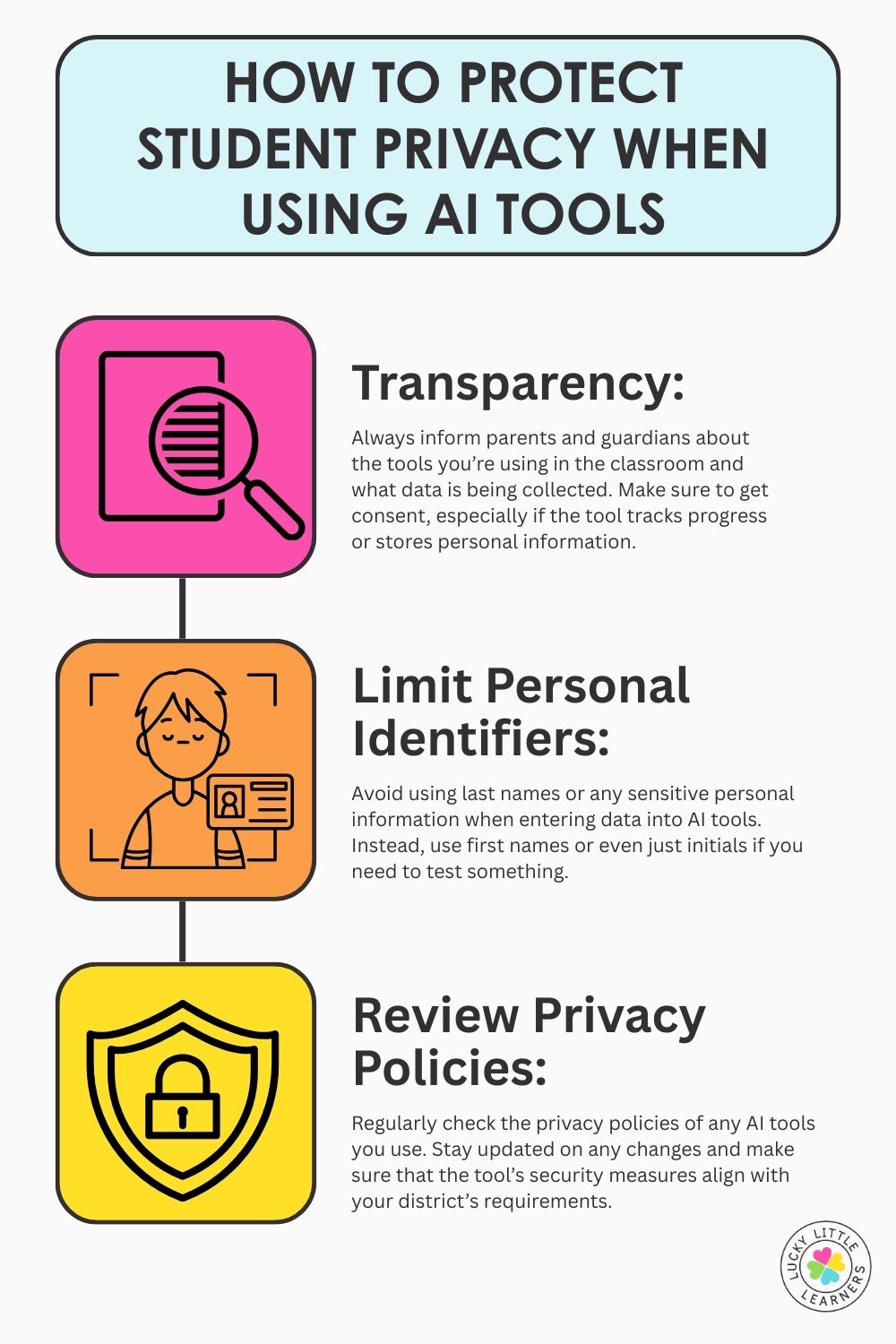
- Transparency: Always inform parents and guardians about the tools you’re using in the classroom and what data is being collected. Make sure to get consent, especially if the tool tracks progress or stores personal information.
- Limit Personal Identifiers: Avoid using last names or any sensitive personal information when entering data into AI tools. Instead, use first names or even just initials if you need to test something.
- Review Privacy Policies: Regularly check the privacy policies of any AI tools you use. Stay updated on any changes and make sure that the tool’s security measures align with your district’s requirements.
By taking these precautions, you help ensure that AI tools are being used ethically and with respect for your students’ privacy.
AI Bias and How to Combat It
AI tools are only as unbiased as the data they’re trained on, and unfortunately, this data can reflect the biases present in our society. As educators, it’s essential to review AI-generated content for fairness and inclusivity.
Here’s an example: Let’s say you use an AI tool to create stories for early readers, but all the characters are from the same cultural background. This lacks the diversity that students need to see in their learning materials. The solution? Simply ask the AI to diversify the characters or adjust the content to better reflect the real world.
By reviewing AI-generated content and pushing back against biased suggestions, you can ensure that your classroom remains inclusive and fair.
Teaching Students About Responsible AI Use
As teachers, it’s not just about using AI responsibly ourselves—it’s also about teaching our students how to use it ethically. This is crucial as AI becomes more ingrained in daily life. Here are a few mini lessons to help students develop responsible AI habits:
- Respecting Others’ Ideas: Teach students how to use AI to generate ideas but also how to add their own creativity. AI can inspire, but it should never replace their own imagination.
- Fairness: Have students share their AI-generated ideas with classmates and ask for feedback. This helps them understand the importance of collaboration and fairness.
- Responsible AI Use: Guide students to use AI as a tool to assist their creativity—not to replace it. They should always be the ones making decisions, not the machine.
- Kindness and Respect: Encourage students to treat AI with the same respect they would treat others. Use AI tools to foster positive interactions and kindness, both online and offline.
By incorporating these ethical lessons, you help students understand the larger implications of AI and how to use it responsibly.
Navigating the Ethical and Legal Landscape of AI in Education
Using AI in the classroom is an exciting opportunity, but it’s also one that requires careful consideration of privacy, legal, and ethical issues. By taking proactive steps to ensure the tools you use are secure and respectful of student data, you can create a safer, more responsible learning environment.
It’s important to stay informed, review privacy policies, and implement best practices to protect your students’ data while using AI tools to enhance their learning experiences.
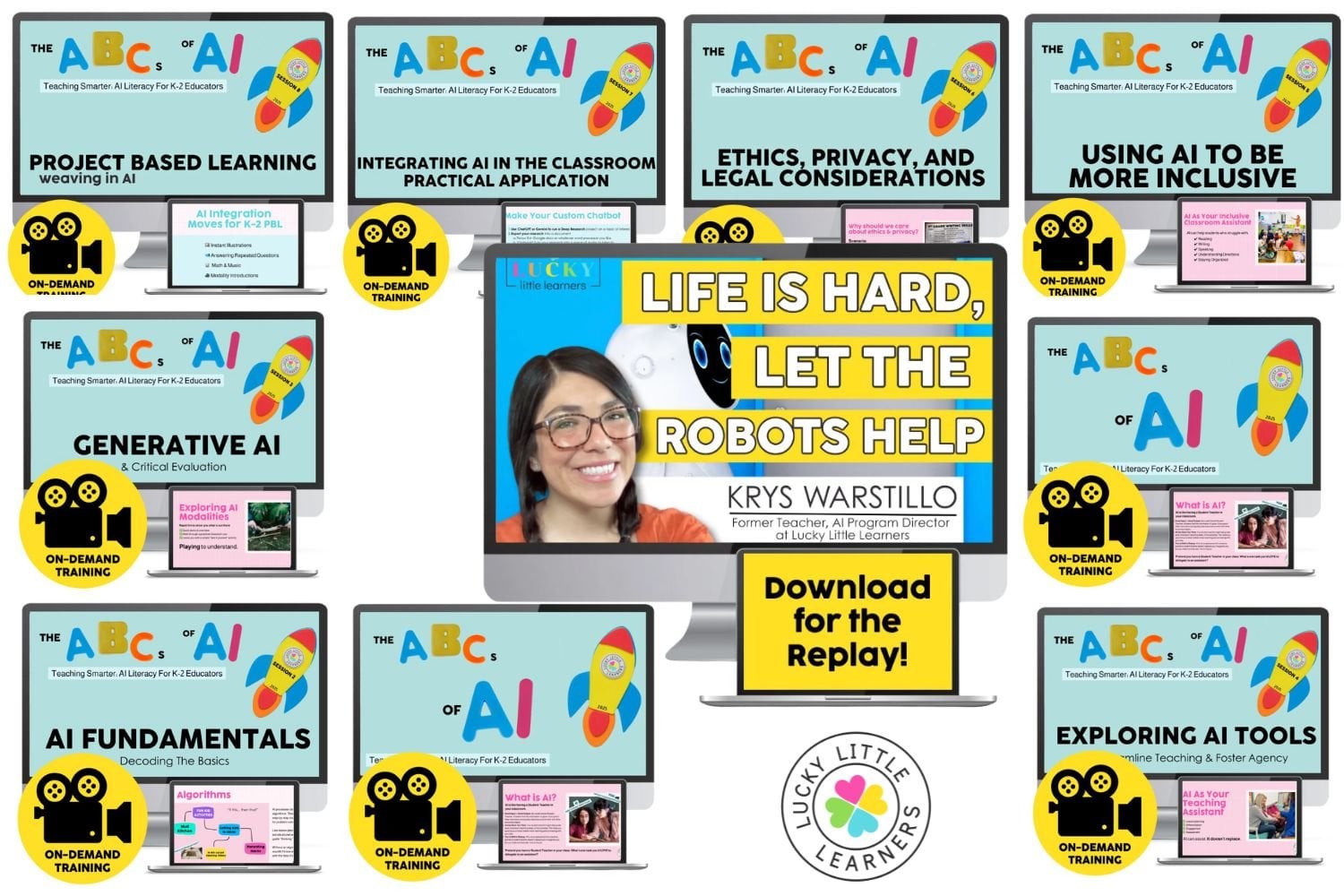
Get instant access to all of our AI trainings for teachers!
Learn how to implement AI tools in your classroom effectively and responsibly—without the confusion and uncertainty.
The ABCs of AI for K-2 Teachers