Overwhelmed about starting writing instruction? You’re not alone. I felt the same too, especially when writing seemed like my weak spot. But once I tried using mini lessons that were simple and purposeful, everything changed. Let me share some of my favorite writing mini lessons perfect for the start of the school year. They’re crafted to build confidence and routine across both 1st and 2nd grade classrooms. Plus, these lessons are flexible and low-prep, setting the stage for strong writing habits all year long.

These ideas also connect directly to Unit 1 of Lucky to Learn Writing, which includes printables, anchor charts, self-reflection tools, and pre-assessments that support everything listed here.

Join All Access to download everything we’ve ever made.
Writing Mini Lessons Idea #1
Things We’d Expect Students To Know But Maybe They Don’t
First things first, are you finding gaps in basic writing skills? Maybe your students are having trouble with letter formation or understanding what a complete sentence is? That’s okay! Just back up and start where your students are. Lucky to Learn Writing offers resources such as letter formation videos and printables that make lessons engaging and supportive.
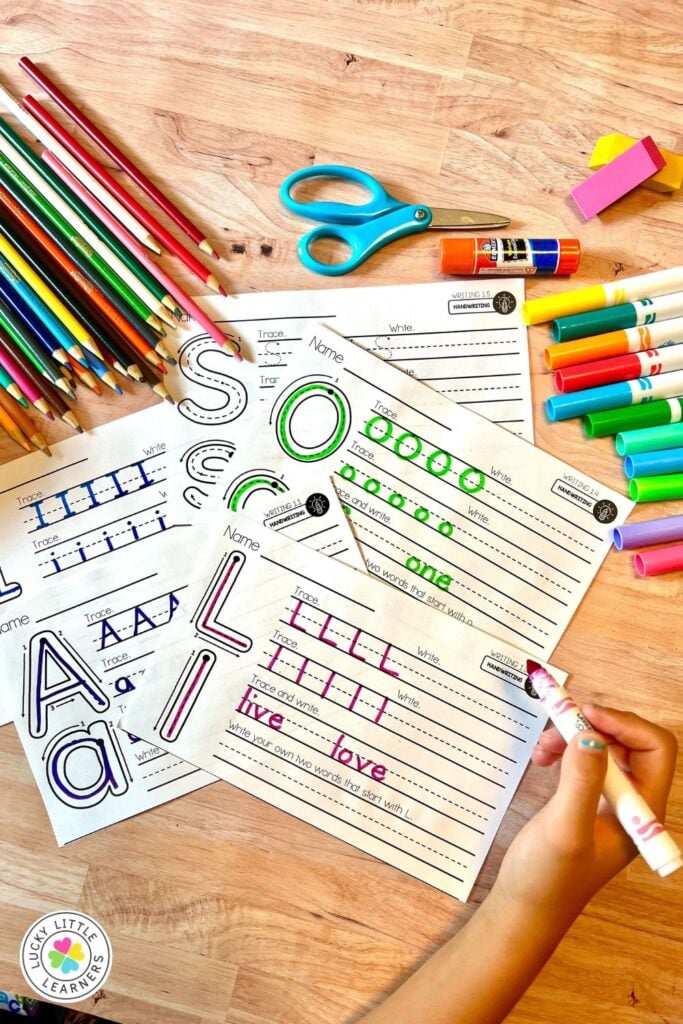
Check for:
- Proper letter formation
- Use of handwriting lines
- Punctuation usage
- Complete sentences
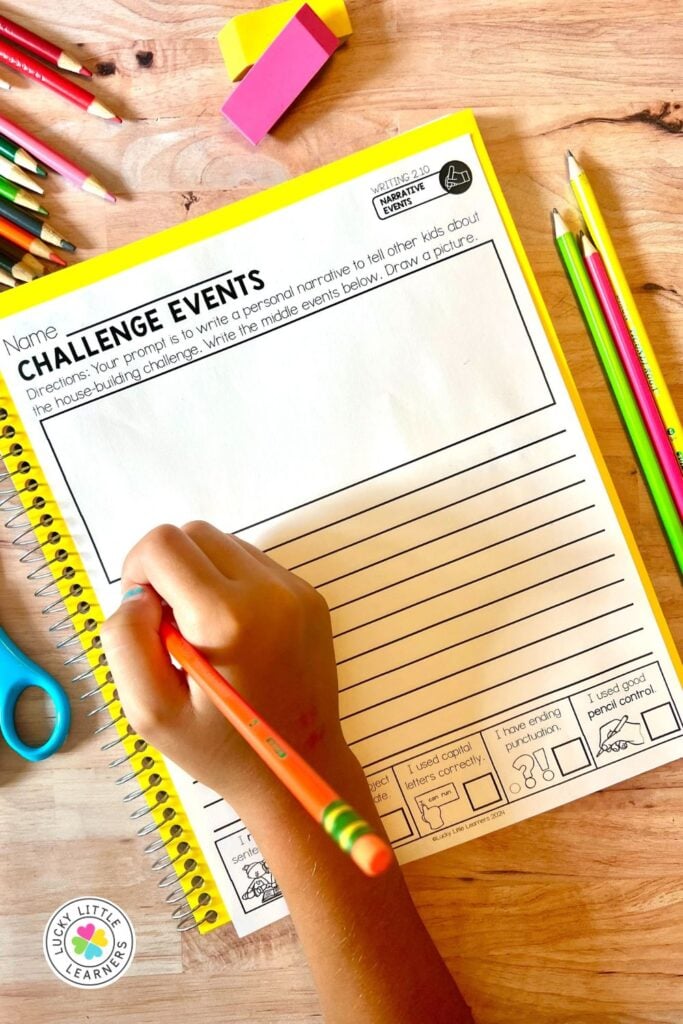
When students are ready to move on, start with a narrative writing assignment that has handwriting lines, a word list, and room for an illustration.
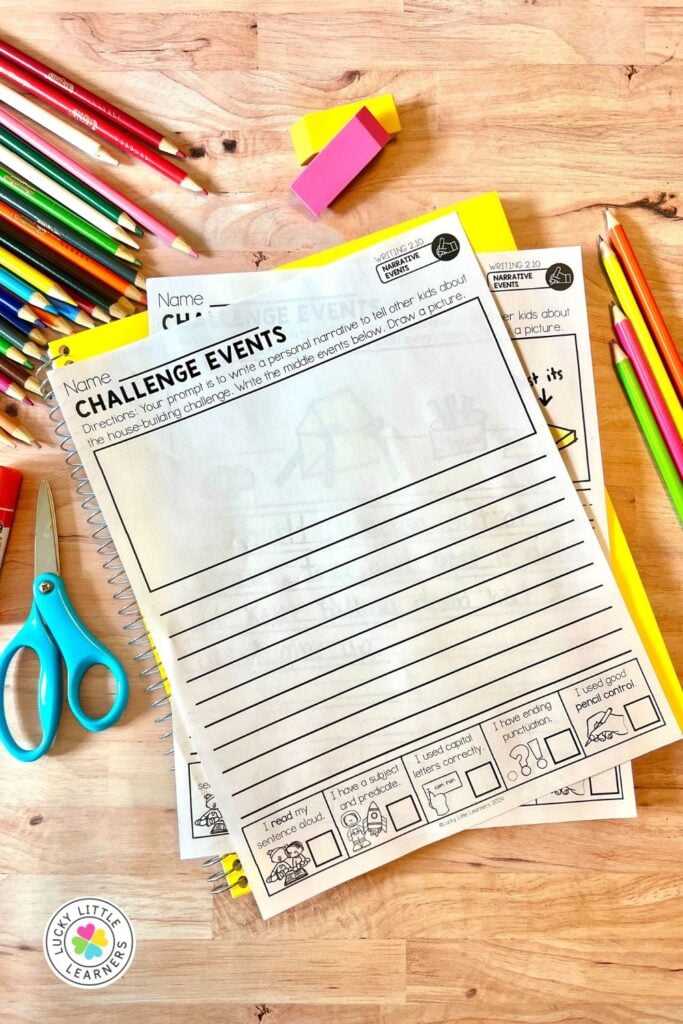
Set a timer and just let students write. I usually give them 10-15 minutes since that’s about how much stamina many students begin with. Collect their writing and look for skills you should be seeing but aren’t. Some things to look for:
- Are they forming their letters correctly?
- Can they write using handwriting lines?
- Are they intermixing capital and lowercase letters throughout their writing?
- Are they using any punctuation?
- Do they write in complete sentences?
- Is their writing legible?
- Can you sound out their writing?
- Where do they start writing on a page?
Look for patterns and group students accordingly. Each of these questions can be the base for quick writing mini lessons. Start the super basics like letter formation and how to use handwriting lines then scaffold from there. Meet your students where they are to minimize frustration as you move through the school year. It makes no sense to jump into graphic organizers if your students are still struggling to write on the lines.
Writing Mini Lessons Idea #2
What Are Some Real Ways People Write Every Day?
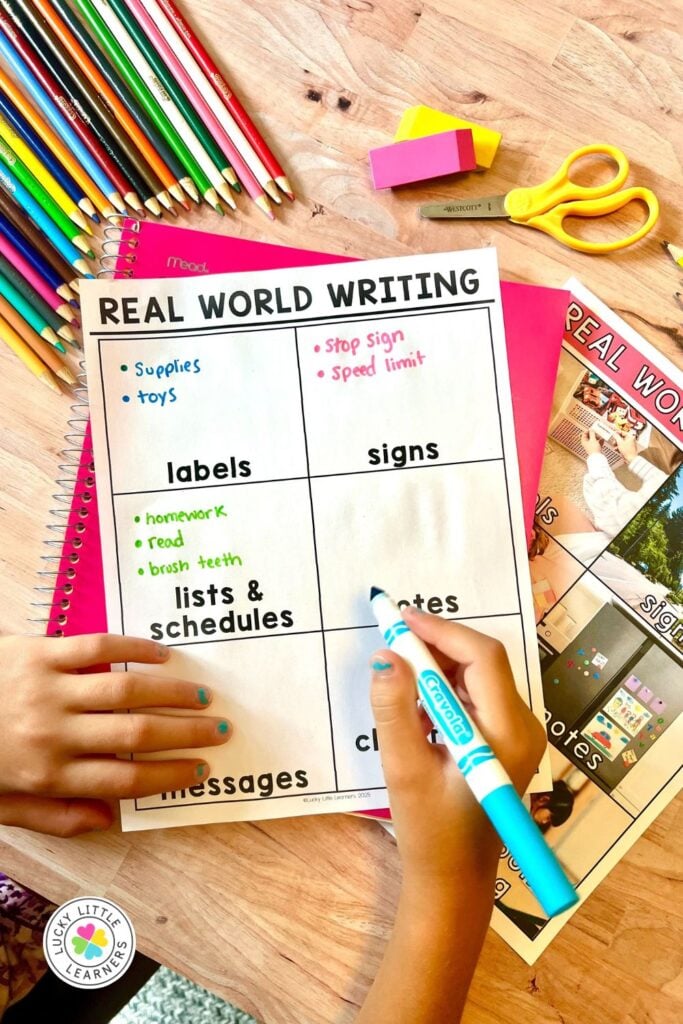
For students who are ready for it, start by talking about WHY people write. This is especially important for reluctant writers. Make it real for them. Work together to create an anchor chart of all the ways writing is part of our daily lives. Make sure to add in things they’d like to write. Here’s an example anchor chart in case you need a little inspiration!

Also, Lucky to Learn Writing provides an anchor chart specifically for 2nd graders and weekly writing examples for 1st graders to illustrate this concept.
Writing Mini Lessons Idea #3
Coming Up With Original Ideas
One of the most common phrases I heard in my classroom during writing instruction is, “I HAVE NOTHING TO WRITE ABOUT!” You and I know that’s not true and usually comes from a desire to not write or frustration with writing or honestly, maybe they just slept poorly and the creativity just isn’t there today. That’s where this mini-lesson comes into play.
Create an anchor chart with interesting prompts. These should all be very short prompts that spark creativity in your students. Remember to draw a quick picture for each prompt for students who aren’t fluent readers. Here’s an example of what that anchor chart may look like:

During your writing block have students reference this chart if they feel stuck. If you find that they look at the chart and say, “that’s doesn’t help me. I don’t have anything to write about” I will ask them to tell me a story using one of the prompts. While they talk, I draw a quick storyboard on their desk with a dry-erase marker. I’m talking about a very basic drawing with stick figures or symbols. Then, they have a quick visual to reference as they begin writing.

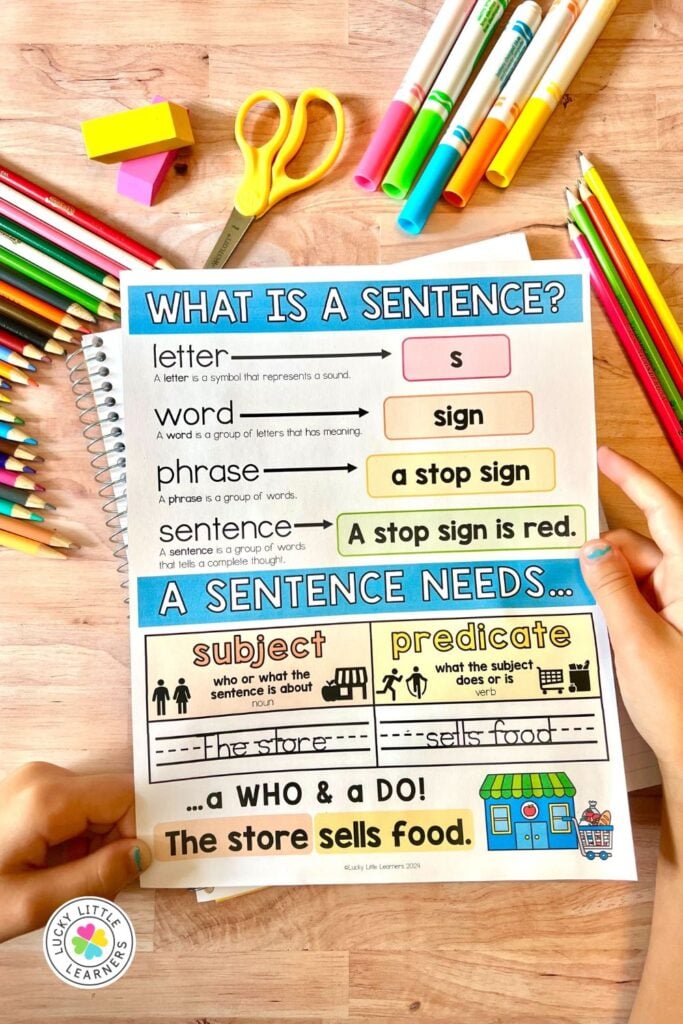
Also, using a sentence building chart to show students the steps & parts of a complete sentence.
Writing Mini Lessons Idea #4
Organize the Ideas in Your Head with a Planning Template
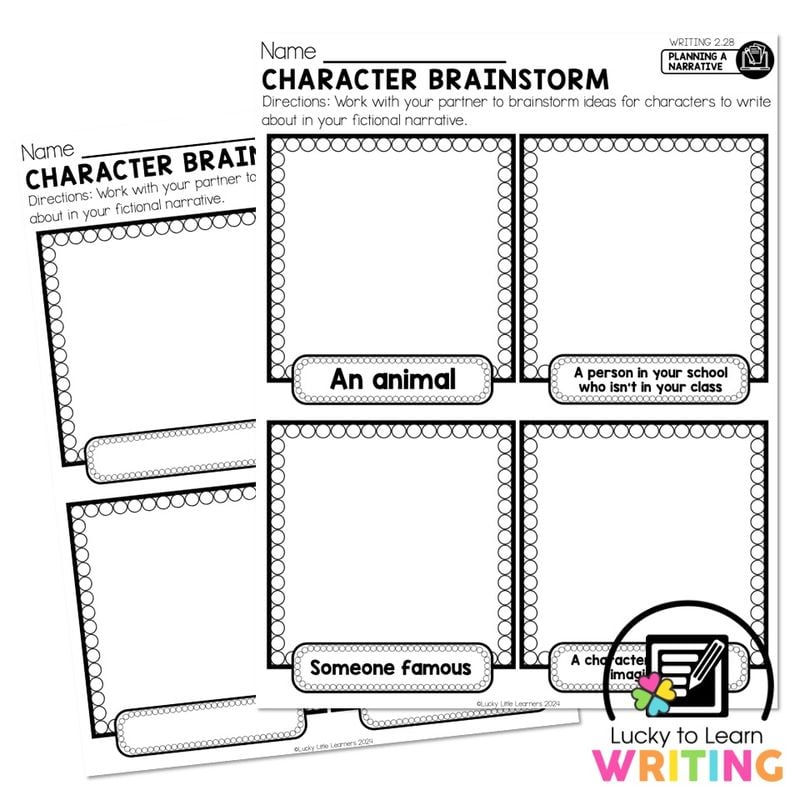
Young writers are full of imaginative ideas, but translating those ideas onto paper can be tricky. That’s where planning templates come in handy. A simple, structured tool (like the Character Brainstorm sheet shown here) can help your students build confidence and get their ideas flowing.
I generally start the year with a unit on narrative writing because it is a fun and flexible place to begin. Here’s how I guide students through organizing their ideas into a planning template:
Characters
This organizer (included in Lucky to Learn Writing) has five simple boxes:
- An animal
- A person in your school who isn’t in your class
- Someone famous
- A character from your imagination
- (One blank box for any other idea)
- Draw First, Write Later
With 1st and 2nd graders, I introduce the organizer one box at a time. I set a 3–4 minute timer and encourage them to just draw a quick sketch of each character idea.
This keeps the pressure low—no need to worry about spelling or handwriting. Just imagination! - Go Back to Add Writing
Once all five sketches are complete, we revisit each box together. This time, students add names, character traits, or short sentences.
The visual anchor makes it easier for them to recall what they were thinking. - Build From There
These brainstormed characters become seeds for their stories. Students pick one and move into the next stage: planning the setting, plot, and problem.
With 1st grade students, I like introducing each box and working through them one at a time. Normally, I set a timer for 3-4 minutes and tell them to just draw a very quick picture of their idea for that box. We do this for all 5 boxes. Drawing the picture first helps them get their ideas down without the stress of encoding. Pure creativity. Once their drawings are done we go back and start writing.
Writing Mini Lesson Idea #5
Teach 5-Star Writing
With our little learners, a visual rubric is going to be your best friend (and theirs!) I love having a writing bulletin board up.

Lead a mini lesson on what Star Writing is and how to use the bulletin board to figure out where on the spectrum their writing falls. Star Writing is writing that is neat, best spelling is used, images are detailed and carefully colored, and it hits their writing goals. You can set these writing goals as a class, as small groups, or for individual students. Star Writing helps students visualize expectations and self-monitor.
Student Reflection
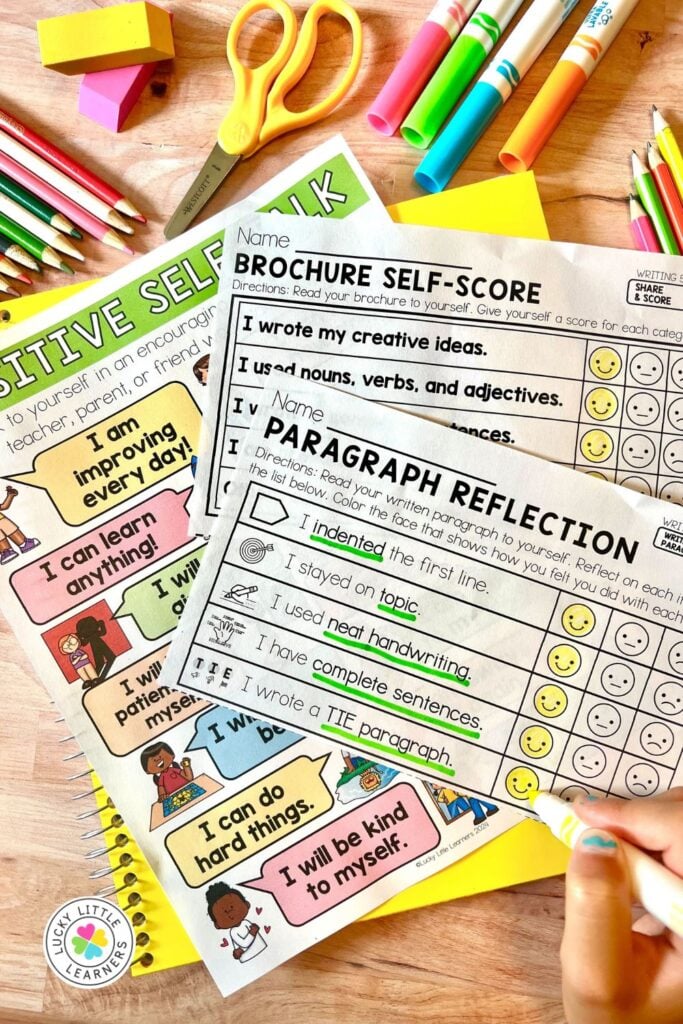
Self-reflection as a self-regulation strategy supports students in monitoring their progress. Also, try using a self-reflection checklist alongside these concepts.
Writing Mini Lesson Idea #6
How To Spell Words
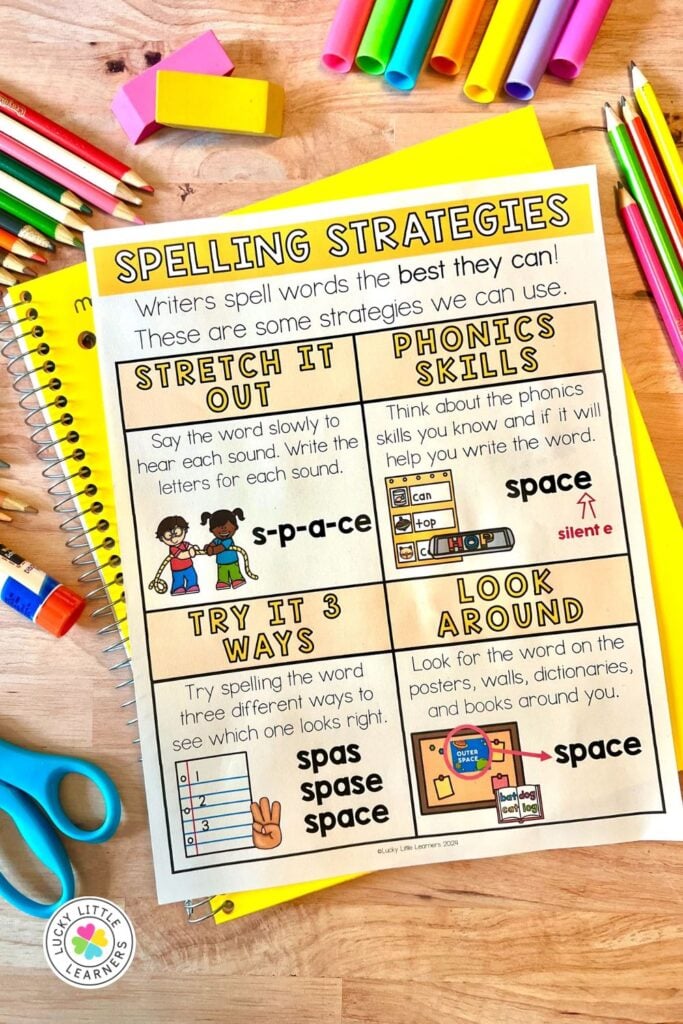
The last mini-lesson idea is all about teaching your students spelling strategies that will help them as they continue to develop as writers. These spelling strategies can easily be turned into seven separate lessons. Teach them one by one and create an anchor chart together as you move through them. When you’re done teaching all of them, you can give your students a personal list of all 7 strategies to keep in their writing folders or notebooks!

The Lucky to Learn Writing curriculum includes spelling strategy teaching slides, all prepped and ready to go!
Check out this blog post If you’re looking for more writing mini lessons that stick.
More Beginning-of-Year Writing Skills to Teach
If you’re seeking additional focus areas for the first weeks, Lucky to Learn Writing Unit 1 includes a full scope and sequence. Key skills:
- Pencil Grip & Letter Formation: Essential even for 2nd graders to reinforce proper technique.
- Starting Points on the Page: Developing left-to-right tracking and using handwriting lines.
- Spacing Between Words: Use fun methods like the “spaghetti and meatball” trick or a finger spacer.
- Understanding Complete Sentences: Start with oral sentence building and sentence scramble exercises.
- Stretching Words for Spelling: Introduce sound mapping and utilize an alphabet chart.
- Adding Illustrations to Writing: Perfect for modeling labeling and including details in illustrations.
- Reflecting on Work: Begin with basic self-reflection using smiley/sad face checklists or the Star Writing rubric.
These beginning skills are embedded in Lucky to Learn Writing with tools like printable handwriting practice pages, letter formation videos, anchor charts, and simple self-reflection routines, so you don’t have to piece it all together on your own.
Lucky to Learn Writing includes all resources mentioned: printables, assessments, anchor charts, and more, all within reach. Follow a gradual release model with LTLW’s lesson flow, including explicit instruction, guided practice, and independent writing.
Join All Access to download everything we’ve ever made.
Make Teaching A Breeze!
Join All Access and grab everything you need for your classroom! With All Access, you instantly have everything we have ever created at your fingertips. From full lesson plans and fun digital slides to handy printables.
Don’t miss out…unlock all these resources and more today!

One Response
this looks awesome!