You’ve spent the whole day managing classroom chaos, answering a thousand questions, and finding someone’s missing left shoe for the third time this week. Then you walk in the door at home… and a whole new list of responsibilities is waiting.
Teaching may be your job, but it’s not your only one. Whether you’re tackling the after-school dinner rush, organizing your family’s calendar, or trying to squeeze in five minutes of peace, your brain rarely gets a break. That mental load? It’s real, and heavy.
That’s where these real life ways teachers are using AI come in. Not the techy, jargon-heavy kind, but realistic, everyday support that actually lightens the mental load.
Here are three simple ways busy teachers are using AI off the clock so managing home life takes less out of them, and they have more energy to give at school.
1. “What’s for Dinner?” Just Got Easier with AI
Skip the recipe rabbit hole and get fast answers based on what you already have.
After a full day of teaching, the last thing most of us want is to make one more decision — especially about dinner. Scrolling through cluttered recipe websites or wandering the kitchen hoping inspiration strikes? No thanks.
AI can help you quickly build a dinner plan that works with your real life and real fridge. Instead of starting from scratch, try a prompt like:
“Create a 3-day dinner plan using chicken thighs, rice, frozen peas, and cheddar cheese. Keep it kid-friendly.”
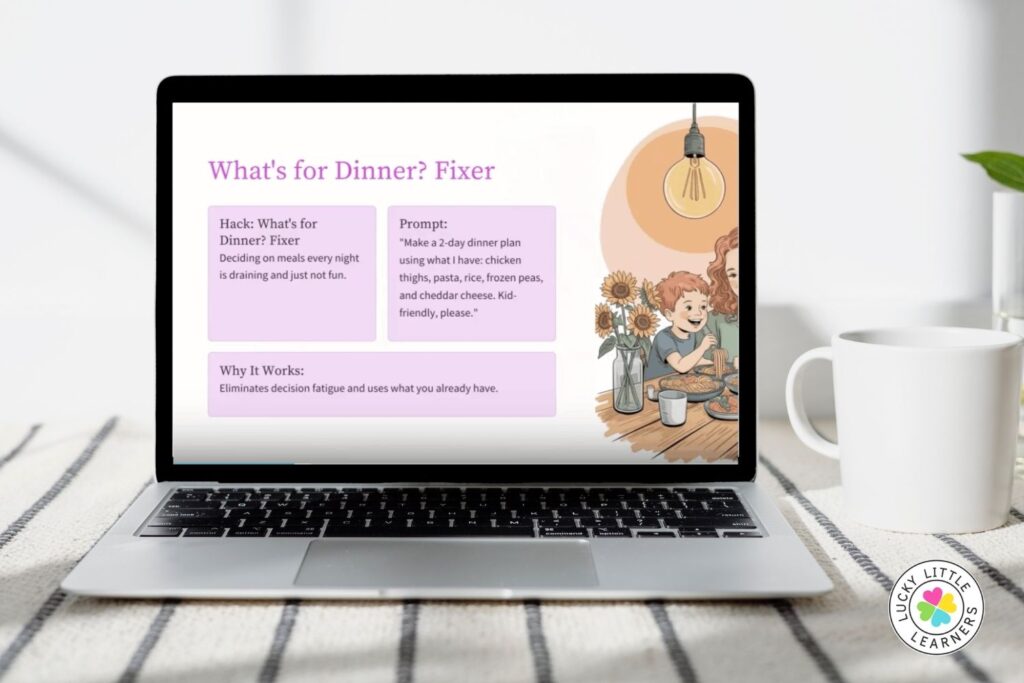
You can even ask for side dishes, time-saving prep tips, or substitutions for ingredients you’re missing. Then, follow it up with:
“Can you turn this plan into a grocery list?”
Simple. Fast. No brainpower required. And way better than cereal… again.
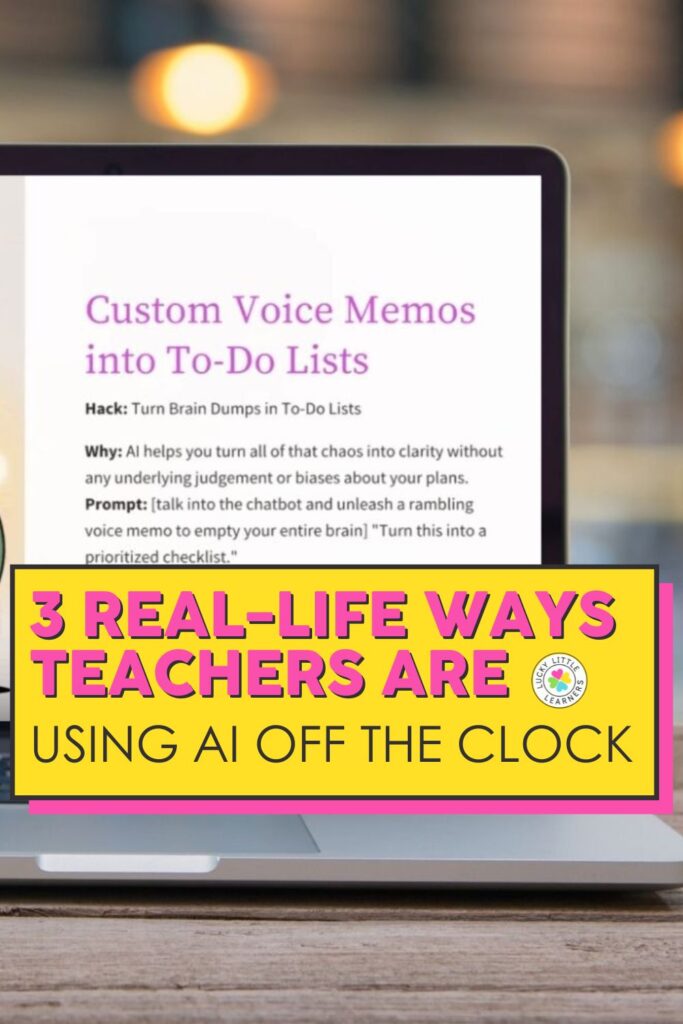
2. Turn a Full Brain Into a To Do List in Seconds
Clear your mental clutter with one simple prompt.
You know that feeling when your brain is juggling 27 tabs and you can’t remember what you were doing next? Teachers carry so much: school tasks, home responsibilities, appointments, reminders. That mental load builds up fast.
Instead of letting it swirl in your head, try this:
“Here’s everything I need to do this week: [insert mental list]. Can you organize this into a daily to-do list by priority?”
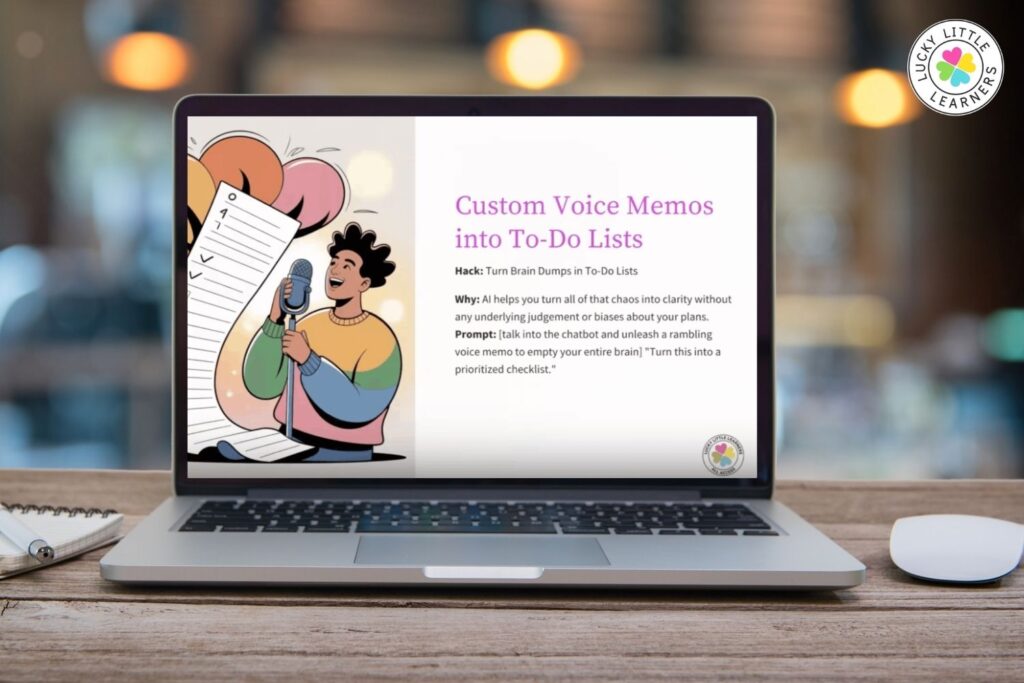
Within seconds, you’ve got a clean, prioritized checklist. Even better? You can speak it into your phone using the ChatGPT voice feature, then copy and paste the list into your notes app or planner.
No more juggling everything in your head. No more dropped balls.
3. Let AI Help with the Little Parenting Wins
From silly lunch notes to calming bedtime stories, AI can be your creative backup.
As a teacher, you already go the extra mile for kids all day. At home, you still want to do the sweet things — like lunchbox notes or fun bedtime stories — but sometimes the energy just isn’t there.
AI can help you show up in small but meaningful ways without using up what little brainpower you’ve got left.
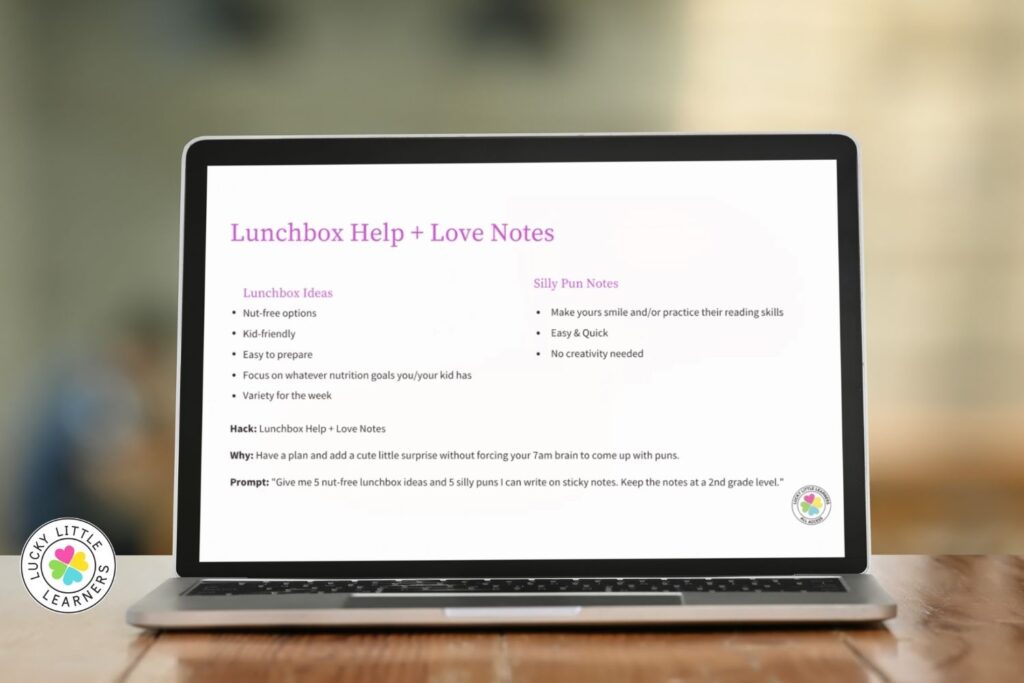
Try a lunchbox note prompt like:
“Write a second-grade-level joke about spaghetti for a lunchbox note.”
Or a bedtime prompt like:
“Make up a 2-minute bedtime story about a girl named Ava and her dog who finds a cloud that talks.”
These little moments feel personalized and thoughtful — but they take seconds to create. And if your child has a specific obsession (dinosaurs, Pokémon, mermaids), AI can tailor everything to them.
Being present doesn’t have to mean doing it all yourself.
You Don’t Have to Do It All—Let AI Help
You carry a lot. At school. At home. In your head. Even when you’re “off the clock,” the list keeps growing. But here’s the good news: you don’t have to handle every detail alone.
AI can reduce the mental load and help you get through everyday life with more clarity, less stress, and a little more time for yourself.
Want more real life ways to use AI?
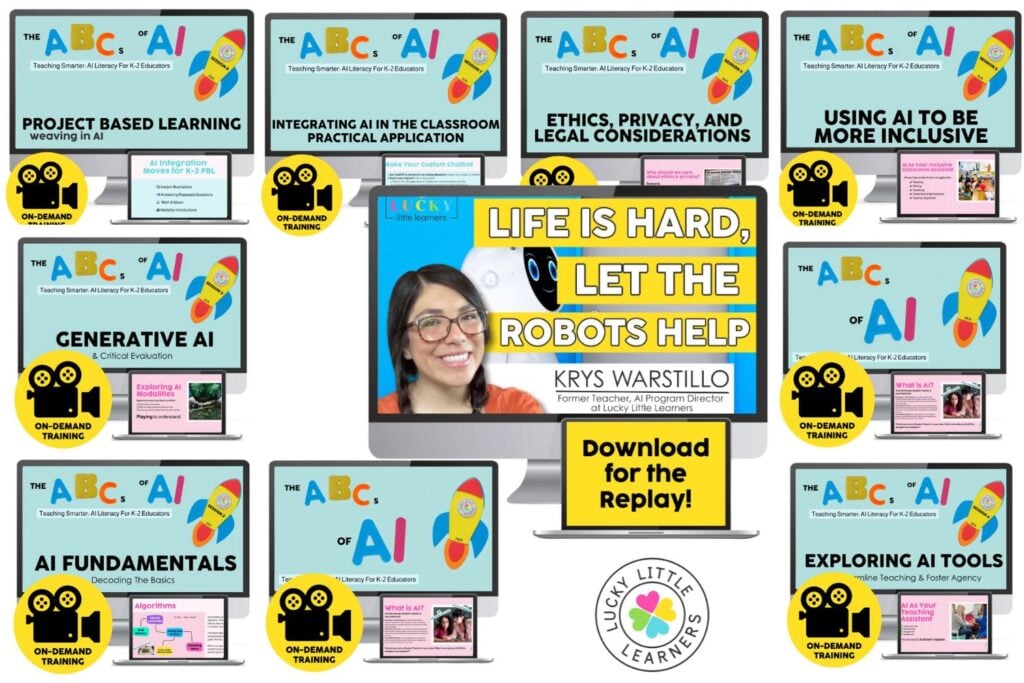
We’ve got you covered with a full training on real life ways teachers are using AI — both at home and in their personal routines.
When you purchase the complete ABCs of AI for K-2 teachers video series you’ll get the background knowledge plus practical ideas and specific prompts tailored for primary teachers, including how to:
- Plan trips, chore charts, and birthday parties
- Write kind and clear (and sometimes firm!) messages for parents, coworkers, or group chats
- Create personalized bedtime stories and visual routine charts
- Turn complex research into a podcast you can listen to on the go
- And so much more…