
The buzz in education right now is loud and clear. Teachers are deeply concerned about their incoming students, especially those struggling with writing. Many kids are finding it harder than ever to put their ideas on paper and organize their thoughts effectively. That’s where our Learning to Write (LTLW) curriculum & strategies come in. By integrating these effective, hands-on approaches, you can help your students grow into confident writers this year. With LTLW, you have the tools to support and scaffold your students as they navigate their writing journey.

Read on for some practical ideas to help your struggling writers. In no time, you’ll take kids from struggling to write a complete sentence to writing fully developed essays for each of the three types of writing.
Strategy #1 – Scaffold, Scaffold, Scaffold!
Scaffolding is key, especially starting with the planning stage of writing. With Lucky to Learn Writing visual supports like grade-specific sentence starters, we create a bridge for students to organize their thoughts
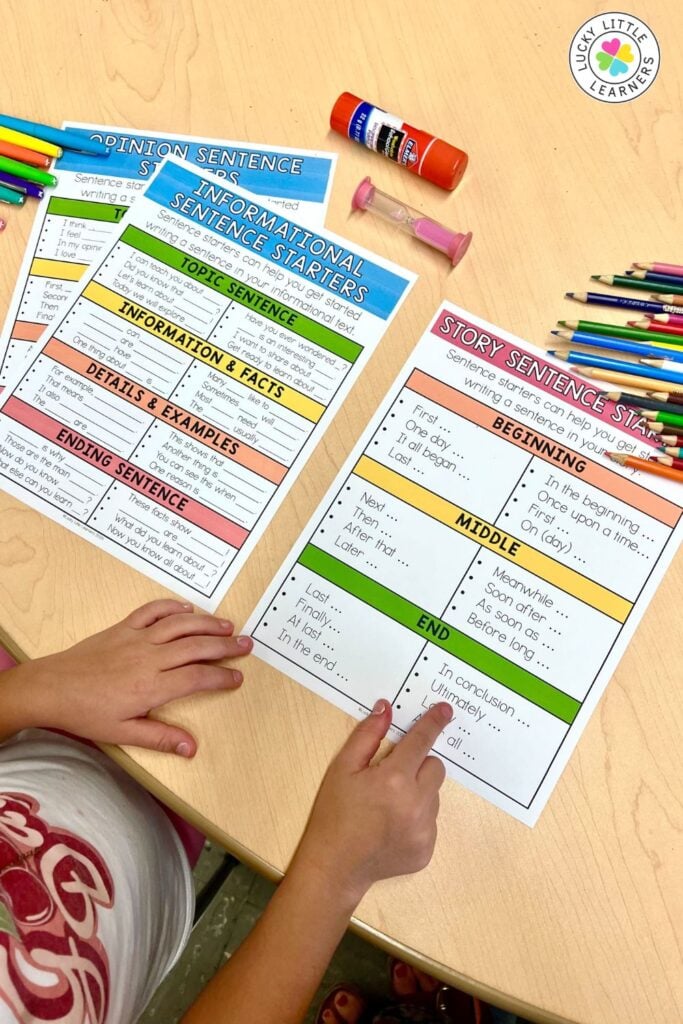
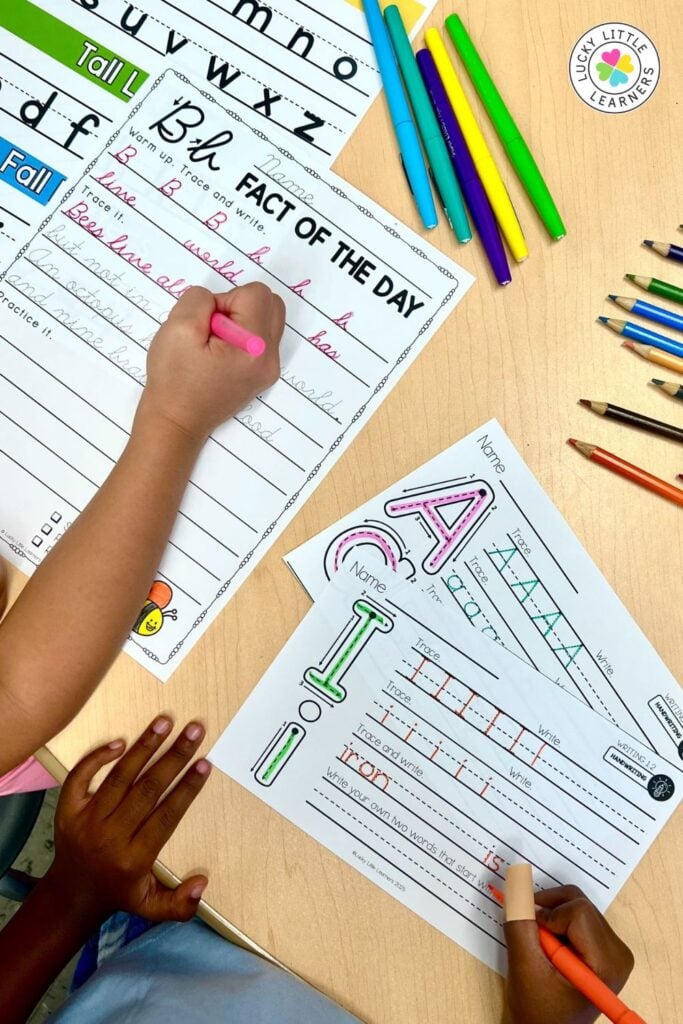
Handwriting practice is equally crucial for struggling writers. Using printables with tailored sentence starters and handwriting lines offers a strong writing foundation. Provide writing prompts with vocab boxes and narrower handwriting lines for those who prefer them, and keep extra paper without picture boxes handy.
Strategy #2 – Break Skills Down
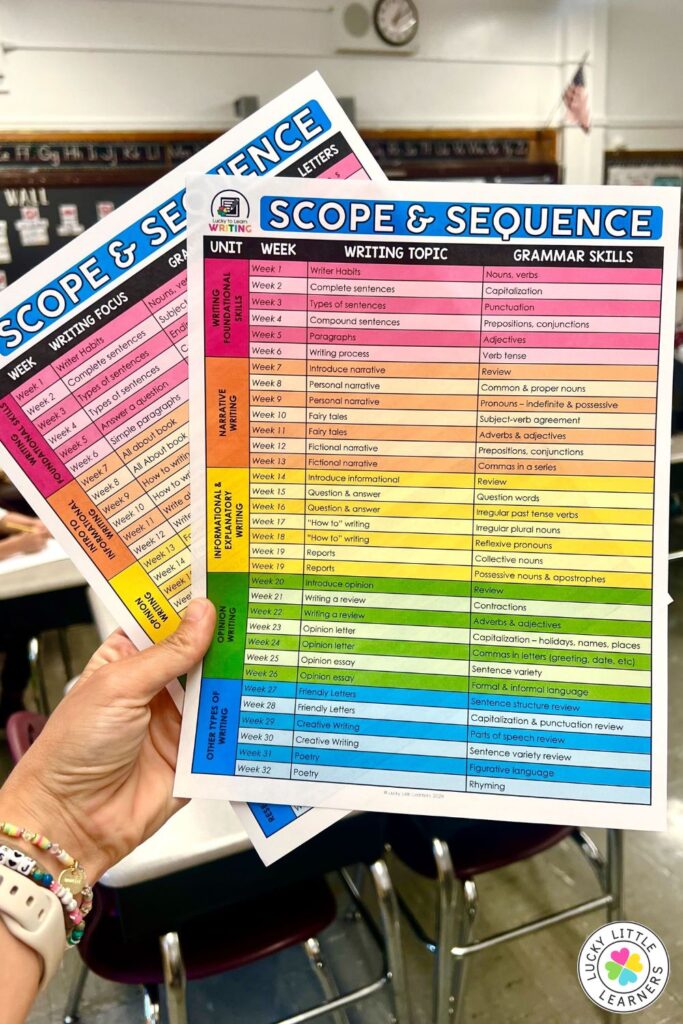
By breaking skills into smaller parts, students can tackle complex tasks like writing more easily. Let the objectives in the scope and sequence guide your teaching.
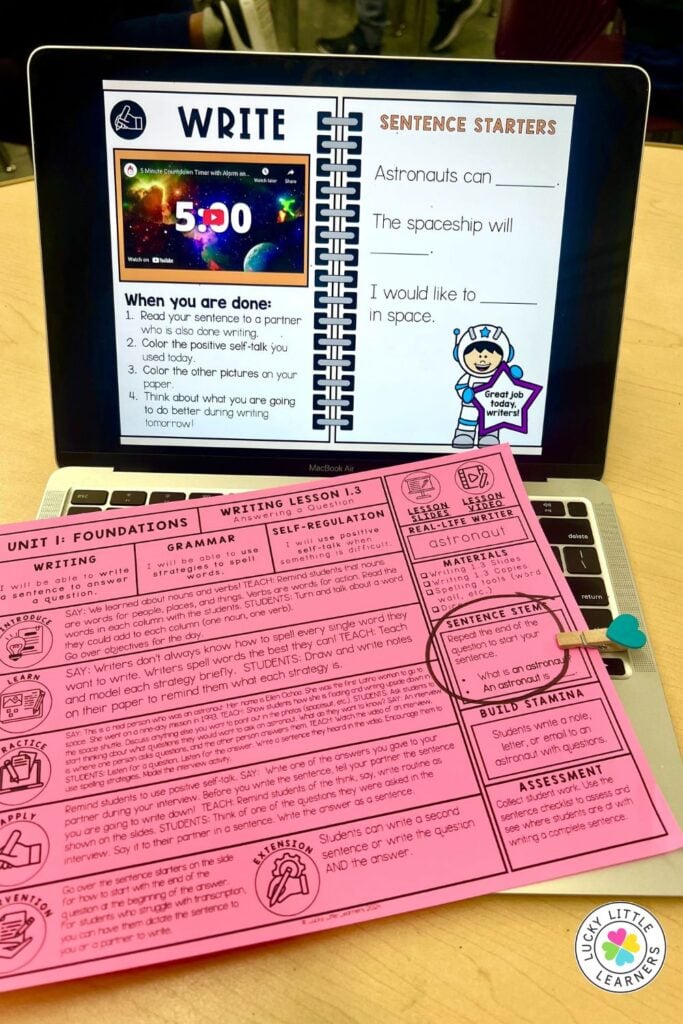
Plus, the lesson plans and slides offer easy-to-follow steps to make sure each skill is taught effectively, helping students gradually build their writing abilities.
Strategy #3 – Make the Goal Clear
Clear objectives are critical for learning. Implement rubrics and checklists specifically designed for LTLW to give students a clear understanding of what they should aim for. Incorporating anchor charts and digital slide lesson objectives provides visual reminders, reinforcing their goals throughout the writing process.
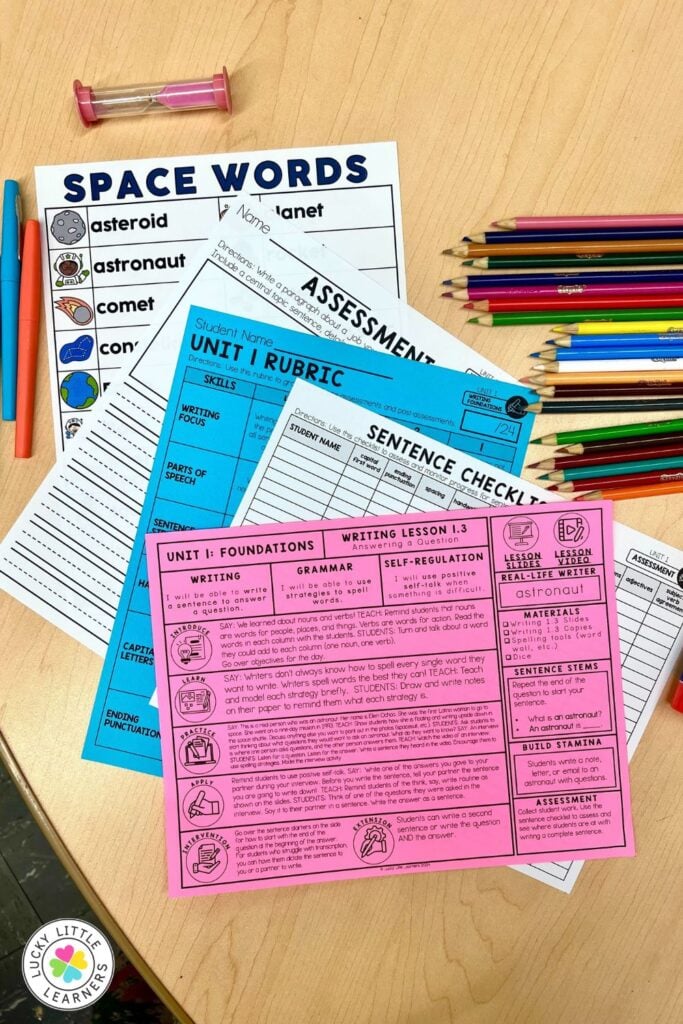
Another way to break down writing tasks is to include a checklist right on the prompt. Not only do these checklists serve as a reminder of what to include in their writing, they also make the big task (writing a story/narrative) seem smaller.
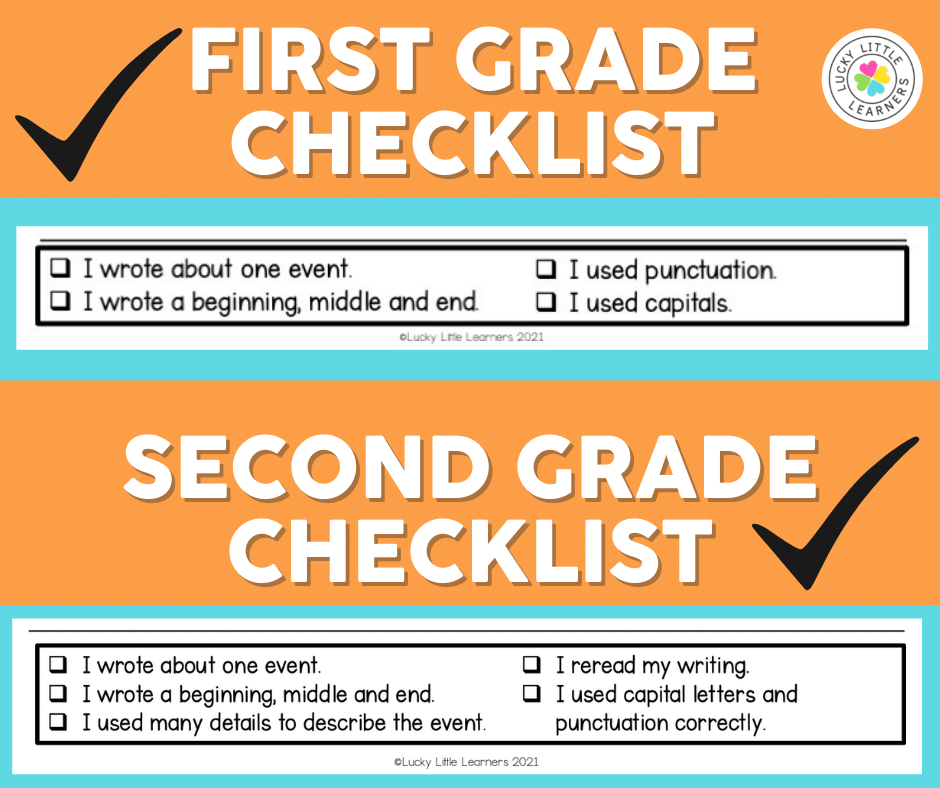
Some teachers give kids writing checklists like the examples above to use as an editing tool after the draft has been completed. We recommend setting kids up for success by copying the checklist directly on the writing paper. This way kids can see what their completed piece should include before they even start writing!

Help Struggling Writers with Visual Rubrics
Showing visual examples of strong and weaker student writing, along with goal cards, helps students grasp their writing objectives. Display these for each type of writing you cover.


Strategy #4 – Use Resources That Support a Progression of Levels
To help students level up their skills, use the intervention and extension ideas from LTLW lesson plans. Keep students engaged with ‘When I’m Done’ activities that offer extra practice and enrichment. These resources meet kids where they are and help them grow in their writing.
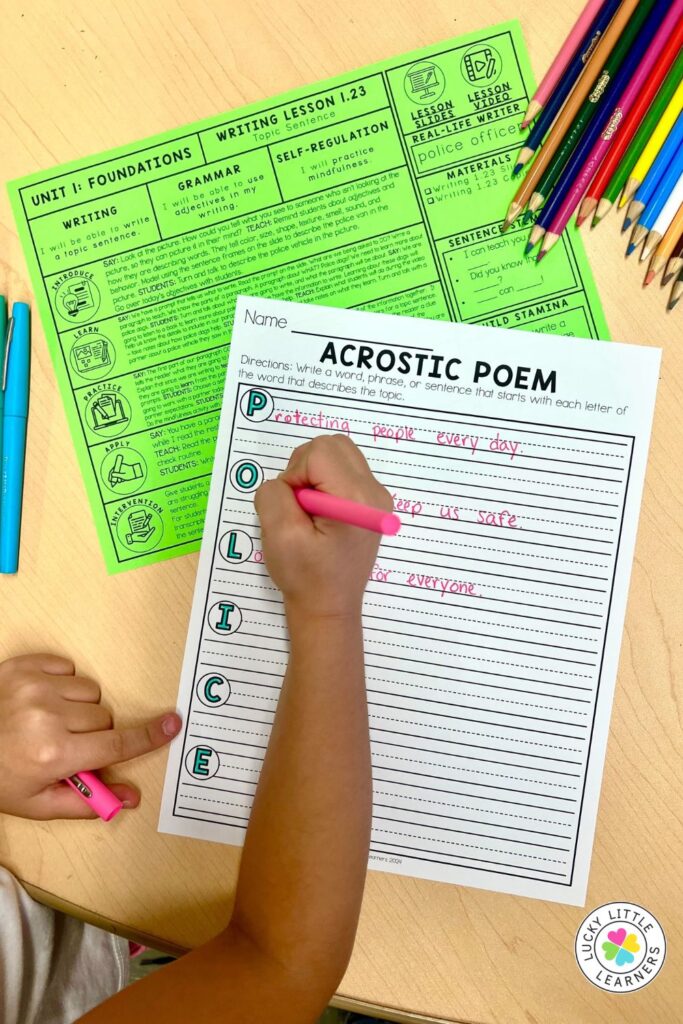
And that’s not all! If you’d love to make writing goals crystal clear for your students this year, you’ll want to grab our ready-to-go Writing Bulletin Board set.
Lucky to Learn Writing is equipped with daily lesson plans with skills practice, digital lesson slides, lesson videos, grammar skills, intervention ideas and more! Click below to easily teach meaningful and engaging writing lessons all year long.

Just remember, you’ve got this! With the right tools and a little extra practice, your lucky little learners will become confident writers in no time!

2 Responses
Is this resource available with the All Access?
Hello Mindy! Yes, it sure is. You can find everything here: https://shop.luckylittlelearners.com/all-access-series/writing-bulletin-board/