
Teaching the 4 types of sentences becomes easier when students use hands-on activities, anchor charts, games, and sentence sorting practice. These first and second grade sentence activities help students identify declarative, interrogative, imperative, and exclamatory sentences in fun and meaningful ways.
Are you teaching types of sentences? Look no further than Lucky Little Learners! We have the resources you need to teach the four different sentence types to your first and second grade students. Keep reading for anchor charts, hands-on activities and centers to teach the four types of sentences in new and fun ways!

What You’ll Find in This Post
- Resources to teach the 4 types of sentences
- Anchor charts and sentence type examples
- Hands-on grammar games and centers
- Sentence sorting activities for 1st and 2nd grade
- Writing activities that reinforce sentence types
What Are the 4 Types of Sentences Students Learn in Elementary School?
In first and second grade, students will learn to read and write four different sentence types. Here are the four sentence types with examples:
| Sentence Type | What It Does | Ending Punctuation | Example |
|---|---|---|---|
| Declarative (Statement) | Tells information or shares a fact | Period (.) | Taylor walked her dog. |
| Exclamatory (Exclamation) | Shows strong feeling or excitement | Exclamation Point (!) | This ice cream is delicious! |
| Imperative (Command) | Tells someone to do something | Period (.) or Exclamation Point (!) | Put your shoes on now! |
| Interrogative (Question) | Asks a question | Question Mark (?) | What time is it? |
How do you teach the 4 different sentence types to young children?
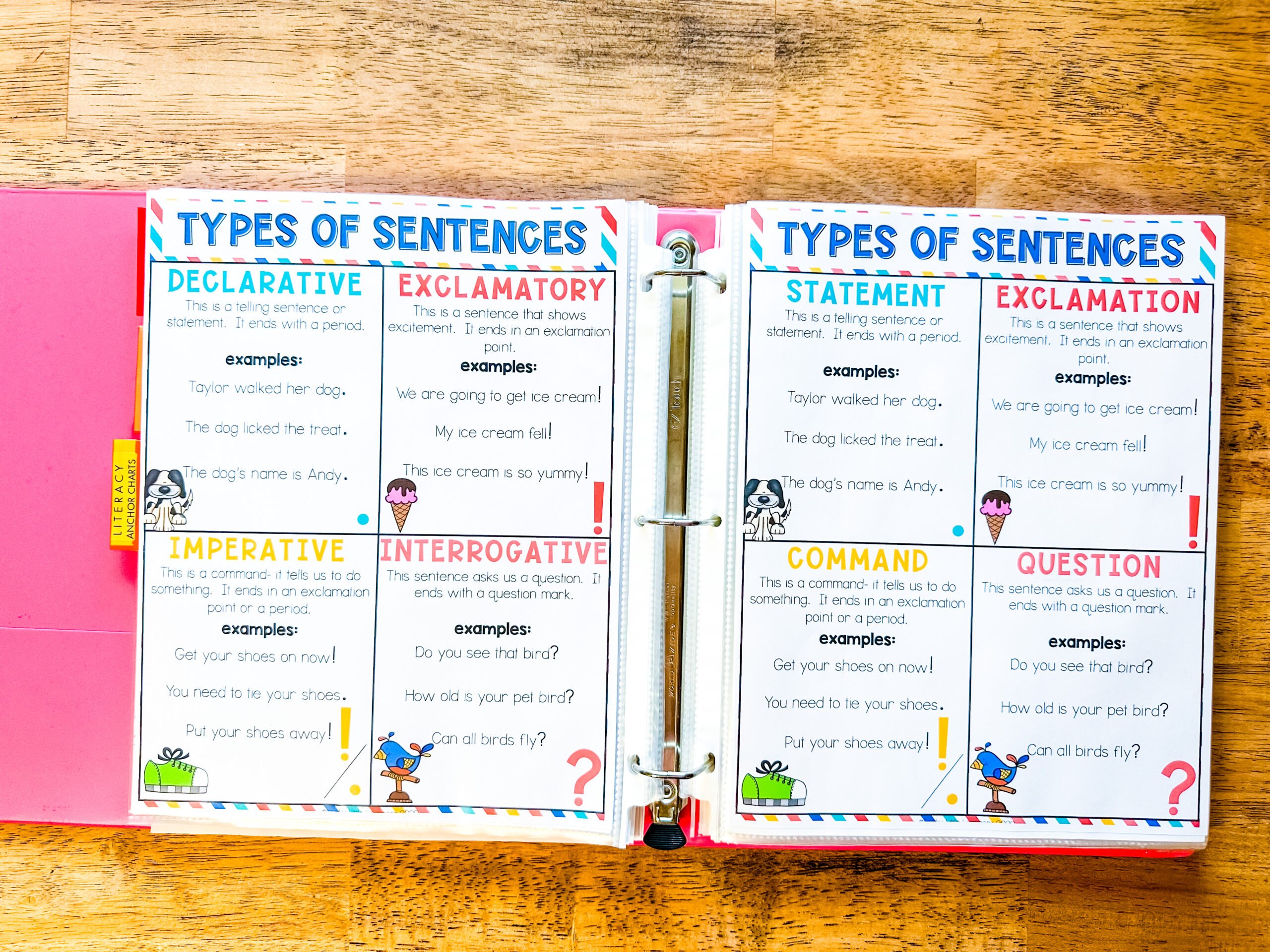
1. Start with Anchor Charts
These anchor charts are great to use during small writing groups, or whole class instruction. Learn how to print anchor charts to poster size on your own computer.
Why it works: Anchor charts give students a visual reminder of sentence types and punctuation they can refer back to during reading and writing activities.
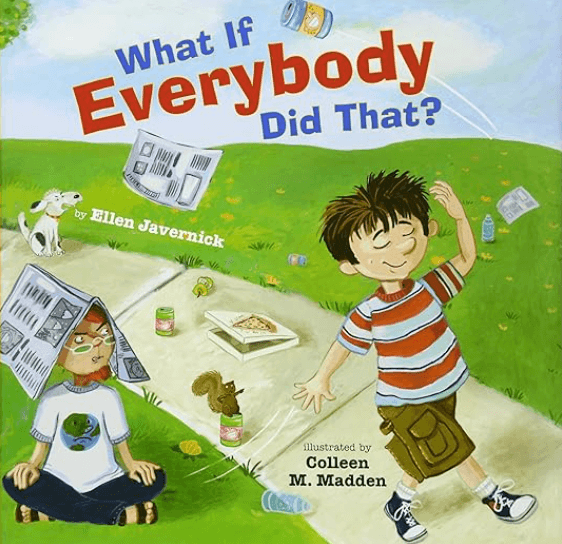
2. Point out sentence types in read alouds
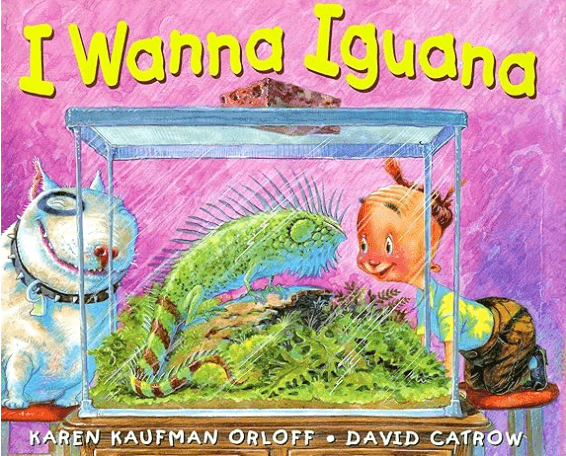
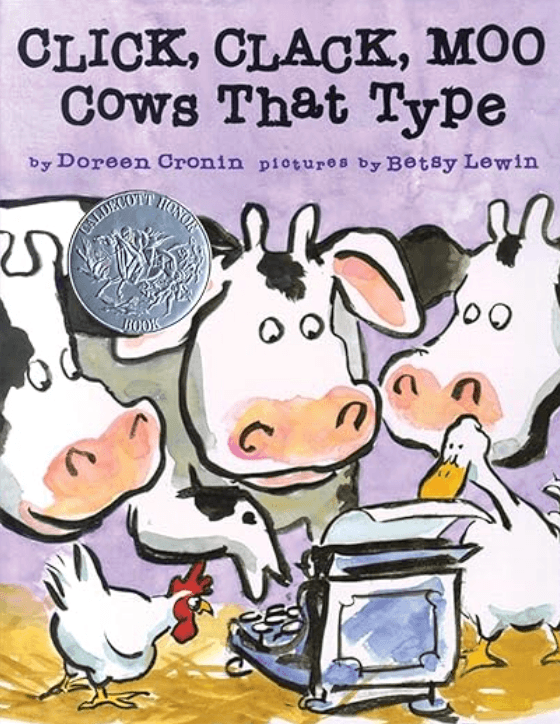
Why it works: Hearing sentence types used naturally in books helps students connect grammar skills to authentic reading and writing.
Read Alouds to Show Declarative Sentences
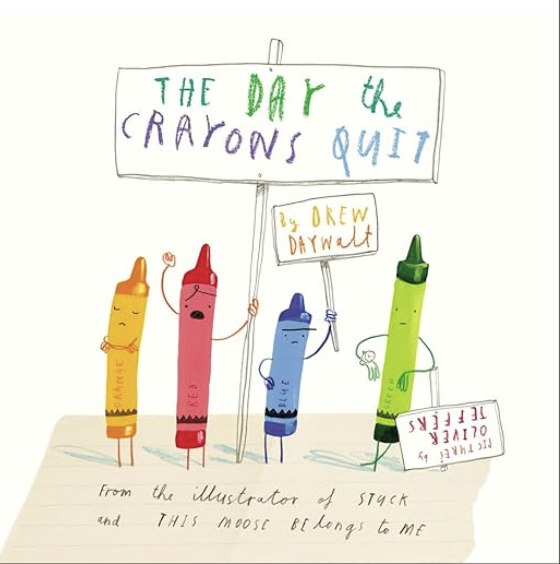
Read Alouds to Show Exclamatory Sentences
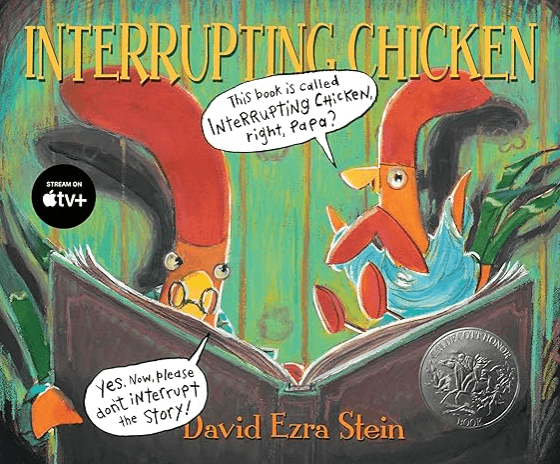
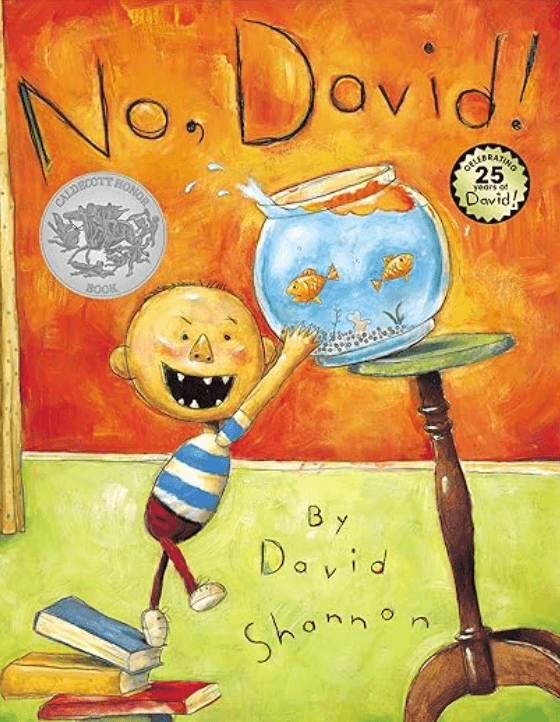
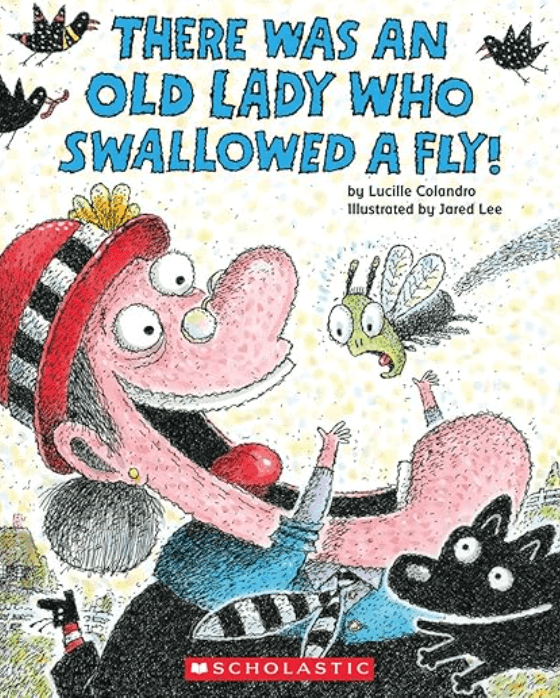
Read Alouds to Show Imperative Sentences
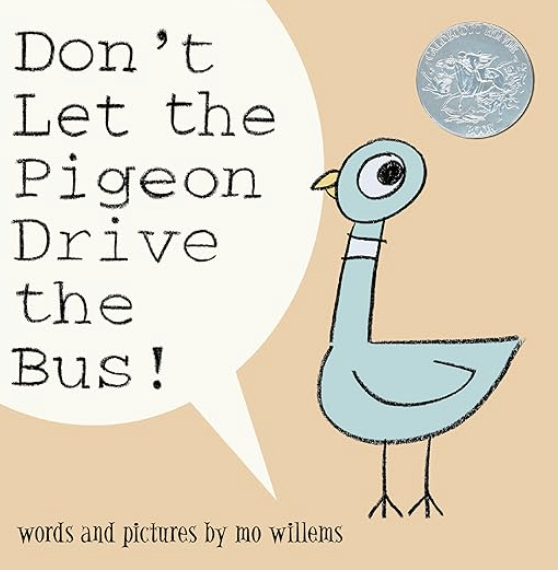
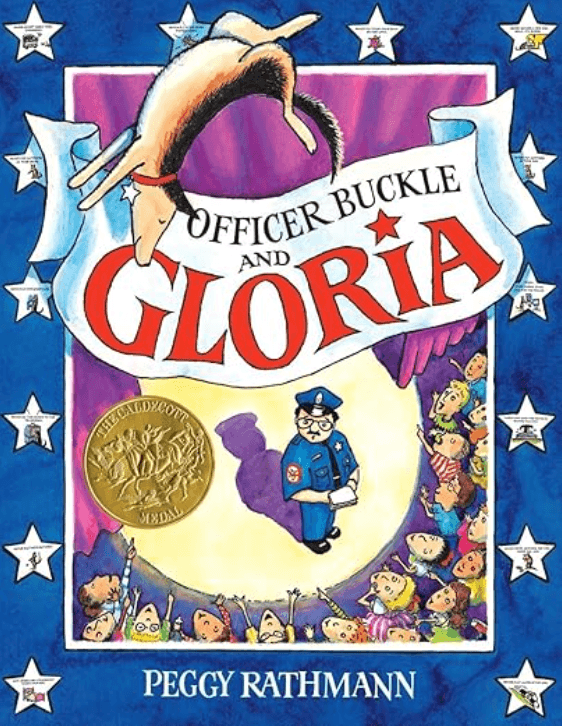
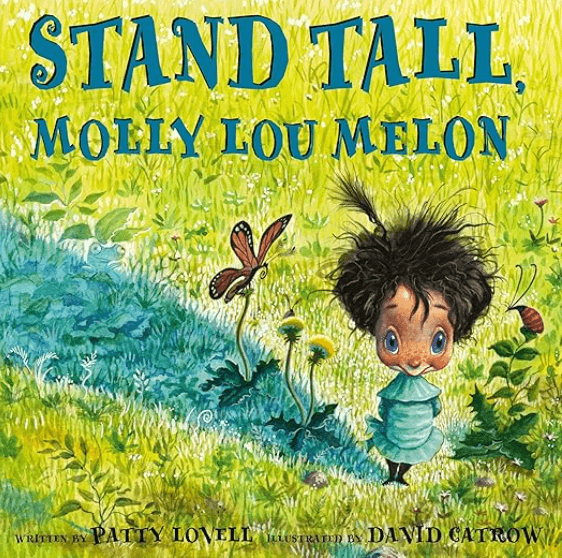
Read Alouds to Show Interrogative Sentences
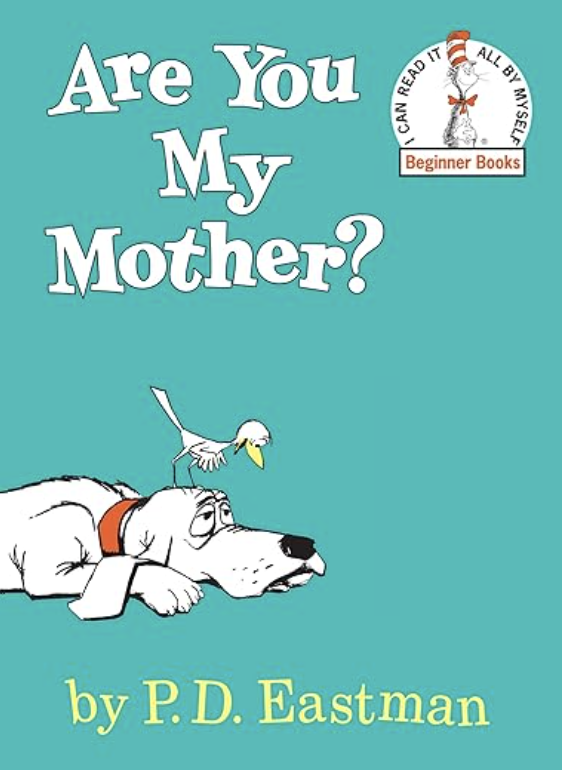
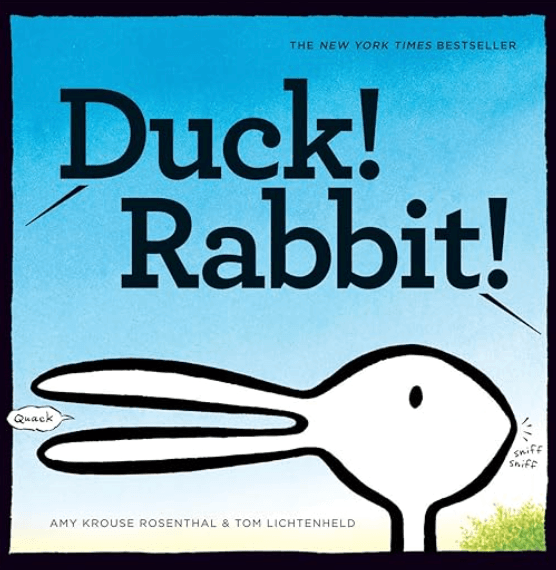
What Are Fun Activities for Teaching and Practicing the 4 Types of Sentences?
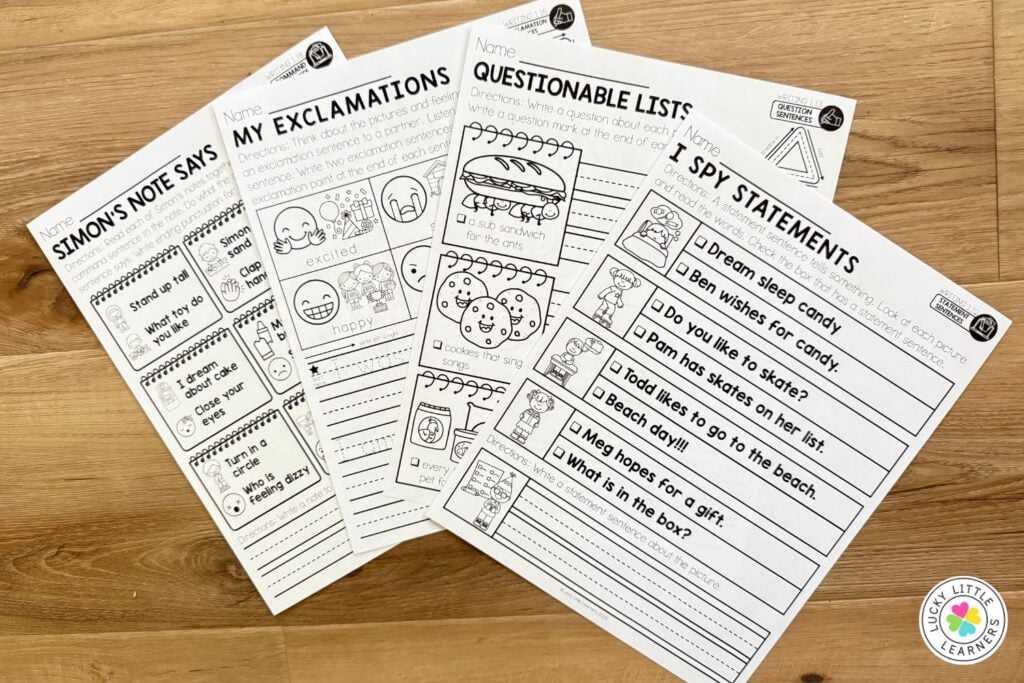
3. Lucky to Learn Writing Lessons
Our full year Lucky to Learn Writing curriculum, offers lessons with guiding videos and hands-on activities focusing on the four types of sentences. Click the pictures below to see more resources.
Why it works: Writing their own examples helps students apply grammar skills in a meaningful context instead of only identifying sentence types in isolation.
Instantly download all the resources in this post (and MORE!) for just $1
4. Sentence Type Toothy
Our favorite learning game, Toothy, is back with a types of sentences version! Students will have fun using this self-checking center, or play as a fun digital game with the whole class. Fill Toothy’s mouth with teeth and get ready to smile when your students have aced this activity!
Why it works: Self-checking games increase engagement while giving students immediate feedback as they practice identifying sentence types.

Teacher tip: Students often remember sentence types more easily when they physically sort, act out, or hear the sentences read aloud with expression.
5. Sentence Sorts
Practice sorting sentence types with these 1st and 2nd grade level literacy centers. Students will draw a card, read the sentence, and sort it into the correct sentence type. Two different levels can make all learners feel successful!
Why it works: Sorting activities help students compare sentence structures and recognize punctuation patterns through hands-on practice.
Check out the 1st grade level sentence sort.
Check our the 2nd grade level sentence sort.

6. Grammar Day by Day
This 5-day spiral review reinforces the 4 types of sentences. Use as a review, independent activity, or writing center. The Roll-a-sentence game on day 5 would also be perfect for a group game!
Why it works: Interactive notebook pages give students repeated practice while creating a reference tool they can revisit throughout the year.

7. Types of Sentences Spoons
Even if your students haven’t played the traditional version of the spoons game, they are sure to be delighted with this fun way to teach types of sentences. All you will need is three plastic spoons per child, each with a different sentence end mark drawn with sharpie.
Why it works: Movement-based grammar activities help students stay engaged and make abstract grammar concepts more memorable.

Types of Sentences Spoons Directions:
- Lay out the spoons on a table or on the carpet in front of the classroom.
- Call up two students for the first turn.
- Read a sentence out loud, but do not let students see it unless you write it without its endmark.
- Students quickly decide which type of sentence it is, and which end mark it would need.
- They try to be the first to grab the correct spoon.
- Whoever grabs the correct spoon first wins, and advances to the next round.
- Play until there is an ultimate winner!
Instantly download all the resources in this post (and MORE!) for just $1
What Videos Help Students Learn the 4 Types of Sentences?
Why videos work: Videos combine visuals, sound, and repetition to reinforce sentence type vocabulary and punctuation rules for young learners.
8. The Four Types of Sentences Song by Silly School Songs
9. Four Kinds of Sentences Song by GrammarSongs by Melissa
Frequently Asked Questions About Teaching the 4 Types of Sentences
What are the 4 types of sentences?
The 4 types of sentences are declarative (statements), interrogative (questions), imperative (commands), and exclamatory (exclamations).
How do you teach sentence types to young students?
Using anchor charts, sentence sorting games, hands-on activities, and repeated sentence practice helps students recognize sentence types more easily.
Why is it important for students to learn sentence types?
Understanding sentence types helps students improve punctuation, writing structure, grammar skills, and reading comprehension.
Instantly download all the resources in this post (and MORE!) for just $1
