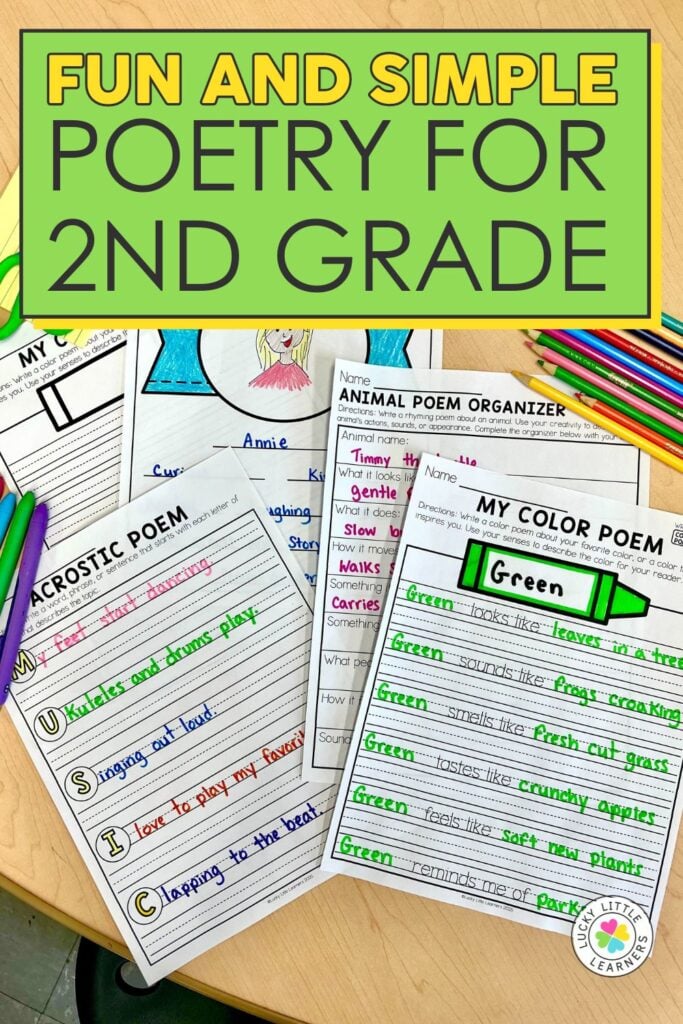

Poetry is one of the most fun and engaging ways to get your students writing. However, many teachers find it challenging to introduce and teach different types of poetry in 2nd grade. We’re here to guide you through the process and share our top four poetry types: acrostic, cinquain, color, and rhyming poems that help build confident writers in your classroom. Let’s dive in!
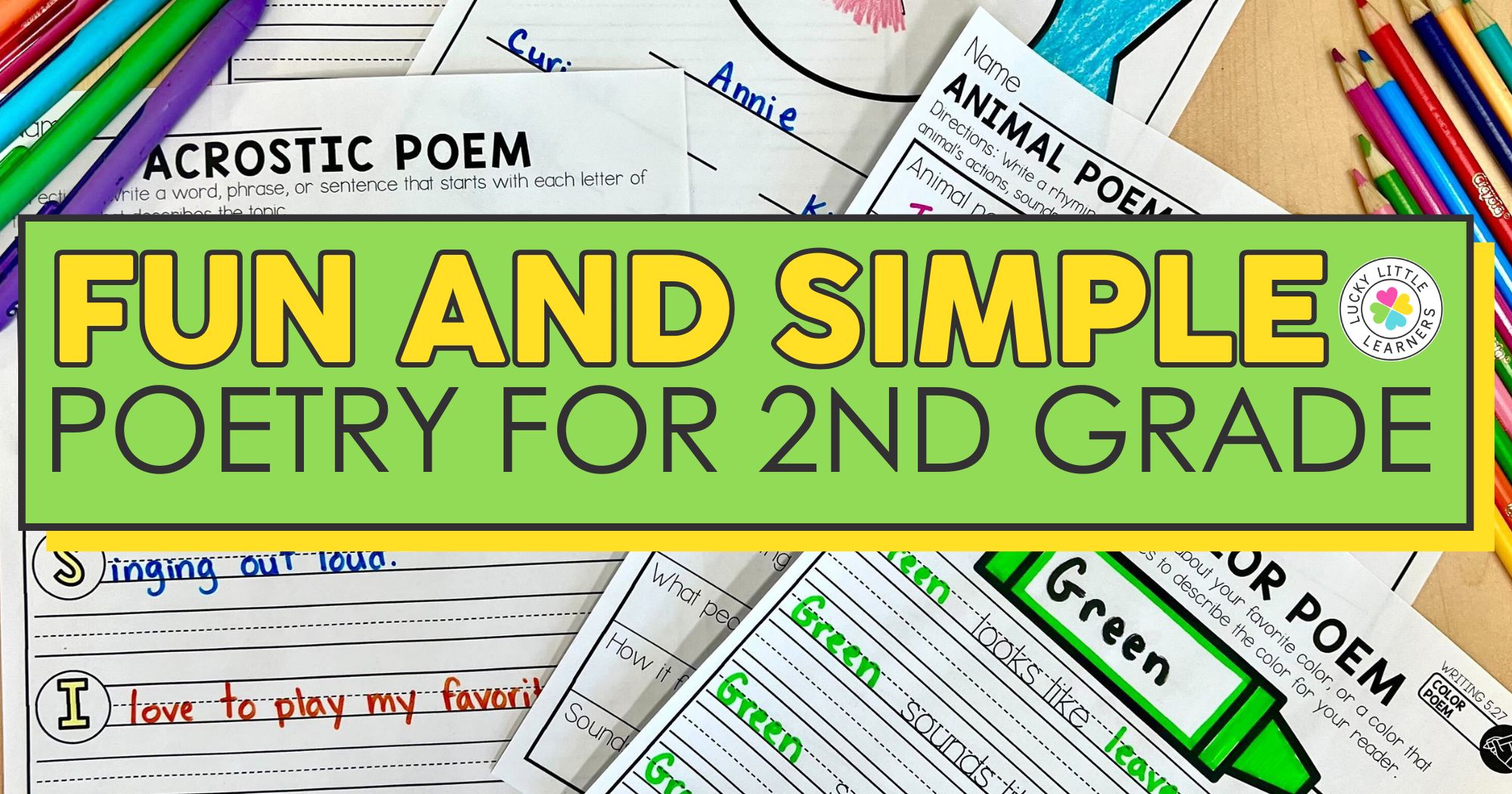
Why Poetry is Perfect for Second Grade
Poetry is one of the most creative forms of writing you can explore with your students. In second grade, kids are full of imagination, creativity, and fun ideas. Starting with poetry types that follow a simple framework allows students to easily plug in their expressive thoughts and ideas. Plus, you can check off some of those standards at the same time!
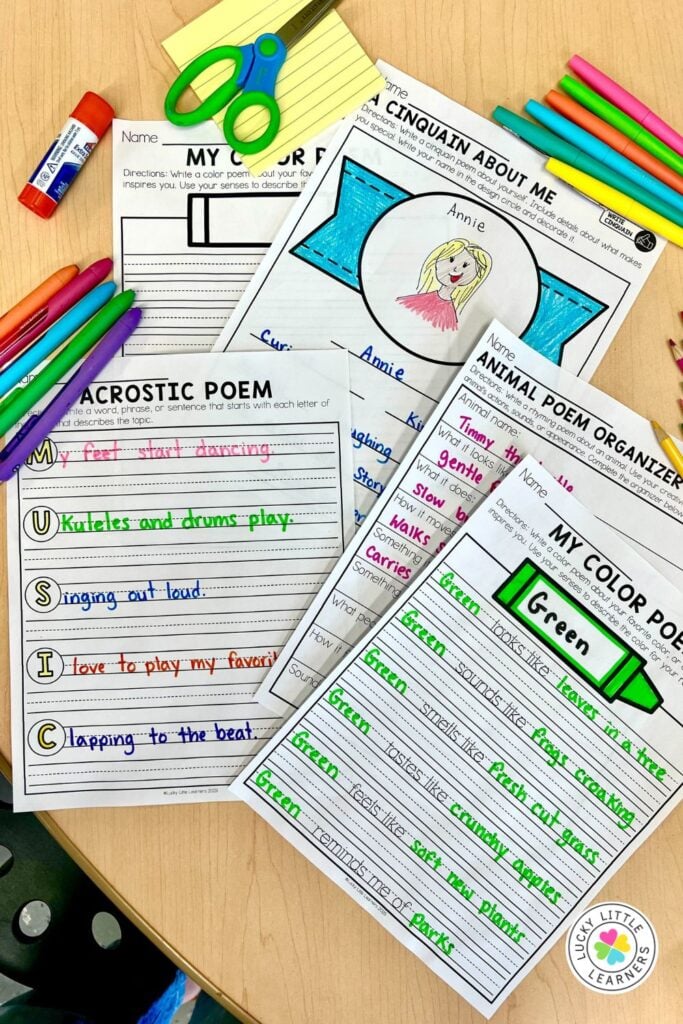
Let’s walk through the four most doable types of poetry for 2nd grade, and how you can teach them.
Also, check out these read alouds that pair perfectly with a poetry unit.
1. Cinquain Poems
How to teach Cinquains
Cinquains are an ideal poetry type for second grade. For example, students can follow a very clear template to create their poem, which makes it much simpler than other types like free verse poetry Cinquains are also a great way to review verbs, nouns and adjectives. (You’ve got to love a cross-curricular opportunity!)
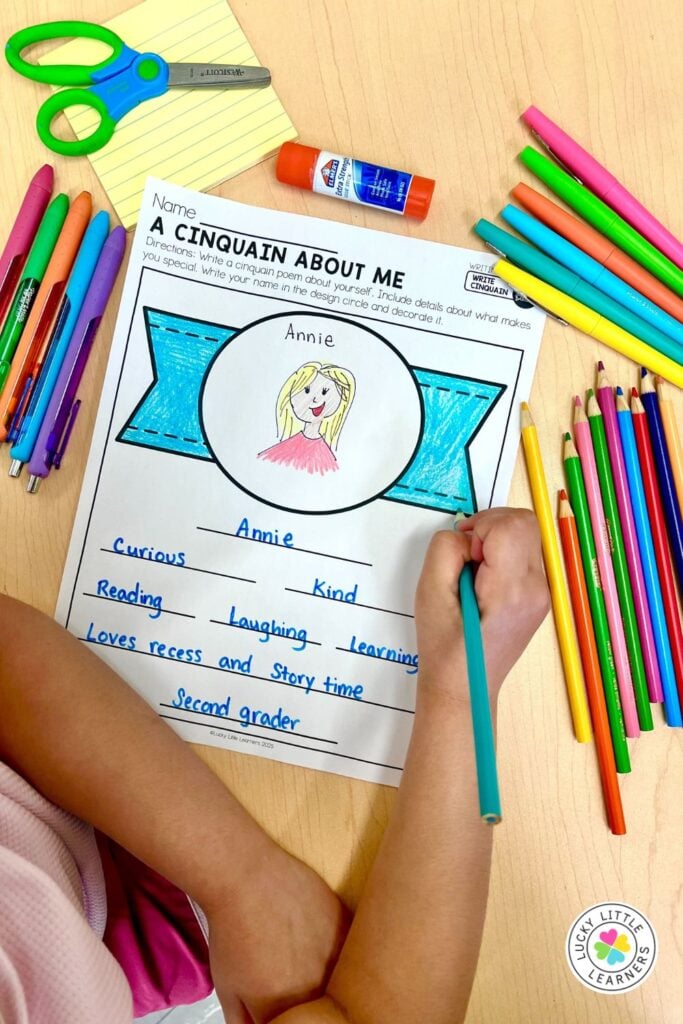
Start by introducing the structure and reviewing parts of speech with your students. Show them a few example cinquains and talk about how each line relates to the topic. Then, guide them step-by-step through the easy-to-use format:
- First Line – The topic (a noun)
- Second Line – Two words describing the topic (adjectives)
- Third Line – Three action words (verbs) that relate to the topic
- Fourth Line – A feeling about the topic (often we teach students to write a short phrase here)
- Fifth Line – A synonym for the topic (another noun)


2. Rhyming Poems
Students love coming up with rhymes, plus it taps into oh so important phonemic awareness skills. In this type of poetry, the ending words of lines rhyme. For this example, we will be using an AABB rhyming scheme.
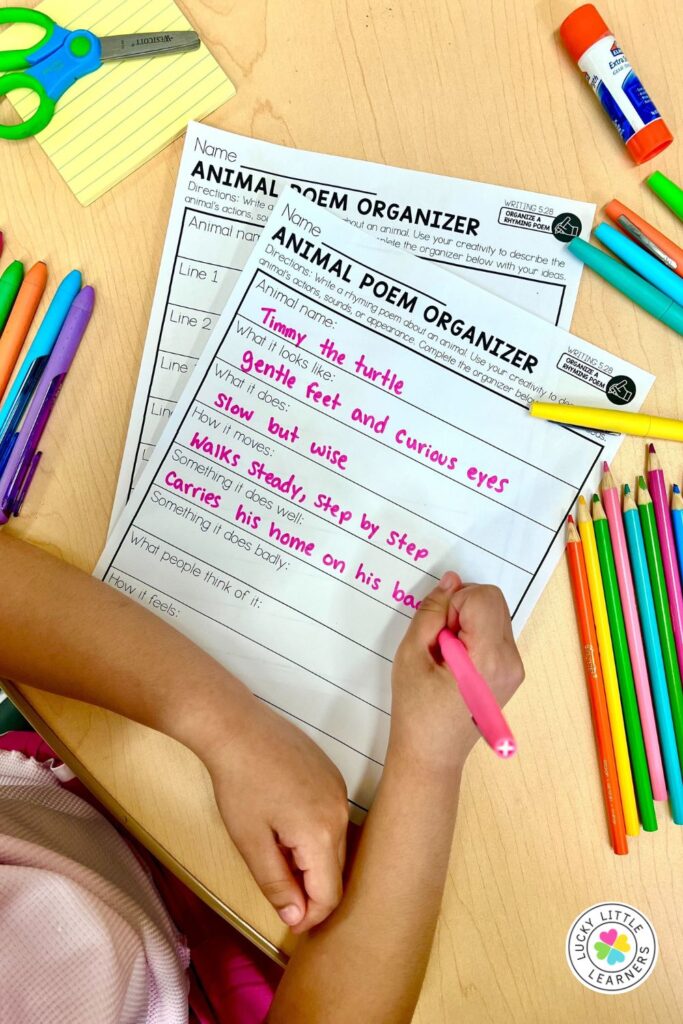
How to Teach Rhyming Poems
It’s best to scaffold this type of poetry. For more ideas on incorporating poetry into your weekly routine, check out this helpful article: A Weekly Routine to Build Fluency Using Phonics Poems.
1 – Start by reading several rhyming poem examples (provided for your in Lucky to Learn Writing unit 5).
2 – Work on a rhyming poem template together, filling in the blanks.
3 – Create a first draft of the poem, not yet focusing on the rhyming words, just getting the sentences down.
4 – Add in the rhymes at the end of the line.


3. Acrostic Poems
Acrostic poems might just be the students’ favorite on this list. They get to choose a word that’s meaningful to them in their lives and turn it into a fun, personal poem. Once students select the word, they write it vertically down the left side of the paper. Then, they come up with a word or short phrase for each letter, making sure each one relates to the original word.
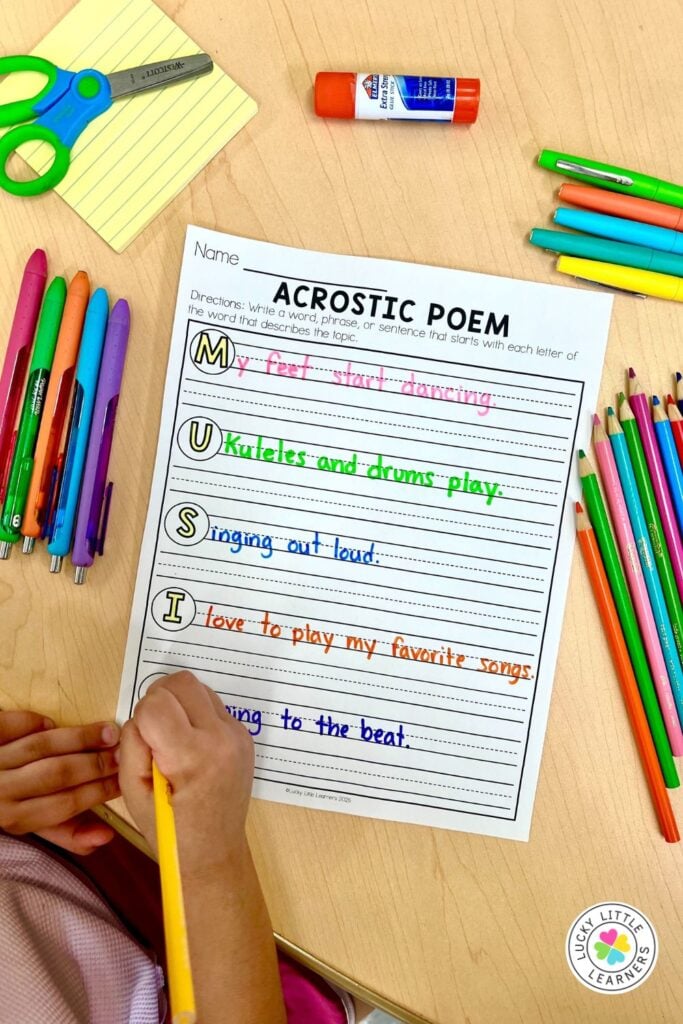
How to Teach Acrostic Poems
Like the other types of poems in this post, it is important to model, model, model. Start by reading example poems. Then, write one for the class using your favorite food, sport, etc. Now it is time for the students to help you write an acrostic poem before they are released to write their own.


4. Color Poems
Color poems are a bit more abstract than the other forms of poetry in 2nd grade. In this type of poetry, students will use colors to describe what it makes them feel or see. It’s helpful to apply the I do, We do, You do teaching strategy with this poem.
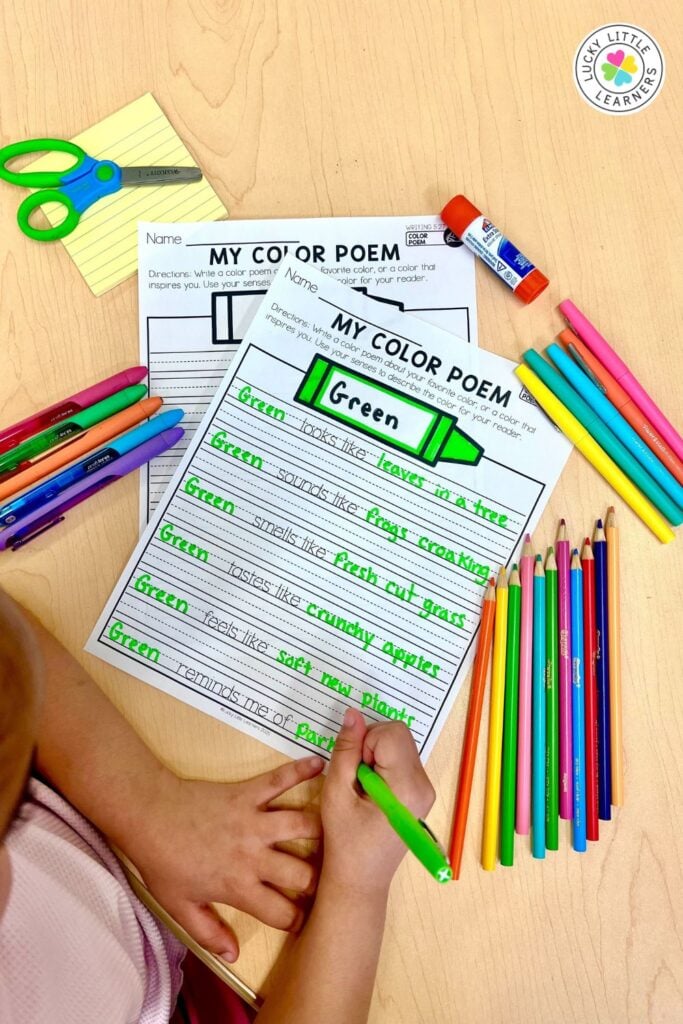
How to Teach Color Poems
As a class, choose a color and list all the things you can think of that remind you of that color. Here are some examples to get you started:
Orange: pumpkins, fall, Halloween, happiness, excitement, road construction, fruit, summer
Blue: sadness, water, dolphins, rainy days, berries, the sky
When students are ready, they can choose their favorite color and use this easy template to write their own color poem.


Easily Teach Poetry in 2nd Grade
Want access to all the resources to teach poetry in 2nd grade?
Join All Access today to instantly download the Lucky to Learn Writing curriculum, including a variety of poetry activities, templates, and teaching tips designed specifically for second-grade teachers.